
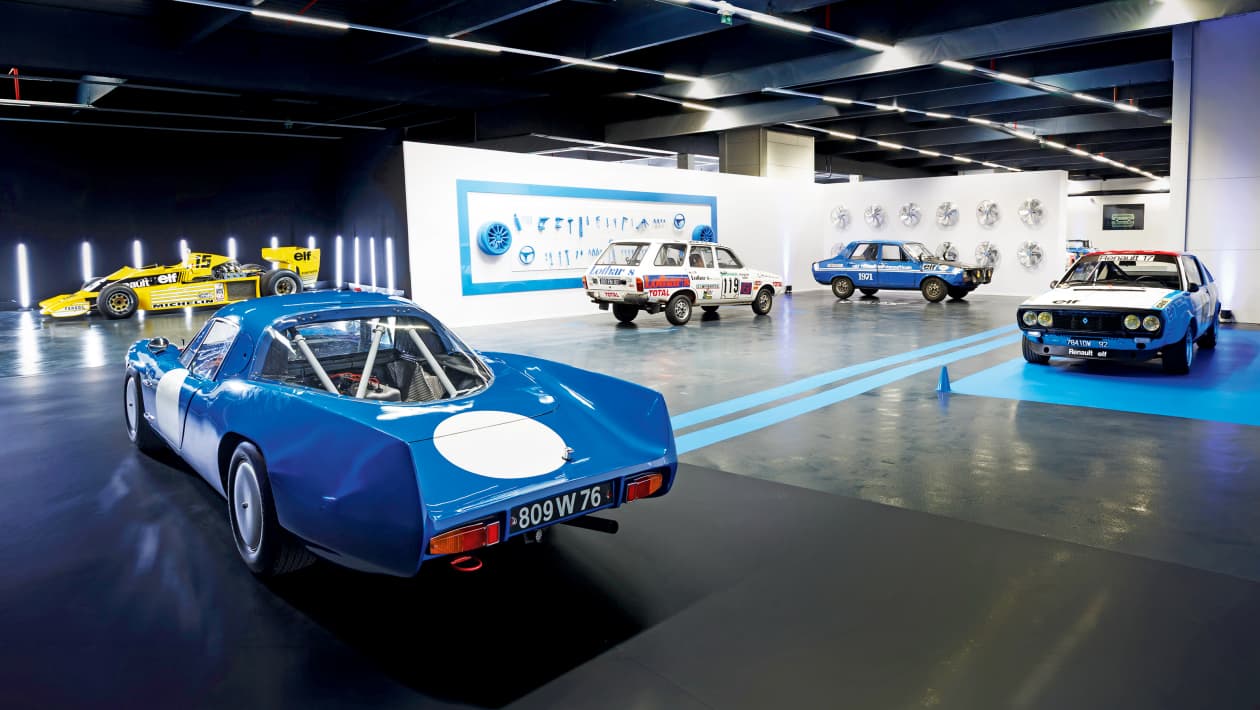
What the Gordini 8 concept actually is
The numbers are straightforward. The concept measures 4.12 metres long and has two doors, a deliberate break from the four-door original. Drive goes solely to the rear through a single 269bhp electric motor, a layout that nods to the rear-engine, rear-drive configuration of the 1960s car it honours.
The design process is the more revealing detail. Renault drew up roughly 300 proposals before signing off the final shape, which suggests the company treated this as a serious styling exercise rather than a quick nostalgia play. The Renault 8 Gordini Concept: The Electric Rebirth of a French Rally Icon retains the offset white stripes and blue paintwork that made the original so recognisable, wrapped around a body that could only be a modern EV. It also covers the specification in more detail. The short version: a rear-drive electric coupe with hot hatch power and a badge with genuine competition history behind it.
Who Amédée Gordini was
The name on the bootlid belongs to a racing driver and engineer who began working with Renault in 1957, the year after the Dauphine won the inaugural Tour de Corse. Gordini had already built a reputation as a tuner, and the Renault collaboration produced immediate results: Gordini-tuned Dauphines won the 1958 Monte Carlo Rally.
Renault later took majority ownership of the Gordini company after Amédée retired, and it remains part of Renault today. That detail is easy to overlook, but it explains why the badge keeps resurfacing. Gordini was never a separate manufacturer that Renault licensed; it became an in-house performance division long before the term was fashionable.
Gordini’s greatest hits
The road cars that followed the rally wins were the ones that embedded Gordini in the public imagination. The Dauphine Gordini carried a 40bhp engine, 25 per cent more than a standard Dauphine, along with disc brakes all round and a four-speed gearbox. The ultimate version, the 1962 ‘1093’, pushed output to around 50bhp.
Then came the car the new concept is named after. The Renault 8 Gordini used a 1.1-litre four-cylinder producing 95bhp, with later versions moving to a 1.3-litre unit. The chassis was uprated, the headlamps enlarged, and the offset white stripes laid over blue paintwork became one of the most copied liveries of the era. Nearly 12,000 were built, and the car served as the basis for the world’s first one-make racing series. That combination of accessible performance and a spec-series proving ground is precisely what modern performance brands try to manufacture; Gordini achieved it almost by accident. The badge also travelled further than most: when Renault wanted to sell its 5 Alpine hot hatch in Britain it could not use the Alpine name, because Chrysler already sold a car called the Alpine, so the car arrived here as the Renault 5 Gordini, a rebadged hot hatch the rest of Europe never saw.
When Gordini lost its edge
Not every car wearing the badge lived up to the original. The Renault 12 Gordini moved to front-wheel drive and borrowed its four-cylinder engine from the 16 TS, enlarged to 1,565cc and producing 111bhp at 6,250rpm. It replaced the Renault 8 Gordini in the range. It had discs all round, ventilated at the front, and uprated suspension. It also never matched the 8’s success, on the road or in competition. The same engine for a time powered Formula Renault single-seaters, which flattered the unit more than the car around it.
The 1974 Renault 17 Gordini was worse, arriving the same year Renault won its first World Rally Championship round with a Gordini-tuned 17. The road car was simply a renamed 17TS with no mechanical changes.
From Gordini to Renault Sport and back again
In 1976, Gordini and Alpine were merged to create Renault Sport. That division built the company’s performance reputation for the best part of five decades, from the Clio Williams to the Mégane R.S., before being wound up in 2023. The late-2000s attempt to revive Gordini as a sub-brand produced mixed results, most notably the Renaultsport Twingo 133 Gordini, a purely cosmetic edition with white racing stripes, white accents and 17-inch alloys, available in blue or black, with the Cup pack’s lower and stiffer suspension fitted as standard.
That car is the cautionary tale. A badge without mechanical substance reads as marketing, and buyers notice. Which is why the Gordini 8 concept’s rear-drive electric layout matters more than its paintwork.
Why the Gordini 8 matters now
Renault is not alone in leaning on its back catalogue. Retro design has become the default marketing language of the electric transition, because heritage gives a new powertrain an emotional frame that a specification sheet cannot. The next wave of electric cars arriving by 2030 will be judged on range, charging and price, but the ones that sell will be the ones with a story attached.
The Gordini 8 is that story, told as a concept rather than a product. It reframes a badge built on rally wins and one-make racing as a design statement, and it asks whether heritage alone can carry an electric performance brand where Renault Sport left off. The honest answer is that it cannot. A 269bhp rear-drive coupe with genuine Gordini engineering behind it could. A stripe package on a crossover could not, and Renault has already tried that once.
For now, the concept does its job: it reminds buyers that Renault once built cars worth remembering, and it tests whether they still care. If the response is strong enough, the production conversation starts. If it is not, the Gordini 8 joins the 17 Gordini in the long list of Renaults that wore a great badge and asked it to do too much.






4 Comments