
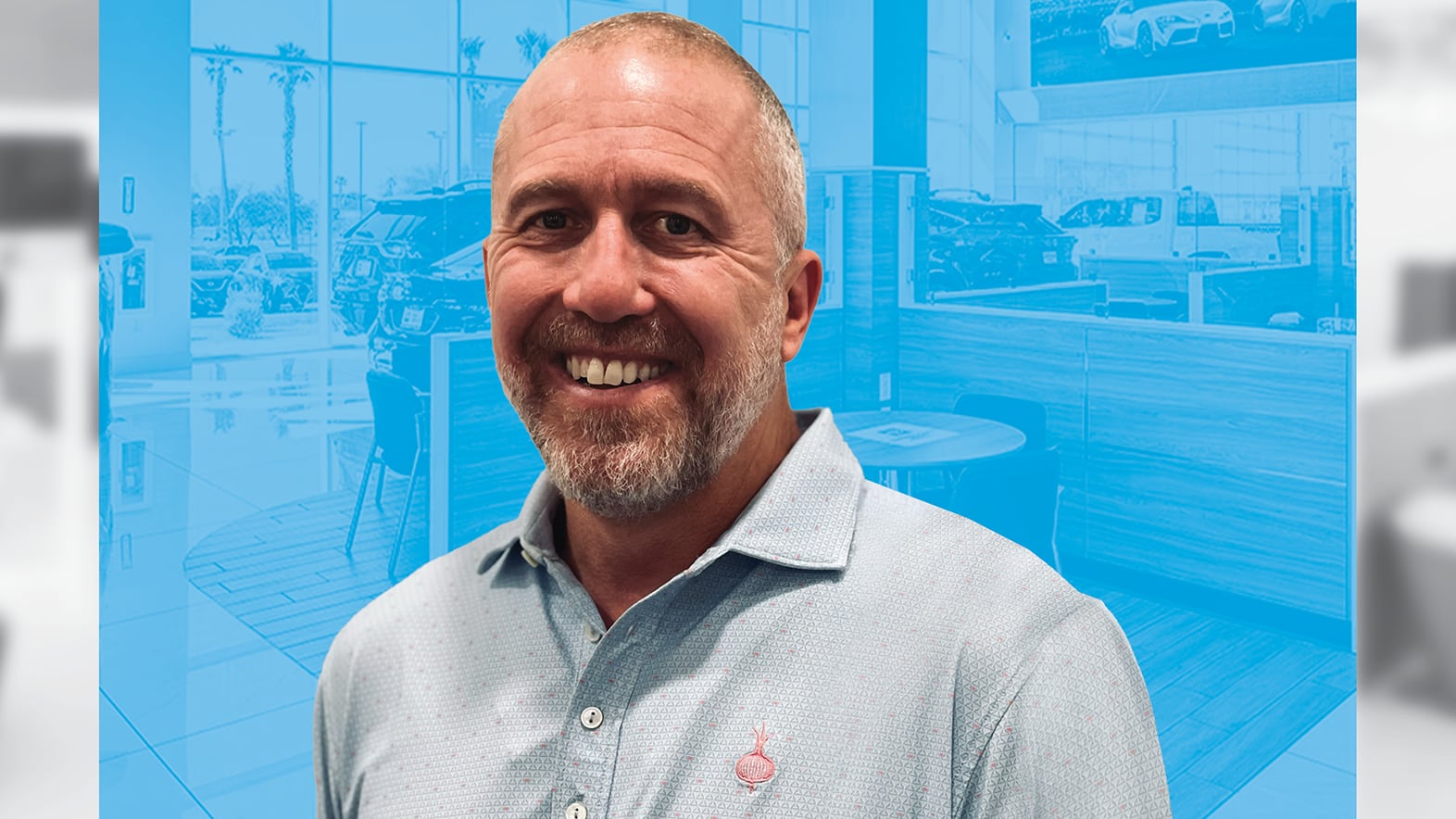
Car retailing is changing fast, and Rob Gallik has spent his career inside the business rather than commenting on it from the outside. As co-owner of Tameron Automotive Group, a US dealership group, he deals daily with the pressures reshaping how cars are bought, sold and serviced. Tameron operates in the US South, but the pressures Gallik describes are felt by dealer groups on both sides of the Atlantic.
In a wide-ranging conversation for our Client Interview Series, Gallik set out where car retailing is heading, what is genuinely changing and what is more hype than substance.
Meet Rob Gallik
Gallik is co-owner of Tameron Automotive Group. His role is not that of a distant investor. As co-owner he is involved in the operational decisions that shape how the group buys stock, prices it, sells it and looks after the customers who come back for servicing.
That hands-on position matters because the pressures facing the sector are felt most acutely where a regional group has to commit real money to inventory, real estate and staff. Gallik’s perspective is shaped by running showrooms and workshops, not by a slide deck about disruption.
The state of the market
On current trading conditions, Gallik’s assessment is measured. Consumer behaviour has shifted in ways that reward dealers who are quick on their feet. Buyers research extensively before making contact, they expect transparent pricing, and they are far less tolerant of the old back-and-forth negotiation ritual than previous generations were.
Inventory remains the practical headache. Gallik says supply disruptions of recent years have eased in many segments, though the mix of vehicles available is not always the mix customers want. That mismatch forces dealers to think harder about how they source stock, how long they hold it and how quickly they reprice when a car is not moving. The groups that treat inventory management as a core discipline, rather than an administrative afterthought, will be the ones that protect their margins.
There is also a wider shift no dealer can ignore. Petrol cars have just slipped below half of global sales for the first time in a century, a milestone explored in our report on Petrol Cars Slip Below Half of Global Sales for the First Time in a Century. The shift is global and does not describe UK registrations, where petrol and diesel still account for the majority of new cars. For dealerships, it is not an abstract statistic. It changes what sits on the forecourt, what technicians need to be trained to fix and what customers walk in asking about.
Electrification and the dealership
Electrification is the single biggest structural change Gallik has seen in his time in the industry, and he is clear that it reshapes the business on both sides of the building.
On the sales side, the conversation with customers is different. Range, charging arrangements and home installation come up before performance or trim. That requires sales staff who understand the practicalities of running an electric car, not just the specification sheet. A dealer who cannot answer a straightforward question about charging at home will lose the sale to one who can.
The service operation is where the change runs deepest. Electric vehicles have far fewer moving parts, no engine oil, no exhaust system and significantly reduced brake wear thanks to regenerative braking, a point borne out by the servicing schedules of the models now arriving on UK forecourts. That means less routine maintenance work per vehicle over its life, which is a genuine challenge for a business model that has long relied on a steady flow of servicing revenue. The response, in Gallik’s view, is to look at where the work is going rather than where it has been: software updates, diagnostics, battery health checks, tyres and the growing market for used EV preparation. The workshop of the future will not be empty, but the jobs in it will be different.
There is a training dimension too. Technicians who have spent careers on combustion engines need proper, funded retraining to work safely on high-voltage systems. Gallik treats that as an investment rather than a cost, because a group that cannot service what it sells will not keep those customers for long.
The digital showroom
Gallik is not a dealer who views online retail as the enemy. Digital tools and the physical forecourt serve different jobs, in his view, and dealers who try to make one replace the other usually get it wrong.
The online journey is now where most customers start. They want to see real photographs of the actual car, not stock imagery. They want a clear price, a finance calculator that works and the ability to reserve a vehicle without a phone call. Gallik’s group has moved in that direction because that is simply what buyers expect.
What has not changed is the part of the process that happens in person. A test drive, a proper look around the car in daylight and a conversation with someone who knows the product still close sales, particularly at the higher end of the market. The digital side should get the customer to the point of decision quickly, and the showroom should then do what it does best: remove doubt.
The dealers who struggle are those who bolt online tools onto an unchanged process, so customers end up repeating themselves at every stage. The ones who do well join the two up, so the information a buyer gives online is waiting for them when they arrive.
Building customer loyalty
Retention is where Gallik sees the most durable advantage for a dealership group, and it is not built on discounts.
His approach centres on the aftersales relationship. A customer who trusts the workshop is far more likely to buy their next car from the same business, even if the price is not the absolute lowest they can find. That trust is earned through transparent job sheets, realistic timeframes and not inventing work that does not need doing.
The competitive landscape makes this harder. Independent garages compete aggressively on servicing costs, and franchise standards add overheads that independents do not carry. Gallik’s answer is to compete on convenience and confidence rather than trying to win a price war. Courtesy vehicles, clear communication about what a repair will cost before it starts and staff who remember the customer all feed into the same outcome.
He is also candid that loyalty is not something a dealership can assume. Customers who feel they were treated as a transaction the first time will not return, and no amount of marketing spend fixes that.
Advice for the next generation
Asked what he would tell people coming into automotive retail now, Gallik’s message is about adaptability rather than any single skill.
The industry rewards people who are willing to keep learning. That applies to sales staff who need to understand electric drivetrains and software features, to technicians facing a completely different repair landscape and to managers who have to read a market that can change faster than a stock ordering cycle.
His leadership view is that the best dealers stay close to the customer and close to the numbers at the same time. Enthusiasm for the product matters, but so does discipline about what a car costs to hold, what it is worth in three months and what the customer will need from the business after the sale.
The dealership is not being replaced, in Gallik’s assessment. It is being reshaped. The forecourt still matters, the workshop still matters and the relationship with the customer matters more than ever. What is changing is the balance between those things, and the groups that adapt their operations to match will still be trading when the next shift arrives.





One Comment