
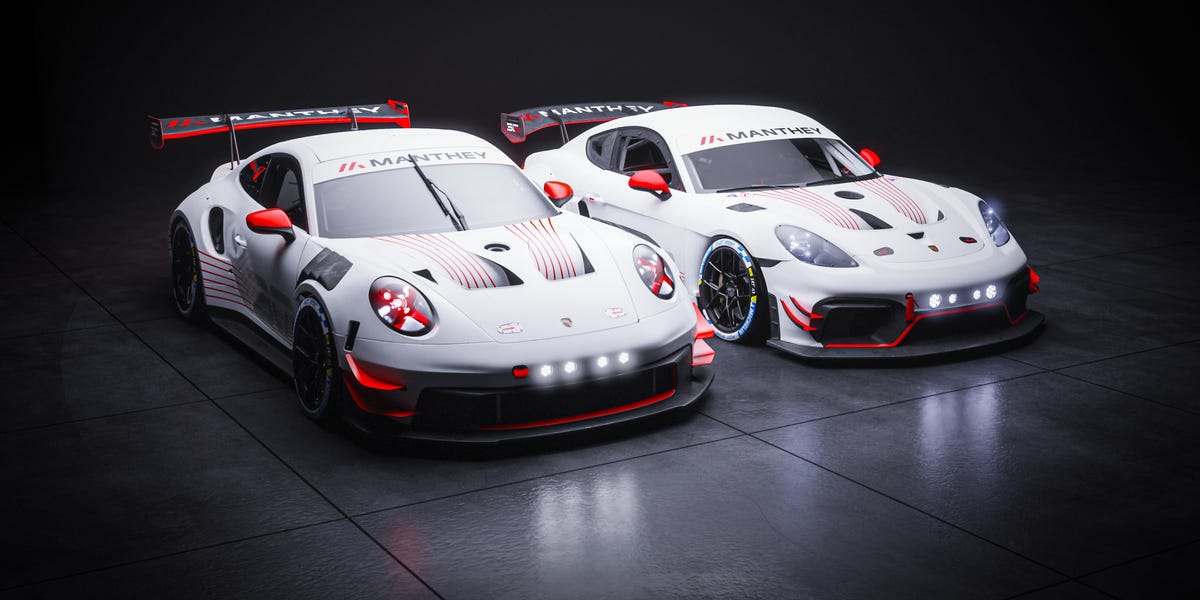
Manthey Racing has spent three decades turning Porsches into faster Porsches.
For its 30th anniversary, the German outfit could easily have commissioned a heritage-liveried show pony and called it a day. Instead, it has built two competition cars that customers can actually race, and it has done so in the same week that Porsche tightened its grip on the company.
The anniversary package consists of the Porsche 911 GT3 Cup MR 30 and the 718 Cayman GT4 RS Clubsport MR 30. Production is split evenly at 15 examples apiece, making 30 cars in total, a number that fits the occasion neatly. Orders are open until 30 October. The 718s will be delivered from November this year, while the 911s will reach their owners in the first quarter of 2027. Manthey has not announced prices for either car.
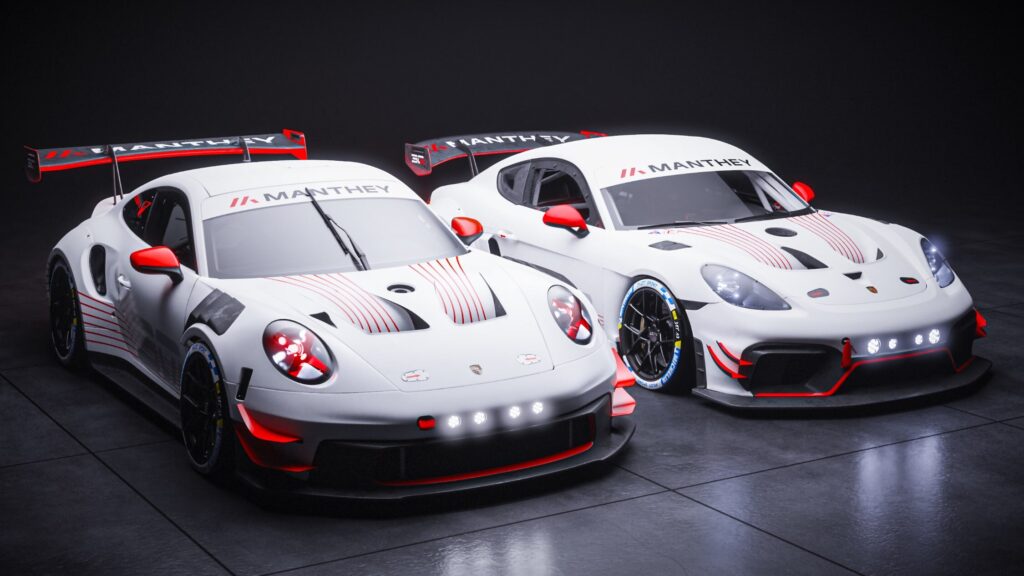
The 911 GT3 Cup MR 30 Leads the Way
The headline act is the 911 GT3 Cup MR 30, based on the 992.1-generation 911 GT3 Cup. The most significant change sits behind the driver. Manthey has enlarged the flat-six from 4.0 to 4.2 litres, using the capacity found in the 911 GT3 R, which lifts output from 503 hp (510 PS) to 552 hp (560 PS). Power reaches the rear wheels through a six-speed sequential gearbox rather than a manual, as befits a car designed for competition.
That engine work is not simply a numbers exercise. Manthey says engine development was central to its 996- and 997-era racing programmes through the 1990s and 2000s, before the company’s focus shifted towards aerodynamics, suspension and cooling. Returning to the internals for this car is a deliberate nod to where the business came from, and it gives the GT3 Cup MR 30 a mechanical character that a bodykit alone could never deliver.
The chassis has been reworked to match. There is a new front splitter, additional flics, and a new rear wing with enlarged end plates. Spring rates have been optimised and the kinematics revised front and rear. Lightweight forged wheels in a 30th anniversary design save roughly 3.8 kg. None of it is decorative.
The 718 Cayman GT4 RS Clubsport MR 30
The second car takes a different route. The 718 Cayman GT4 RS Clubsport MR 30 is built to GT4 regulations rather than GT3, so it retains the 4.0-litre engine producing 500 hp and uses a seven-speed dual-clutch transmission instead of the 911’s sequential unit. The regulations dictate the fundamentals, and Manthey has worked within them rather than around them.
Aerodynamic changes follow the same philosophy as the 911: a new splitter with additional flics, plus a redesigned rear featuring a new wing and a carbon diffuser. Model-specific wheels, manufactured in-house by Manthey, cut about 5.7 kg. The Cayman has long been the enthusiast’s choice for track work, and this version leans into that reputation with hardware developed in-house rather than bought in.
White, Red and Thirty Years of History
Both cars wear Manthey’s traditional white and red livery, with the chassis painted white as a nod to historic Porsche race cars. The seats are embroidered with anniversary lettering. The rear wing end plates carry “30 Years of Manthey” graphics, and the Cayman adds a “30 Years Manthey” exterior badge with “30 Years Anniversary” logos on its wing end plates.
It is a restrained treatment by the standards of anniversary specials, which is entirely in keeping with a company that has never been especially interested in ornamentation. The livery does the work, and the hardware does the rest.
Built for the Racetrack, Not the Party
Manthey managing director Nicolas Raeder was blunt about the intent behind both cars. “Both cars exemplify the way development takes place at Manthey: driven by specific customer requirements and motorsport projects,” he said. “They were not created to celebrate an anniversary, but for use on the racetrack. The fact that we are now able to offer the results of these two development paths as limited-edition special models makes them a particularly fitting way to conclude our 30th anniversary year.”
That distinction matters. Plenty of tuners mark milestones with a cosmetic package and a numbered plaque. Manthey has instead taken two customer-driven development programmes that already existed in some form and turned them into limited-production race cars.
Porsche Takes a Bigger Stake
The timing of Porsche’s increased shareholding is unlikely to be a coincidence. Porsche has raised its stake in Manthey from 51 per cent to 67 per cent, and Manthey now sits within Porsche’s new Performance vertical, one of three pillars organising the business. The other two are Exclusiveness, covering Sonderwunsch special wishes and Exclusive Manufaktur personalisation, and Heritage.
Placing Manthey alongside the personalisation and heritage operations says something about how Porsche views the company. It is no longer simply a racing partner with a useful engineering department. It is part of the core performance strategy, and further road car collaborations between the two are expected in the coming years. Given what Manthey has achieved with the 911 GT3 RS and other road cars, that prospect should interest anyone who cares about how Porsche’s fastest models drive.
The Nürburgring Reputation That Built All This
Manthey’s modern fame rests largely on its performance upgrade packages, which have helped Porsche set multiple production car lap records at the Nürburgring. Those packages transformed the way enthusiasts think about modifying a road car. Rather than voiding a warranty and hoping for the best, owners could buy a factory-sanctioned upgrade that made a measurable difference on track.
That reputation is the foundation on which everything else sits. The Nürburgring remains the benchmark by which performance cars are judged, and it is the reason Manthey’s name carries weight far beyond Germany. It is also the reason the company’s 30th anniversary cars will be taken seriously by people who actually race them, rather than merely displayed.
What Manthey’s Next Chapter Looks Like
Thirty years is a long time in motorsport, and Manthey has survived by being useful rather than nostalgic. The company started with engine work on 996- and 997-era cars, moved into aerodynamics, suspension and cooling as the regulations and the technology changed, and has now become the operation Porsche trusts with its most serious performance projects.
The two anniversary cars reflect that trajectory precisely. One is a GT3-rules machine with a bigger engine and a sequential gearbox, the other a GT4 car built to a stricter formula with in-house wheels and revised aero. Both exist because customers asked for them.
With Porsche now holding 67 per cent and Manthey installed in the Performance vertical, the relationship is only going to tighten. The obvious question is what comes next for road cars. Given the lap records already achieved and the engineering depth now formally integrated into Porsche’s structure, the next few years should produce some genuinely interesting machinery. For a company that has spent three decades making Porsches quicker, the anniversary year ends exactly as it should: with two more cars heading to the grid.
Related: porsche mission teased mid.