A V-8 Dodge Reportedly Wrote Off Is Being Written Back In
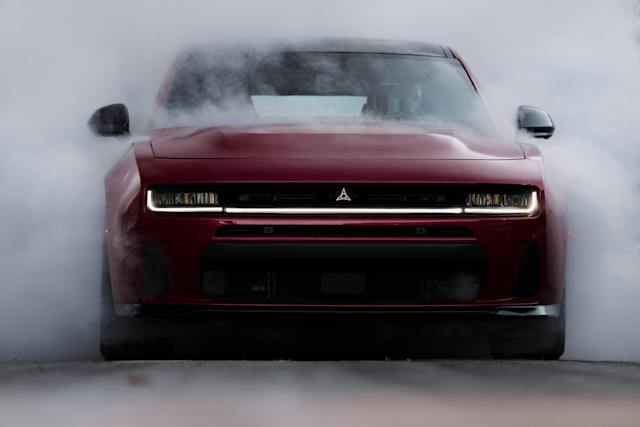
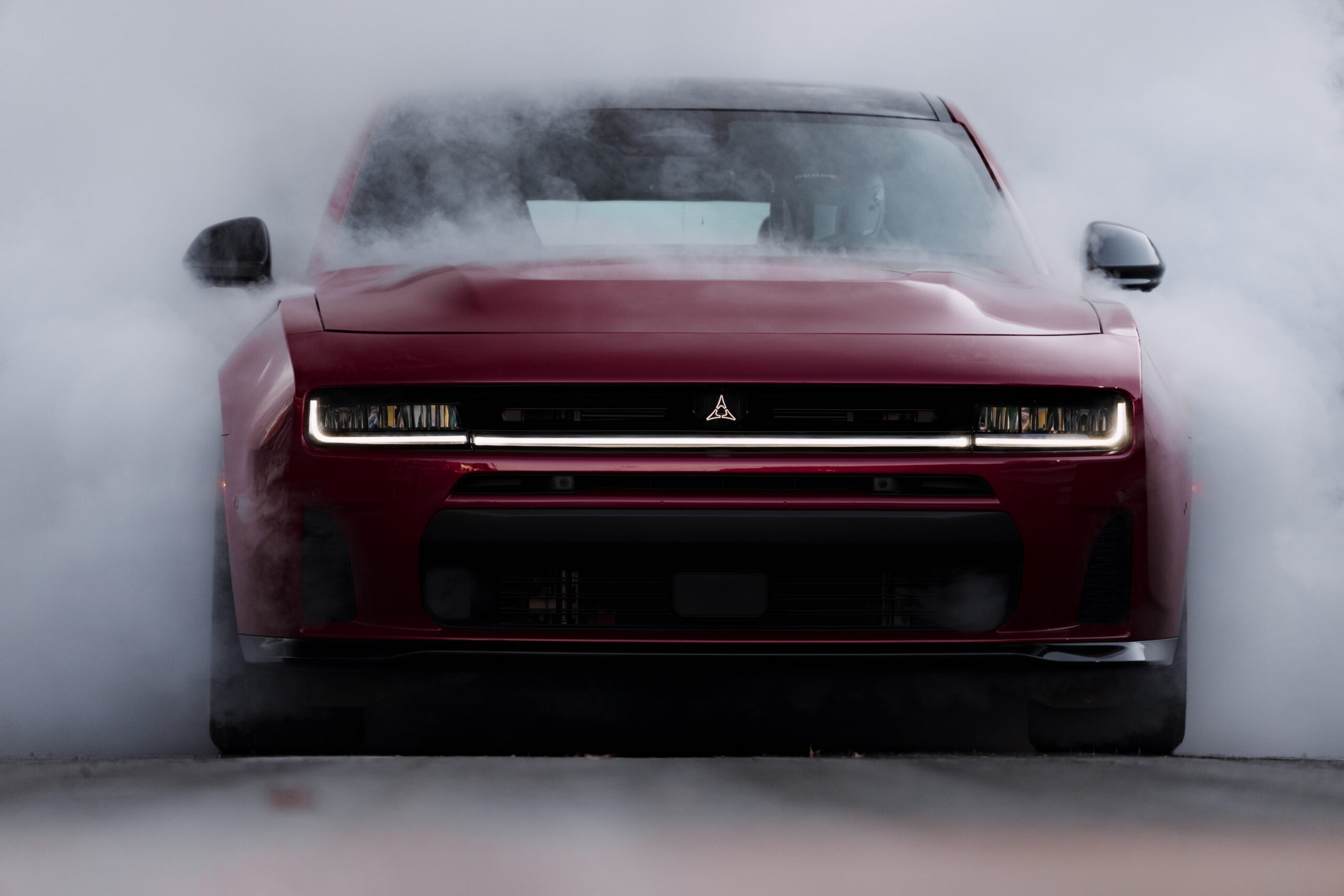
A V-8 that Dodge appeared to have written out of its future is reportedly being written back in. According to internal planning documents reviewed by Automotive News, the supercharged 6.2-litre Hellcat engine will return to the Dodge Charger, arriving at the end of 2027 as a 2028 model year launch. Mopar Insiders has also reported the story and published what it says are the same supplier-facing documents.
If accurate, it marks one of the more striking reversals in recent American performance car history, and it lands squarely at the feet of the man who spent years championing the Hellcat in the first place.
What the reports actually say
The documents described by Automotive News are planning papers sent to suppliers, which is the sort of material that tends to firm up well before a manufacturer is willing to talk about it publicly. They confirm a Hellcat V-8 for the eighth-generation Charger, with a launch window at the end of 2027 ahead of a 2028 model year on sale.
Dodge, as you would expect, is saying nothing. The brand told Road & Track it does “not comment on future product plans,” which is the standard response and tells us precisely nothing either way.
Worth noting for anyone squinting at the paperwork: internal Dodge code for the model appears to be “HEV.” In this context that means Hellcat-equipped vehicle, not hybrid.
Rear-wheel drive and automatic only
The Hellcat Charger is said to differ from the rest of the range in a way that matters to enthusiasts. Every current Charger comes standard with all-wheel drive. The Hellcat variant is reportedly rear-wheel drive only.
It is expected to be paired with the ZF 8HP95 automatic and offered without a manual gearbox, despite the old Challenger Hellcat having one. The engine is reportedly planned for both two-door and four-door Charger models, so the coupe body style gets the supercharged V-8 as well.
That combination, rear drive, automatic only, two or four doors, is a fairly clear statement of intent. This is a car built for straight-line violence and tyre smoke rather than lap records, which is exactly the brief the Hellcat has always served.
How many will be built, and what else is in the 2028 range
Dodge intends to build around 12,000 Charger Hellcats a year, according to the supplier-sourced information in the Automotive News report. That is a serious number, not a limited-run special, and it suggests the model is being planned as a volume performance flagship rather than a collector’s trinket.
The rest of the 2028 Charger line-up is said to carry on unchanged. The R/T, Scat Pack and Super Bee continue with Hurricane inline-six power, and the all-electric Daytona is scheduled to continue into 2028 as well. Dodge has already rolled out the six-cylinder, 600bhp Charger Super Bee, so the electric and inline-six cars are not going anywhere.
The picture that emerges is a range with three distinct powertrain philosophies sitting side by side: electric, twin-turbo straight six, and supercharged V-8. That is an unusual amount of choice for a single nameplate, and it says something about how uncertain the market still is about where performance cars are heading. Ford has taken a similar bet, keeping a supercharged V-8 at the top of its Mustang range while electrification reshapes everything beneath it.
Why the V-8 is coming back now
The Hellcat was dropped from Dodge and Ram’s North American line-up under then-Stellantis CEO Carlos Tavares, who resigned abruptly in December 2024. His tenure was defined by cost discipline and a hard push toward electrification, and the supercharged V-8 was one of the casualties.
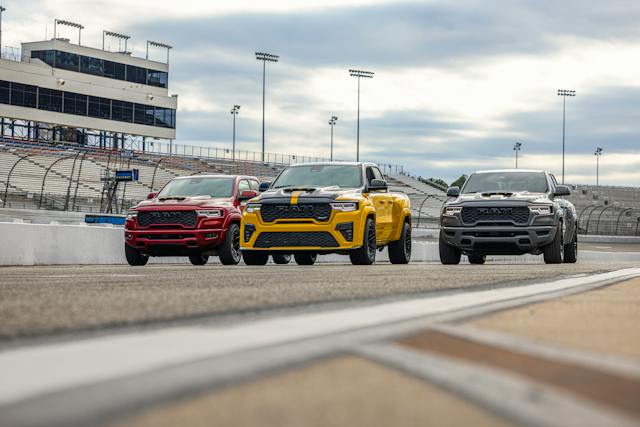
Tim Kuniskis came out of retirement to lead Ram, then was promoted to run Stellantis’ North American brands along with the region’s marketing and retail strategy. What followed is a fairly unambiguous reversal of the Tavares-era playbook. Kuniskis ordered the Hemi V-8 back into Ram’s light-duty pickup, and Ram has since resurrected the Hellcat-powered TRX performance truck with 777bhp, an increase of 75bhp over its predecessor. Ram also launched a new Rumble Bee line of V-8 street trucks, with the supercharged version going on sale in the first half of 2027.
A Hellcat Charger in 2028 fits that pattern exactly. The brand is rebuilding the V-8 ladder from the bottom up, and the Charger is the obvious place to put the top rung.
There is a wider context here too. Stellantis has been recalibrating its electric plans across the group, and supplier demand has shifted with it. Reports that Nidec is eyeing an exit from its EV motor business underline how quickly the assumptions underpinning those programmes have changed.
The fitment question
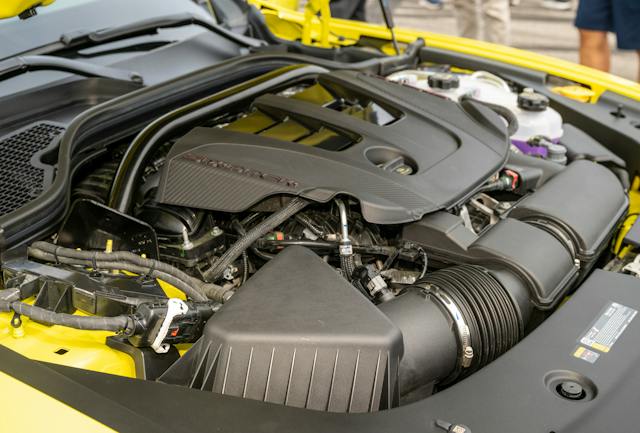
None of this matters if the engine will not physically go into the car, and that has been the quiet question hanging over the new Charger since it launched.
At the Charger Six Pack reveal, Dodge CEO Matt McAlear came close to confirming it. Asked “theoretically” whether a Hellcat would fit, he said: “Theoretically, I’ll let you come up here and take a look and get your tape measure out … but don’t be surprised if it would fit.”
Kuniskis, meanwhile, has been candid about why a smaller V-8 would not be enough. He has said the only way an optional Hemi makes sense now is “I have to go all the way up to a Hellcat,” noting that the 5.7-litre would be outgunned by the inline-six already in the range. That logic points in one direction only.
What happens next
The reports are consistent, the sourcing is supplier-level rather than speculative, and the corporate behaviour around them fits a clear pattern. But nothing is confirmed, and Dodge is not going to confirm it until it wants to.
The timeline to watch is the end of 2027. If a Hellcat Charger is going to appear for the 2028 model year, development mules and further supplier leaks should surface well before then. A 12,000-a-year production target is not something a manufacturer can hide for long.
For now, the most interesting thing about this story is not simply that a V-8 might return. It is that Dodge appears to be keeping the electric Daytona alive while putting a supercharged V-8 back at the top of the tree. That is not a company that has decided what the future looks like. It is a company that has decided to sell customers whatever they are willing to buy, and right now plenty of them still want a Hellcat.
We covered dodge charger hellcat could in more detail elsewhere.