
The Paris Motor Show has always carried a certain weight. It is the event where French brands flex on home turf, where concepts get their first airing and where the industry takes stock of itself. But the 2024 edition felt different, and not just because of the usual razzle of concept unveilings and press conference theatrics.
For the past few years, the dominant narrative in European motoring has been one of retreat. Chinese manufacturers have been steadily claiming market share across the continent, and that pressure has been felt keenly in Britain, where Chinese brands such as BYD, MG and Omoda have steadily increased their UK market share. Against that backdrop, the Paris show could easily have been a defensive affair: legacy makers huddling together, reminding everyone of their history and hoping the storm would pass.
It did not feel that way. If anything, the show suggested that Europe’s established car makers have rediscovered something they had been in danger of losing: a sense of urgency, and a willingness to fight.
Stellantis steals the show
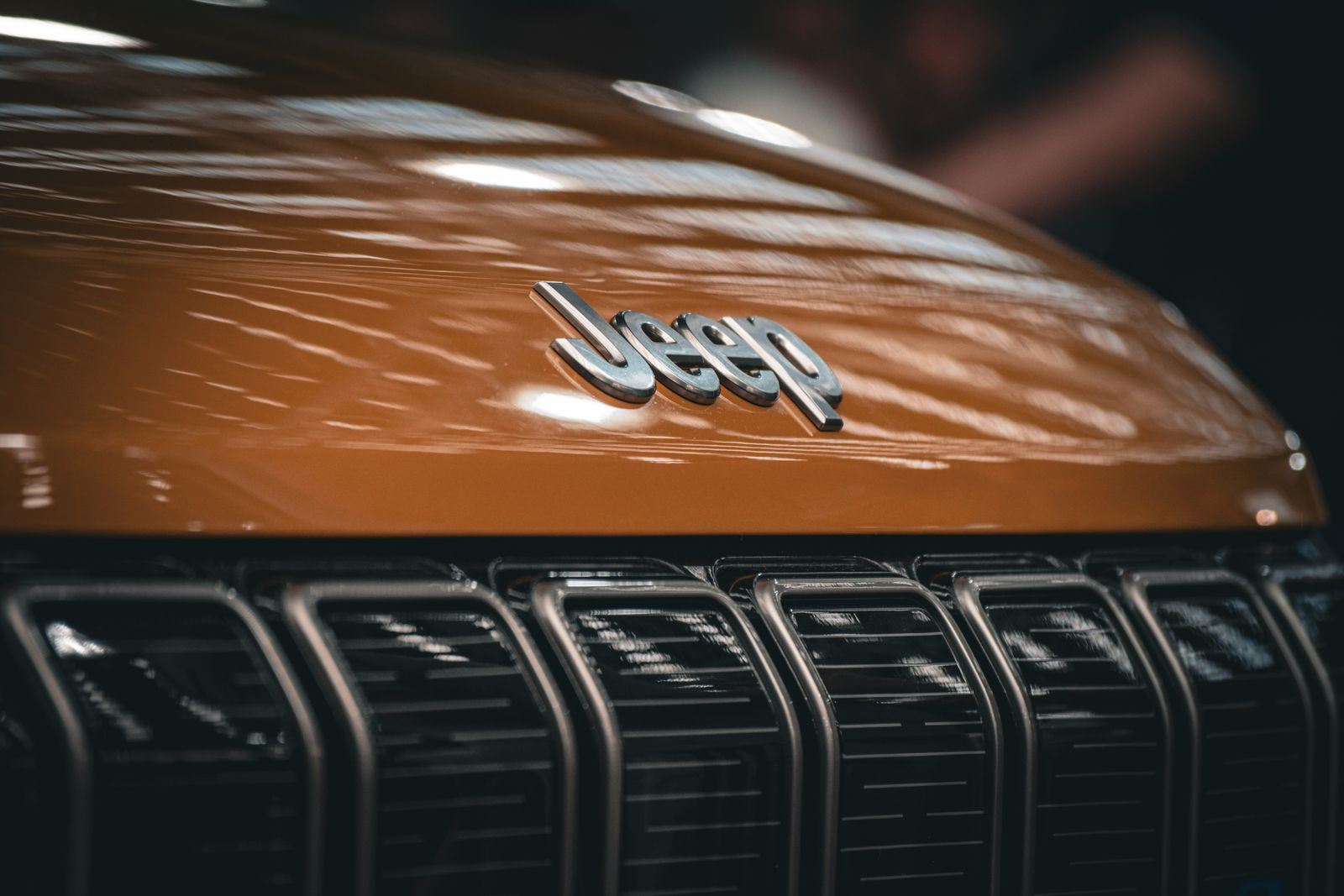
Walk the halls at Paris and it was hard to miss the Stellantis presence. The conglomerate, whose brands include Citroën, Peugeot, Vauxhall, Fiat, Alfa Romeo and Jeep, brought some of the most talked-about concepts of the entire event. These were not idle design exercises destined for a glass case in a design studio. Much of what was displayed is heading to production, and it is heading there quickly.
That last point matters enormously. For years, the knock on European legacy manufacturers has been their development cycles: several years from sketch to showroom, while Chinese rivals bring cars to market far more quickly. Stellantis appears to have absorbed that lesson. The concepts shown in Paris preview new design languages for the group’s brands, and the timelines attached to them suggest the group is moving with a speed that would have been unusual for a European maker a decade ago.
The design direction itself was notable too. Rather than chasing a generic, futurist aesthetic, several Stellantis concepts leaned into the distinct identities of their respective marques. That is a deliberate strategy, and it reflects a wider realisation across the industry: if you cannot beat Chinese manufacturers on price or raw production scale, you can compete on character, heritage and the kind of emotional pull that a badge with decades of history still commands.
New leadership, new approach
A good deal of that shift can be traced to Antonio Filosa, whose arrival at the helm of Stellantis has coincided with a noticeably different tone. Filosa has been clear that the group’s brands need to double down on what makes them distinctive rather than blurring into one another. In an era when platform sharing and badge engineering are industry norms, that is a more radical position than it sounds.
At the same time, he has been candid about the need to borrow from the Chinese playbook when it comes to speed, agility and efficiency. Development timelines are being compressed. Decision-making is being pushed closer to the brands. The result, at least as presented in Paris, is a group that looks less like a sprawling bureaucracy and more like a collection of focused marques with a shared sense of purpose.
Whether that translates into commercial success is another question entirely. But the direction of travel is unmistakable, and it is a marked departure from the defensive posture that has characterised much of the European industry’s response to Chinese competition.
Renault Group builds on momentum
Renault has arguably been the most convincing European success story of the past two years, and the group used Paris to reinforce that momentum. The Renault E-Space concept signalled where the core brand is heading, while the Alpine A310 Vision concept offered a striking reminder of what the group can do when it lets its designers off the leash.
The A310 Vision, in particular, is worth dwelling on. It resurrects a historic nameplate and reinterprets it for an electric era, which is exactly the kind of heritage-meets-modernity playbook that European brands are uniquely positioned to execute. You can read more about the Alpine A310 Vision Concept and what it signals for the marque’s future direction.
Alpine has been quietly building a case for itself as a genuine performance brand rather than a niche curiosity, and concepts like this one suggest the group understands that heritage is not just nostalgia. It is a competitive asset, particularly against rivals who have no equivalent back catalogue to draw on.
The wider European picture
None of this is happening in a vacuum. The European car industry is under real strain. Plant closures have been announced or threatened across the continent. Job losses are mounting. Profits at several major manufacturers have shrunk, and the cost of transitioning to electric vehicles while simultaneously defending market share against cheaper imports has stretched balance sheets thin.
My own assessment is that Stellantis and Renault are the mainstream players with the most to lose from Chinese inroads, and the reasoning is hard to argue with. Both groups rely heavily on volume sales in segments where Chinese brands are now competitive on price, specification and increasingly on quality too. The pressure is not theoretical. It is showing up in showrooms and in registration figures across Europe.
For buyers, that competition has largely been a good thing: better-equipped cars at keener prices, with warranty terms that would have seemed implausible a decade ago. For legacy manufacturers, it has been a wake-up call delivered in quarterly sales reports.
A view from Beijing to Paris
Having attended the last two major Chinese motor shows in Beijing, I expected Paris might feel parochial by comparison. The scale of the Chinese events, the sheer volume of new metal, the pace of change on display: it is genuinely impressive, and it would be easy for a European show to look tame next to it.
It did not. Paris did not feel like a backwards-looking village fete. It felt like a show where the participants understood the assignment. The concepts were sharp, the messaging was coherent, and the sense of renewed focus was palpable. The European talent pool, whatever its structural challenges, clearly understands what is needed to stay relevant. That is not a small thing. The 2026 edition of the show is already shaping up to be a very different affair, with Chinese brands set to flood the show while some established European names stay away. How the legacy makers respond over the next two years will tell us a great deal.
There is a temptation, when watching an industry under pressure, to assume the outcome is predetermined. History suggests otherwise. Brands that look finished can reinvent themselves with startling speed, and complacency, not competition, is the real enemy.
Why Europe’s legacy makers deserve more patience
The challenges facing European manufacturers are real and they are not going away. Plant closures will continue. Job losses will continue. Some brands will not survive the transition, and pretending otherwise helps nobody. The economics of building cars in Europe, with its energy costs and labour agreements, remain difficult to square with the pricing power of Chinese imports.
But Paris made a case for patience. Stellantis under Filosa looks like a group that has stopped waiting for the storm to pass and started building for the conditions ahead. Renault and Alpine are demonstrating that heritage and innovation are not mutually exclusive. The concepts on display were not the work of an industry in denial. They were the work of an industry that has looked at the competition, understood what it is up against, and decided to respond on its own terms.
That is not a guarantee of success. It is, however, a reason not to write anyone off just yet. The European car industry has been counted out before, and it has a habit of surprising people. On the evidence of Paris, it may be about to do so again.
Related: xpeng 500 000 car.

One Comment