
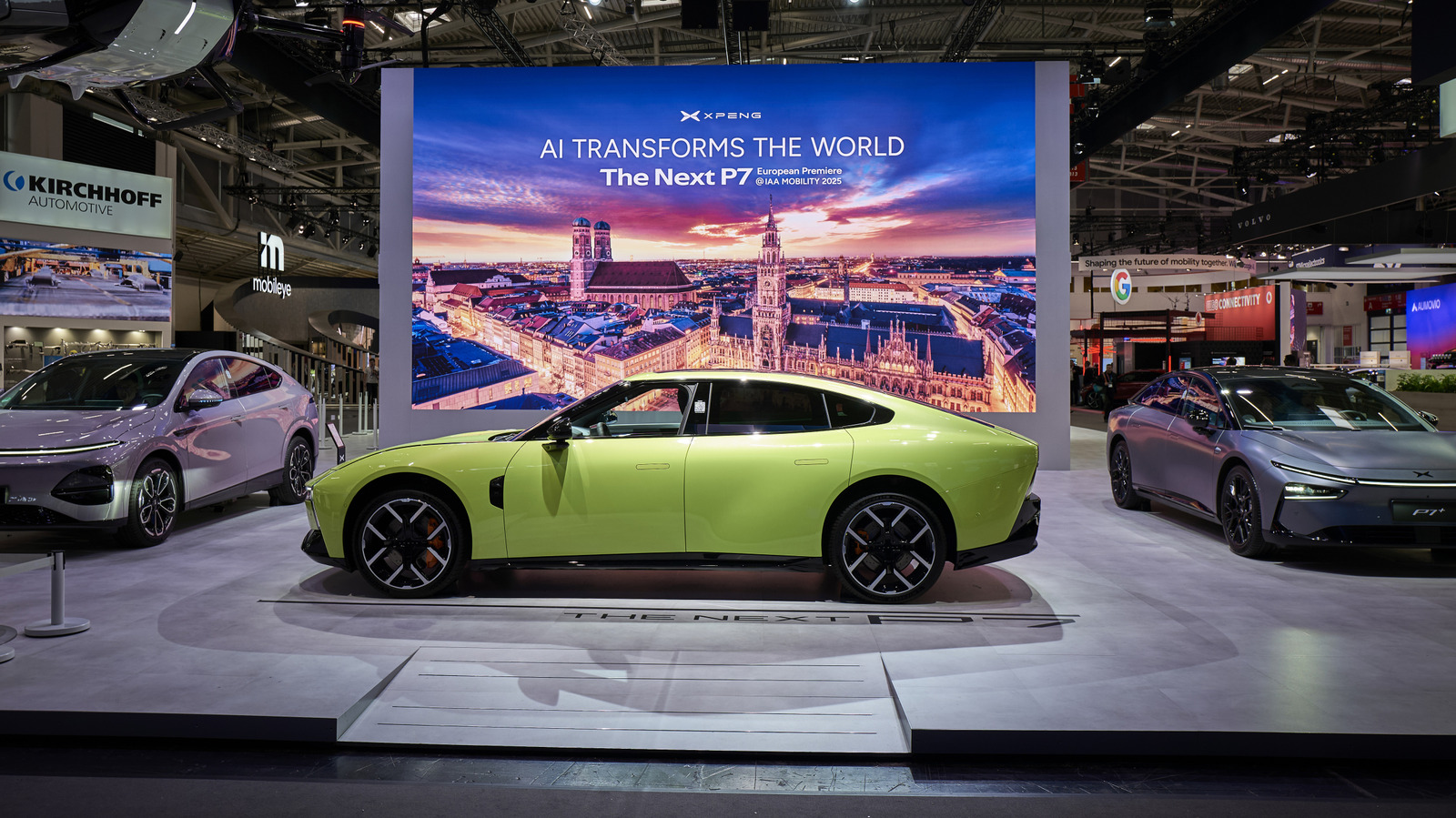
He Xiaopeng’s one-million target
Chairman and CEO He Xiaopeng has set out an ambition to sell one million vehicles a year by 2030, with 500,000 of those earmarked for Europe. That would make the continent Xpeng’s single largest market by some distance.
The scale of the gap between ambition and reality is the story here. Xpeng is not a niche curiosity in Europe, but neither is it a volume player. Its global deliveries of just under 430,000 last year put it in the same conversation as established mid-sized manufacturers, yet its European footprint remains modest.
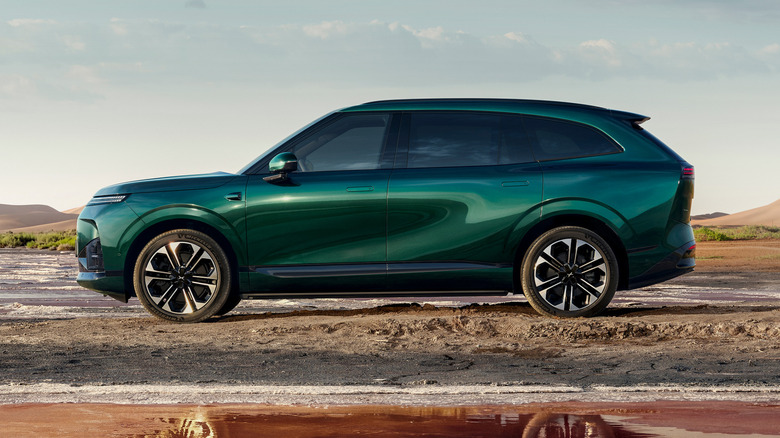
Sixty thousand cars in five years
Xpeng’s European story began in late 2020 with the G3 in Norway, a familiar entry route for Chinese brands testing demand in a market where EV incentives were generous and buyer habits already leaned electric. Five years on, the cumulative European total stands at roughly 60,000 cars.
That works out at an average of around 12,000 vehicles a year across the continent. Reaching 500,000 annually by 2030 would require a transformation in distribution, brand recognition and manufacturing capacity that few observers would call straightforward. The company’s own executives acknowledge as much.
The scale of the mountain to climb
Putting Xpeng’s European total in context is instructive. Kia sold 507,304 cars in Europe last year and Ford managed 426,459, both from decades of dealer networks, fleet relationships and brand loyalty. Ford’s own trajectory is the cautionary tale: it sold around one million cars a year in Europe roughly a decade ago. If a company with more than 115 years of European manufacturing history can lose more than half its volume in ten years, the idea that positions are permanent looks shaky. It also shows how quickly a determined newcomer could theoretically climb, provided the product and pricing land correctly.
The competitive backdrop is not standing still either. Tesla continues to refresh its line-up, with the Model 3 recently gaining a larger central display and more power in some markets, while legacy brands are reinventing themselves at pace. The Jaguar Type 01 revealed: £120,000 electric GT spearheads brand’s Bentley-rivalling reinvention is a case in point, and our report on the Tesla Model 3 Gets 16-Inch Screen and More Power – But Not Everywhere covers the other end of that refresh cycle.
Local production, not a flood of exports
Xpeng’s answer to the volume problem is to build in Europe rather than export at scale. The company intends to partner with a local manufacturer, either establishing a new factory or operating from an existing one, and He Xiaopeng told Reuters the facility will focus on “mid-level” vehicles rather than range-topping models.
That decision is shaped in part by regulation. Proposed EU local-content rules would require a minimum amount of European content for electric vehicles, and any manufacturer planning meaningful European volume needs to prepare for them. Building locally also insulates Xpeng from shipping costs, potential tariffs and the logistical friction of moving thousands of cars halfway around the world.
The partnership model is a pragmatic choice. Xpeng avoids the capital outlay and planning risk of a greenfield factory while gaining access to established production expertise, supplier networks and a trained workforce.
Graz is the launchpad
The template already exists. Contract manufacturer Magna Steyr builds the Xpeng G6, G9 and P7+ sedan at its factory in Graz, Austria, and the site will also produce the new G9L. Xpeng vice president Yeqing Zheng told Reuters that output at Magna is “not even sufficient” to meet its sales goal, a candid admission that current capacity is a fraction of what the 2030 plan demands.
Graz therefore functions as a proof of concept rather than the finished answer. It demonstrates that Xpeng can assemble vehicles in Europe to European standards, but scaling from there to half a million cars a year would require either a substantial expansion of that arrangement or an entirely separate facility.
The G9L takes centre stage
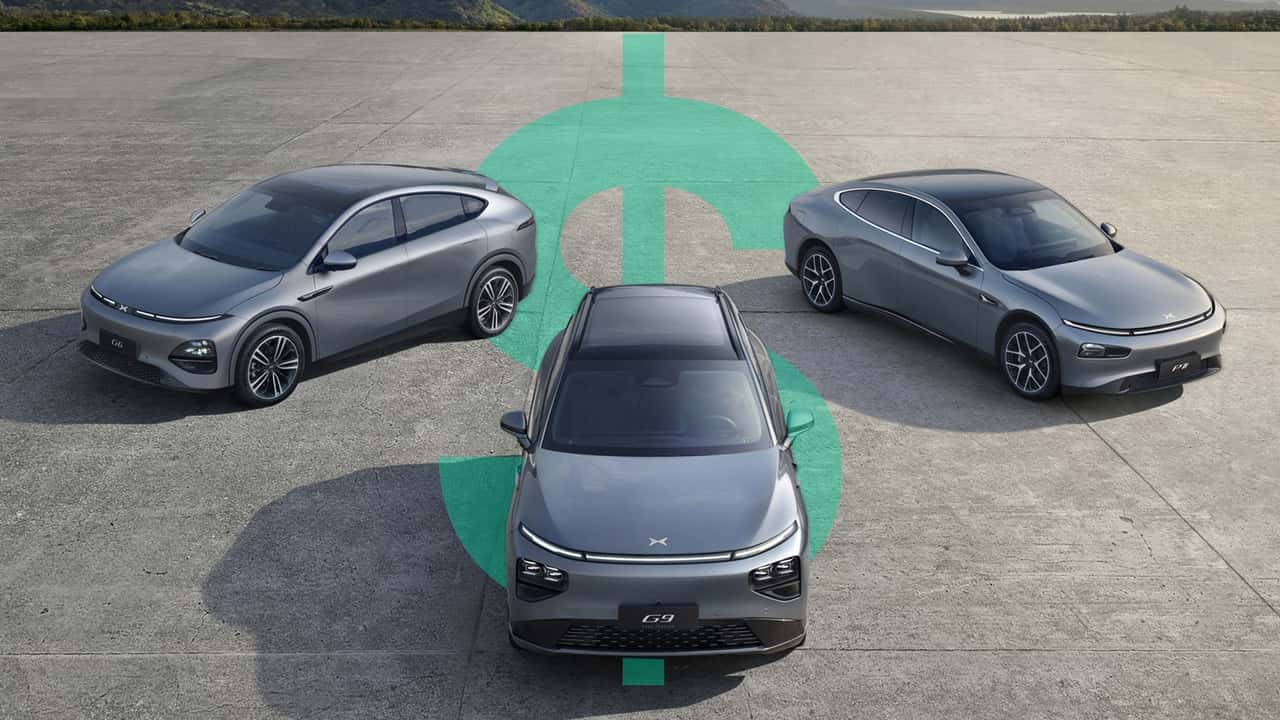
The G9L, Xpeng’s new range-extender and battery-electric SUV, passed a production trial at Graz on 26 February. The company has not said how many it plans to build there, and volumes will likely follow demand rather than a fixed schedule. That flexibility is sensible for a manufacturer still establishing its European footing, though it also means the G9L is unlikely to deliver the step change in volume on its own.
Range-extender powertrains are an interesting choice for Europe. They offer buyers a familiar refuelling experience with electric drive for most journeys, and they sidestep some of the charging infrastructure concerns that still linger in parts of the continent. Whether European buyers embrace the format at scale remains an open question.
What the G9L offers
The G9L is priced from €74,600 in Germany, roughly £63,000 at current exchange rates, and that figure applies to the German market rather than the UK. The range-extender version pairs a turbocharged 1.5-litre inline-four with an electric motor and a 63 kWh battery, producing a combined 577 PS and 695 Nm of torque. Two all-electric versions are confirmed: a base model with a 91.9 kWh battery and a top variant with a 110 kWh pack. The all-electric range-topper uses two electric motors for the same combined 577 PS and 695 Nm.
That is serious performance for a family SUV, and the pricing positions it against established premium electric models rather than undercutting them aggressively. Xpeng is clearly not pursuing a pure value strategy in Europe, at least not with its most expensive model.
China’s cost advantage and the limits of localisation
Even as it assembles vehicles in Europe, Xpeng expects to source many parts from China, where it retains a significant cost advantage. That is a practical reality of the global supply chain rather than a loophole, but it does highlight the tension at the heart of the localisation push.
Meeting local-content rules while preserving Chinese cost advantages will require careful management. The more Xpeng localises, the more it erodes the very advantage that makes its cars competitive. The less it localises, the harder compliance becomes. Somewhere in that balance sits the company’s European future.
A five-year plan that has to deliver
Xpeng’s European ambition is bold to the point of audacity. Going from 60,000 cumulative sales to 500,000 a year within a decade means building a brand, a dealer or direct-sales network, and a manufacturing base almost from scratch, all while competing with manufacturers that have been doing this for a century.
What Xpeng has going for it is timing. European EV adoption continues to climb, established brands are still finding their footing on pricing and technology, and the regulatory environment rewards exactly the kind of local investment Xpeng is proposing. Graz gives it a credible starting point and the G9L gives it a car worth talking about, but the company’s own executives are honest that current capacity falls well short of the plan. Whether that is enough to turn 60,000 cars into 500,000 a year is the question the next five years will answer.





One Comment