What Has Happened
The bulletin, numbered PIP6132, was sent to Chevrolet dealerships last month. It covers 2027 model-year Corvettes equipped with the LS6 V8, the 6.7-litre unit that replaced the long-serving 6.2-litre LT2 across the Stingray, Grand Sport and Grand Sport X lines.
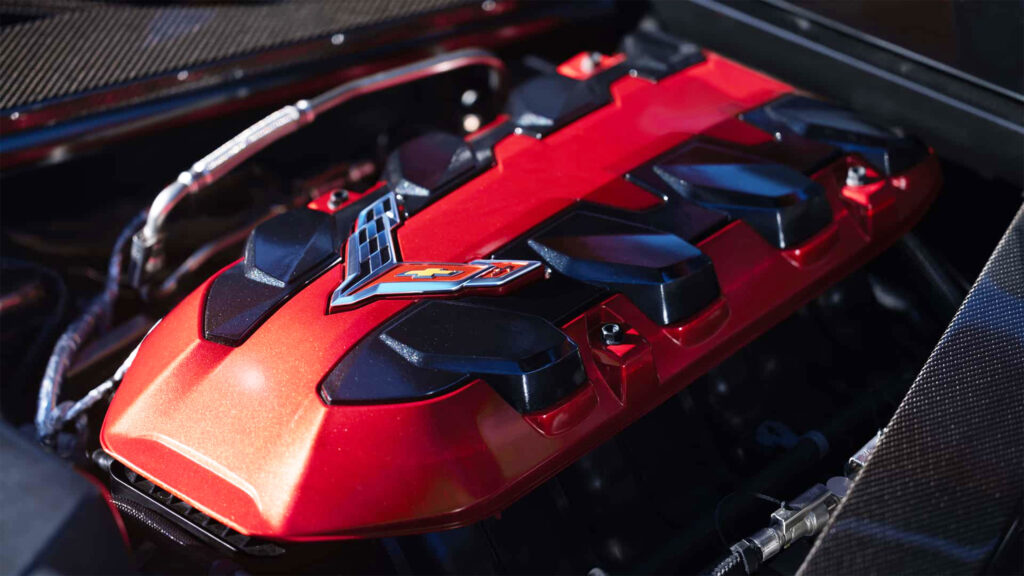
According to the document, the leak originates between the oil cooler adapter and the oil pan. That is a comparatively accessible area of the engine bay, which matters for the repair procedure, but it is also a sealing joint that has to cope with the pressure and thermal cycling of a V8 that produces considerably more output than the engine it replaced.
GM has not framed the issue as widespread. In a statement, the company said: “We are aware of stories covering service bulletin PIP6132, regarding a potential oil-leak condition on certain Corvette vehicles equipped with the LS6 V8 engine. A limited number of engines may be affected, but the issue has been addressed.”
How to Spot the Leak
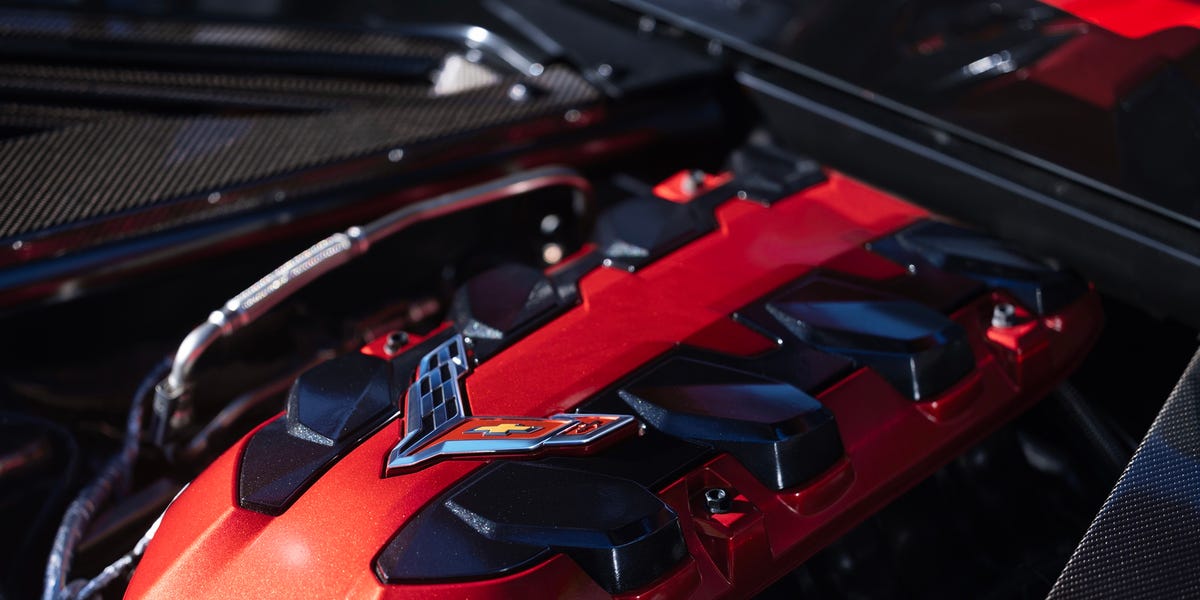
This is not the sort of failure that leaves a trail of oil down the driveway in most cases. GM’s guidance notes that oil has not been observed gushing from the area. Instead, the telltale sign is bubbling around the front or rear mounting locations of the oil cooler adapter while the engine is running.
That bubbling points to a high-pressure port seal that is not doing its job. In practice, owners or technicians may also simply find engine oil underneath the vehicle, which is the more obvious symptom but a less specific one, since a Corvette can weep from any number of places over time.
The distinction matters because a slow, pressurised seep can be easy to dismiss. Anyone running a 2027 Corvette with the LS6 who notices oil where it should not be, or a faint bubbling noise at idle near the front of the engine, has a clear reason to book the car in.
The Fix and Torque Procedure
The repair itself is targeted rather than invasive. Technicians are instructed to replace two oil pan high-pressure port seals located between the oil pan and the oil cooler adapter. Crucially, the oil cooler and the cooler adapter do not need to be separated to carry out the work, which keeps the job contained.
What follows is a torque sequence that service departments will need to follow precisely. The four oil cooler adapter bolts must be run down evenly and tightened in sequence, initially to 5 Nm, and then to 15 Nm on the final pass. Skipping the staging or tightening the bolts out of order risks distorting the adapter face and creating a fresh leak in the same place.
It is a small job on paper. It is also the kind of small job that rewards patience, and GM’s decision to spell out the sequence in the bulletin suggests the company wants to avoid repeat visits.
Bulletin, Not Recall
PIP6132 is a service bulletin rather than a safety recall, and the distinction is not a technicality. A recall is a formal safety campaign, usually notified to regulators and pursued until every affected vehicle is accounted for. A service bulletin is technical guidance for dealerships: it tells technicians what to look for and how to fix it when a customer arrives with the symptom.
Chevrolet’s advice to owners who find a leak is straightforward: have a dealer carry out the repair rather than attempting it at home. Given the torque staging and the need to reseat high-pressure seals correctly, that is sensible guidance rather than a bid to protect dealer revenue.
GM’s Official Response
GM’s statement goes further than acknowledging the bulletin. “The service bulletin reinforces guidance for service departments that may encounter this condition,” the company said. “As always, customers with questions or concerns about their vehicle should contact their Chevrolet dealer for assistance. Chevrolet is committed to the quality and reliability of its vehicles and will provide additional information if warranted.”
The phrasing is careful. GM is not describing a design flaw or announcing a parts campaign. It is saying that a limited number of engines may be affected, that the issue has been addressed, and that dealers now have the instructions they need. The offer of further information if warranted leaves the door open without committing to anything.
For owners, the practical takeaway is that the fix is known and documented. That is a better position than an unexplained weep from a new engine with no published remedy.
Engine Context: The LS6 V8
The 6.7-litre LS6 V8 was unveiled seven months ago and powers the 2027 Corvette Stingray, Grand Sport and Grand Sport X. It produces 535 bhp and 705 Nm of torque.
Those figures represent a meaningful step up from the outgoing 6.2-litre LT2 V8, which was capped at 495 bhp with the optional performance exhaust and produced 630 Nm. The LS6 adds 40 bhp and 75 Nm over the best version of its predecessor, and it does so while sitting at the heart of a model range that now spans everything from the standard Stingray to the ZR1X.
A new engine in a new model year is always a period of adjustment. Sealing joints, torque specifications and supplier tolerances get validated in the real world as well as on the test bench, and a service bulletin issued within months of launch is the system working as intended rather than evidence of a fundamental problem.
Production Snapshot from Bowling Green
The scale of the LS6 rollout is visible in figures published for the Bowling Green assembly site. As of the end of September, 2027 model-year output includes 3,691 Stingrays fitted with the 6.7-litre V8, 3,204 Grand Sports, 1,293 Z06s, 285 Grand Sport X models, 380 ZR1s and 269 ZR1Xs.
Production of the 2027 Corvette began earlier this year, and Chevrolet is still building 6.2-litre Corvettes alongside the new LS6 cars. That overlap is normal during a transition, but it also means the LS6 is not yet the only V8 game in town at Bowling Green.
Against those volumes, a limited number of affected engines is a small proportion. It is also a reminder that the more units a new engine puts on the road, the more likely a minor sealing issue is to surface in the field rather than at the factory gate.