The US is reopening the rulebook on headlights
The US is reopening the rulebook on headlights. On 6 October, the National Highway Traffic Safety Administration announced it plans to modernise Federal Motor Vehicle Safety Standard No. 108, the decades-old regulation that governs everything from how bright a car’s lamps can be to how high they sit and where they point. The review will run under docket NHTSA-2026-1981, with comments on the scope of the negotiation and committee membership applications due by 9 November.
Nothing changes yet. No new requirements take effect through the announcement, and no completion date has been given. What NHTSA has done is set in motion a negotiated rulemaking that will bring together up to 18 stakeholders to examine glare, headlamp height and aim, and the newer lighting technologies that current rules struggle to accommodate.
The review addresses a genuinely sore subject for American drivers. The question is whether it produces a rule that finally aligns with international standards, or simply writes another US-only framework that most manufacturers ignore.
What the review actually covers
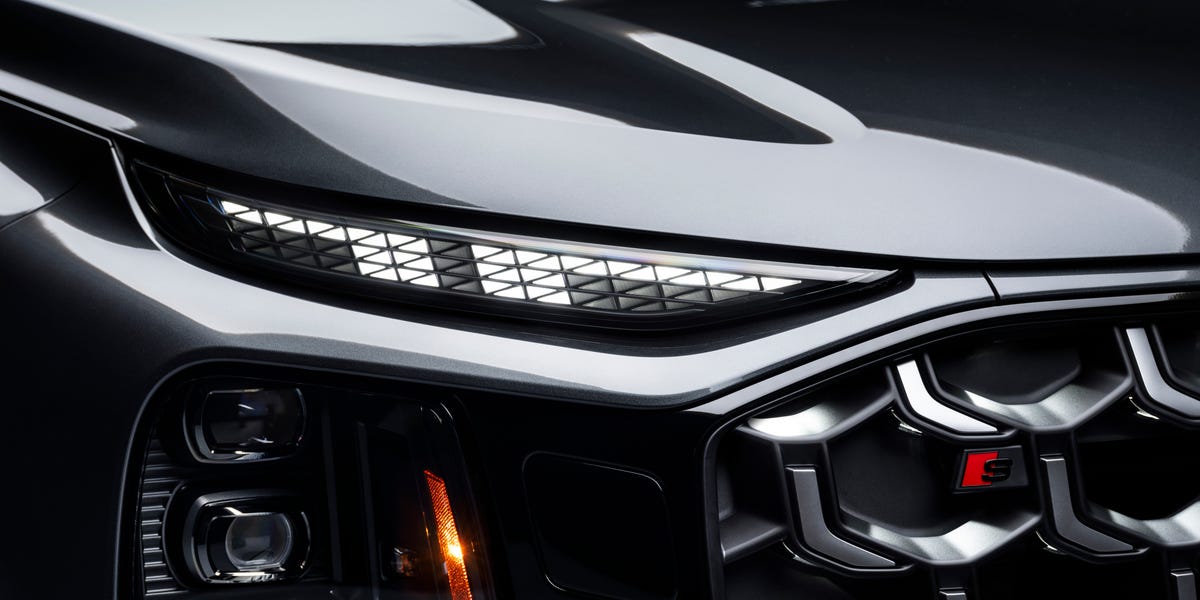
FMVSS 108 is a sprawling piece of regulation, and NHTSA’s review touches several parts of it. The agency has named LEDs, automatic high beams, dusk sensors and replaceable light sources as technologies in scope, alongside testing procedures for plastic optics and replacement lenses.
That last detail matters more than it might appear. Plastic headlamp lenses degrade over time, clouding and yellowing as they age, which scatters light and worsens glare for everyone else on the road. A testing regime that accounts for how a lamp performs after years of UV exposure, rather than just when it leaves the factory, would be a meaningful shift.
NHTSA has also stated an interest in aligning with international standards. That phrase carries a lot of weight, and it is deliberately vague. Alignment could mean anything from mutual recognition of European-type approvals to a loose commitment to compare notes. The agency has not promised wholesale adoption of European adaptive-headlight regulations, and that remains an open question.
How the process works, and what to watch
This is not a conventional notice-and-comment rulemaking. NHTSA is using negotiated rulemaking, a process designed to build consensus among parties who would otherwise spend years fighting each other through formal objections. Up to 18 stakeholders will sit on the committee, drawn from manufacturers, suppliers, safety advocates and other interested parties.
The absence of a completion date is worth noting. Negotiated rulemaking can collapse if the committee fails to reach consensus, and even a successful negotiation is followed by a proposed rule, a comment period and a final rule. Anyone expecting relief on glare in the next model year is going to be disappointed.
The clearest signal will come from the committee itself. If NHTSA stacks the negotiated rulemaking with manufacturers who have no interest in redesigning their lamps for a global standard, the outcome is predictable. If it includes European regulators, lighting suppliers and safety researchers with a genuine mandate to harmonise, the review could produce something that actually changes what gets fitted to cars.
The 9 November deadline for comments and membership applications is the first concrete checkpoint. After that, watch for whether the committee’s scope explicitly references UNECE regulations, the international lighting standards that European manufacturers already build to. That single detail will tell you more about the likely outcome than any press release.
The 2022 rule that changed almost nothing
This is not NHTSA’s first attempt at modernising its lighting rules. In February 2022, the agency issued a final rule permitting adaptive driving beam systems on new vehicles, amending the same FMVSS 108 standard and setting performance requirements.
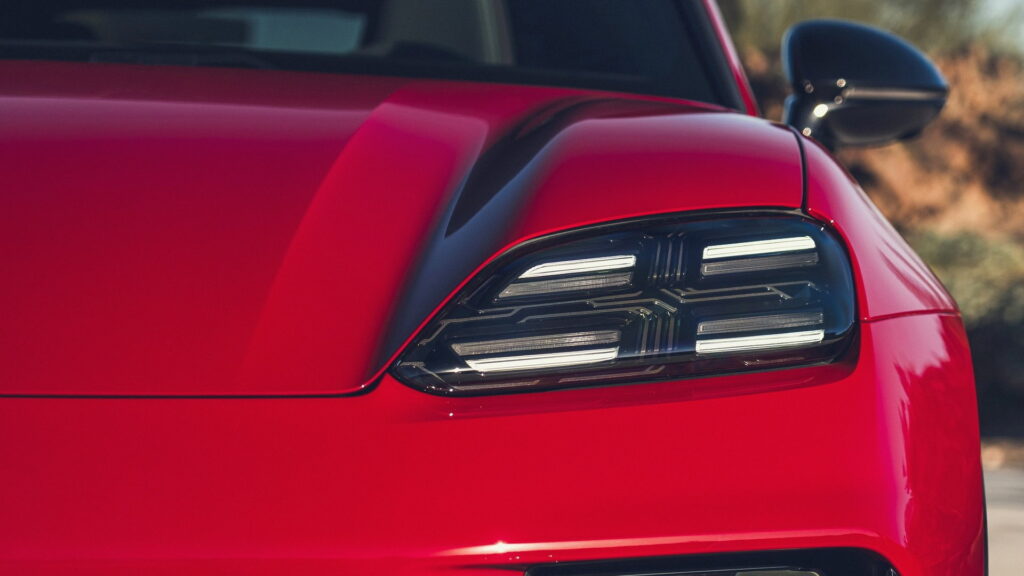
The technology is genuinely clever. ADB systems direct more light toward unoccupied parts of the road while reducing illumination around other vehicles, helping drivers spot pedestrians, animals and obstacles without dazzling oncoming traffic. European drivers have had access to it for years.
But rather than harmonising with international standards, NHTSA wrote its own ADB requirements inside the existing FMVSS 108 framework. Headlights already fitted to cars in Europe and elsewhere did not meet them. According to Road & Track, the result was almost no change at all: outside Rivian and Tesla, no other manufacturer has engineered a headlight specifically to meet those US-specific regulations.
That is a striking outcome for a rule intended to unlock new safety technology, and it explains why this review is being watched closely. Rivian, meanwhile, has had other regulatory matters on its plate recently, including a Rivian Recalls Almost 99,000 R1T, R1S and R2 Models Over Rear-View Camera Software Fault, which serves as a reminder that meeting US rules is a moving target for every manufacturer.
The glare problem in numbers
Glare is not a niche complaint. An AAA survey released in March found that 60% of drivers consider glare a problem after dark. Among those affected, 73% said it had worsened over the past decade, and 92% named oncoming headlights as their primary concern. About a third also reported problems with glare in their mirrors.
The pattern is not confined to the US. A 2025 UK study found that 96% of drivers think most or some headlights are too bright, a near-unanimous verdict that mirrors the American findings almost exactly.
Two different markets, two different regulatory regimes, and the same complaint from drivers. That convergence is the strongest argument for treating glare as a design and enforcement problem rather than a matter of national rulebooks.
The administrator’s case
NHTSA administrator Jonathan Morrison framed the review as a response to rules that have fallen behind the technology they govern.
“Today’s standards do not allow automakers to deploy the latest safety-improving lighting technologies, so we are bringing key experts and stakeholders together to modernize our standards and address potential causes of glare,” he said. “This collaborative approach will allow us to update outdated regulations, foster innovation, and keep everyone on our roads safer.”
The logic is sound. A standard written before LEDs were commonplace cannot sensibly regulate them, and manufacturers have little incentive to develop lighting systems they cannot legally fit. But the 2022 experience suggests that the gap between announcing a modernisation and delivering one is where these efforts tend to stall.
Why glare may not disappear
Even a well-drafted rule will not solve glare on its own. Road & Track notes that poor modifications sometimes made to headlights on older cars will likely keep the problem alive regardless of what NHTSA writes. Lifted trucks with badly aimed aftermarket lamps, bulbs swapped into housings never designed for them, and cloudy lenses on ageing cars all contribute to the problem, and none of them are addressed by rules governing new vehicles.
Carscoops makes a related point: whether the review delivers meaningful relief depends entirely on the rules that eventually emerge. A negotiated rulemaking that ends in a weak consensus is worse than no rule at all, because it locks in the status quo for another decade.
There is also the question of scope. The US has been moving in a distinctly deregulatory direction on vehicle standards elsewhere, as shown by the decision to US Slashes Fuel Economy Rules: 34.9 mpg by 2031 as CAFE Credit Trading Axed, where the figures are US gallons. Whether the same administration that rolled back fuel economy targets has the appetite for a genuinely ambitious lighting rule is an open question.
Tesla, meanwhile, continues to expand what its cars can do with the hardware they already have, most recently with Tesla Powershare Home Backup Comes to Model 3 and Model Y: What You Need to Know. It is a reminder that the companies most willing to engineer to US-specific rules are the ones with the resources to treat regulation as a design brief rather than an obstacle.
For everyone else, the wait continues. NHTSA has opened the door to reform, named the problems it wants to solve, and set a deadline for the first procedural step. What it has not done is commit to a timeline, a standard, or a promise that the next set of headlights on American roads will be any less blinding than the last.