A one-year U-turn
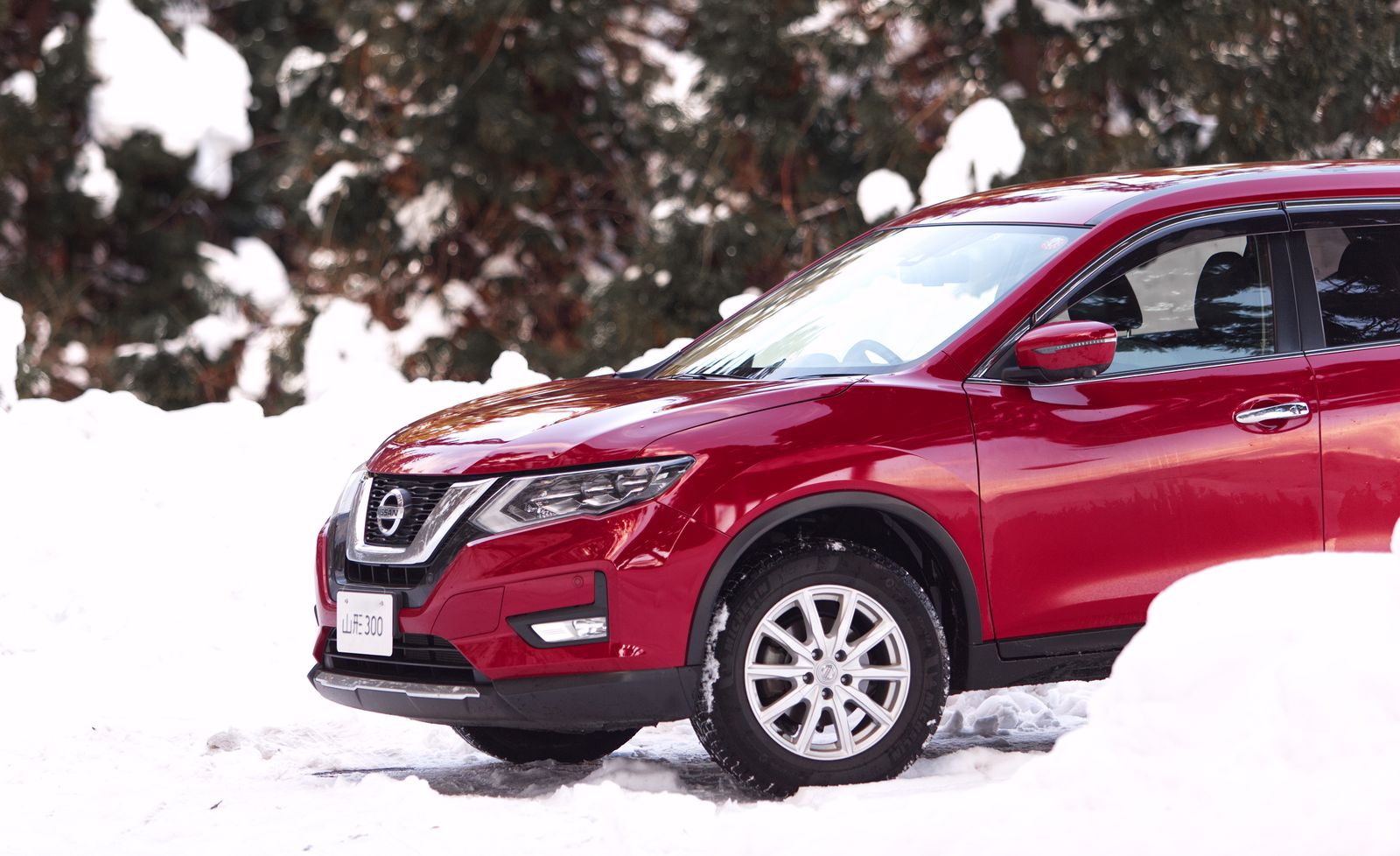
The previous Rogue Hybrid lasted a single model year. Launched for 2026, it was a rebadged Mitsubishi Outlander plug-in hybrid, a shortcut that got Nissan a hybrid SUV onto US dealer forecourts quickly and without much engineering effort. It was not a bad car, but it was not a Nissan underneath.
For 2027, the Rogue Hybrid is a clean-sheet design built around Nissan’s own series-hybrid hardware. Replacing a car after one year is an expensive admission, and it is hard to read the move as anything other than the company deciding the badge-swap was not good enough. Mitsubishi has been building its own identity around ruggedness, as the Mitsubishi Outlander Diamond Trail Edition: the most off-road-ready Outlander yet shows, which makes Nissan’s decision to walk away from the Mitsubishi connection look deliberate.
How e-Power actually works
The mechanical layout is the part that confuses people, so it is worth being precise. Under the bonnet sits a turbocharged 1.5-litre three-cylinder petrol engine running the Miller cycle. It is connected to a generator, not to a propshaft. Its only job is to make electricity.
That electricity feeds a compact lithium-ion battery, which in turn supplies two electric motors, one on each axle. Combined output is 225bhp, and because the motors are controlled independently, the car has full-time all-wheel drive without any mechanical linkage between the axles. There is no gearbox in the conventional sense and no clutch pack shuffling drive backwards and forwards.
The battery acts as a buffer, so the engine does not have to chase every throttle input. It can run at a steady, efficient speed while the motors draw whatever the driver asks for.
This is the first time the third-generation system has appeared in a US-market Nissan. The 1.5-litre engine is the same unit used elsewhere in the range, but here it gets a larger turbocharger and is tuned to spend most of its working life between 2,000 and 5,000 rpm.
That rev band is the key to the whole package. A generator engine that sits at a constant, modest speed is a quiet engine, and it avoids the strained, droning note that has blighted some series hybrids under hard acceleration. The bigger turbo provides the low-down torque needed to hold that speed under load without the engine having to flare.
Performance and economy
Nissan quotes a 0-60 mph time of 6.4 seconds, which would put the Rogue Hybrid ahead of both the Toyota RAV4 and Honda CR-V hybrids. That is a US claim and has not been independently verified, so treat it as such for now, but it is a credible one given 225bhp and the instant torque delivery of electric motors.
Fuel economy, on US EPA estimates, is 41 mpg city, 36 highway and 38 combined for the SR trim. Those are US gallons, so they are not directly comparable with UK mpg figures. The SV and Platinum drop by 1 mpg on the highway and combined cycles, presumably down to wheel and tyre differences. Those are strong numbers for a compact SUV with this much power, and they underline the efficiency argument for series hybrids: the engine never operates outside its sweet spot.
Behind the wheel
Early drives describe a car that is impressively quiet and refined, with responsive acceleration and a well-controlled ride. Rear-axle torque vectoring keeps understeer in check through tight corners, shuffling power between the rear wheels to help the nose tuck in rather than wash wide.
The criticism is steering feel. Reviewers have called it lifeless, though most add that it is no worse than the segment norm. That is faint praise, and it is the usual trade-off in this class, where light, isolated steering is what most buyers actually want.
Nissan also brought a fleet of hybrid Toyota RAV4s along to the launch drive for comparison. That is a confident move, and not an accidental one.
The Rogue Hybrid offers five levels of regenerative braking, including a genuine one-pedal mode that can bring the car to a complete stop without touching the brake pedal. That is more adjustability than most rivals provide. Nissan’s Smooth Stop system manages the final moments of deceleration to reduce pitch and head bob, which is the kind of detail that matters far more in daily use than a tenth of a second here or there. It is the difference between a hybrid that feels jerky in traffic and one that does not.
Towing and the plug-in question
Here is the weak spot. In the US, towing capacity is just 1,500 lb (roughly 680 kg), well short of the RAV4’s 3,500 lb. If you need to pull a trailer, a caravan or even a modest boat, the Rogue Hybrid is not the car for you, and no amount of clever engineering changes that.
There is also an interesting wrinkle for buyers who specifically want a plug-in. Leftover 2026 Rogue Hybrid PHEV stock may still be sitting on dealer lots, and for anyone with a short commute and a driveway to charge on, that rebadged Mitsubishi remains a genuinely different proposition from the new car.
Cabin and practicality
The interior is tech-heavy but, mercifully, free of piano-black trim. Cloth upholstery is standard on the base SV, with faux leather and quilted bolsters on other trims extending to the door cards, console and dashboard.
Practical touches are well judged. The passenger seat folds flat for long items, the rear doors open nearly 90 degrees for easy child-seat access, and the rear bench fits two adults or three children comfortably, with a drop-down centre armrest. Cargo space measures 31.1 cubic feet behind the rear seats and 65.9 cubic feet with the 60/40-split bench folded.
This is exactly the sort of unglamorous competence that The Best ‘Appliance’ Cars: Why Ordinary Motors Deserve More Credit argues is undervalued. The Rogue Hybrid is not trying to be a hero car. It is trying to be excellent at the things families actually do.
Tech and trims
A 12.3-inch infotainment touchscreen is standard across the range, alongside a 12.3-inch digital gauge display, Bluetooth and four USB-C ports, two in front and two in the rear. A wireless charging pad sits in the centre console, and the Platinum gets two.
The larger 14.3-inch screen arrives on the SR with the Technology package and on the Platinum, while a 12.3-inch touchscreen is standard across the range. The upgraded unit runs a Google-based operating system with wireless Apple CarPlay and Android Auto. Audio runs to six speakers on SV and SR, upgrading to a 10-speaker Bose setup on Platinum.
Standard driver assistance includes adaptive cruise control, blind-spot monitoring, lane-keeping assist and traffic-sign recognition. That is a competitive suite, and offering the 14.3-inch screen as an option rather than reserving it solely for the top trim is a sensible call.
Ownership reality check
In the US, the warranty is 3 years or 36,000 miles, which is unremarkable next to the Kia Sportage and Hyundai Tucson, both of which offer considerably longer cover. For a family SUV bought on monthly payments, that gap is worth factoring into the maths before you sign.
Crash-test results are available from NHTSA and IIHS, so check the specific build and trim you are considering rather than assuming a carry-over score. Safety ratings do not always transfer cleanly between generations, and this is a new car from the ground up.
The 2027 Rogue Hybrid is a better answer than the shortcut it replaces, and the fact that Nissan was willing to admit as much after a single model year says something about how seriously it is taking this segment.