BMW M’s first electric car, and why it matters
This is not an electrified M car in the way the i4 M50 was. It is the first M model built on the 3 Series’ new Neue Klasse platform, and the first M car conceived as an EV. BMW has already shown how serious it is: our earlier coverage of the BMW’s Electric M3 Prototype: 850bhp, Four Motors and a Fake Gearbox set out the technical groundwork.
Crucially, the electric M3 will not replace the petrol car. BMW intends to sell both, with the combustion-engined M3 expected in showrooms first. The EV arrives as an addition to the range rather than a substitution, which gives traditionalists a way out and gives BMW a way to hedge. Styling follows the standard i3, with M-specific fender bulges, aero work and more aggressive exterior lighting to separate it from the cooking model.
Four motors, two gearboxes and 838bhp
The headline figures are extraordinary. Four electrically excited motors, split two per axle, work through two gearboxes, one for each axle. Combined output is quoted at 838bhp with 1,200Nm of torque. BMW lists the front axle at 643bhp and 540Nm, the rear at 750bhp and 1,000Nm, which tells you where the bias sits.
The claimed 0-62mph time is 2.5 seconds. Regeneration alone can absorb up to 540kW, or 724bhp, which is more than most hot hatches produce under full throttle. The car runs in rear-wheel drive most of the time, with the front motors engaging only when the software decides they are needed, and the front axle can be decoupled entirely for efficiency. Torque vectoring works both front to back and side to side.
A sharper two-wheel-drive-only variant is reportedly in development, possibly wearing GT, CS or CSL badging. At around 2,350kg, the M3 EV is no lightweight, and that sharper model looks like BMW’s answer to anyone who finds the standard car too grown-up.
Battery, charging and the range question
Underneath sits an 800-volt architecture and a roughly 100kWh underfloor pack developed and manufactured in-house. BMW has gone with M-specific round cells rather than prismatic pouches, citing weight, packaging and thermodynamics, and claims 20 percent higher energy density than its previous EVs.
DC charging peaks at 420kW, with BMW suggesting ten minutes on a suitable charger adds up to 215 miles. The WLTP range figure is up to 406 miles, while the provisional EPA rating for the United States sits around 300 miles. Independent real-world estimates are rather less flattering: no more than about 225 miles in dry, warm conditions and closer to 175 miles in winter. Treat those as estimates rather than hard numbers. That gap between lab and life is familiar to anyone who has run an EV, but it matters more in a car with this much performance on tap.
Heart of Joy: one brain for everything
BMW’s “Heart of Joy” control unit is the technical centrepiece. It is a single ECU managing drivetrain, braking, charging, regeneration, steering, handling and ride, backed by separate water and oil cooling systems and a three-level inverter.
The idea is that one computer arbitrating every dynamic decision reacts faster than a network of separate modules talking to each other. On a prototype track drive the car was described as “a beast”, and it was judged at its best in Auto mode among the various eDrive settings. That is telling: BMW has built a machine whose default setting is smarter than its driver’s instincts, at least on a circuit.
Sound, shifting and the touchscreen problem
BMW knows an electric M car needs theatre, so the M3 EV gets three synthesised soundtracks: Mid, Max and Off. There are fake throttle-blip downshifts and virtual-limiter rattles to complete the illusion. The “Stages” e-shift system offers six virtual gear ratios and three shift speeds, labelled Moderate, Dynamic and Extreme.
The criticism, and it is a fair one, is that the system is personalised mainly through the touchscreen, which is less practical on the move than Mercedes-AMG’s console-knob arrangement. Building a simulated gearbox is one thing; burying its controls in a menu is quite another.
Interior and technology
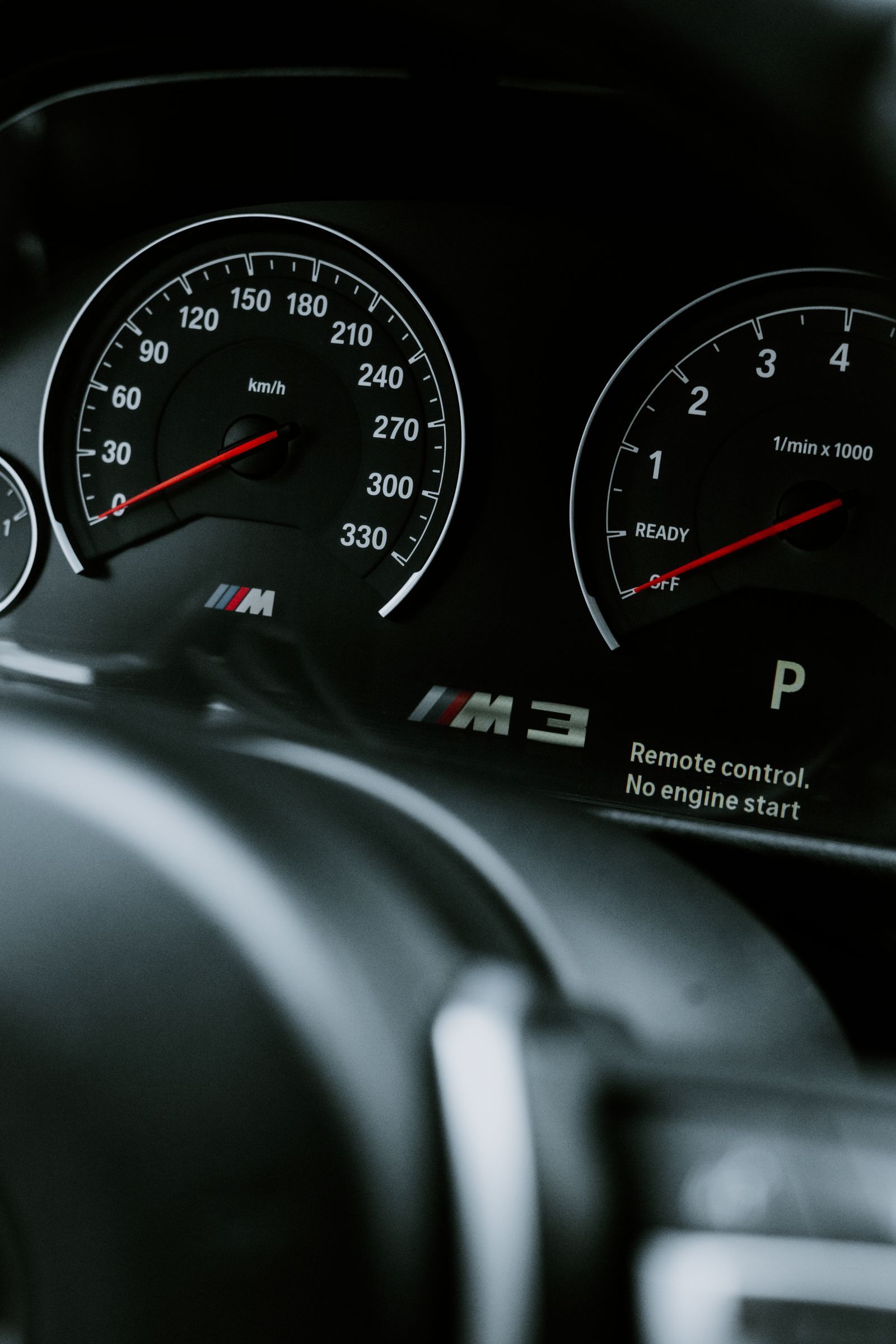
Inside, the M3 EV gets BMW’s latest digital dashboard with a trapezoidal infotainment touchscreen featuring matrix backlighting and heavy customisation. Panoramic Vision projects information across the base of the windscreen from A-pillar to A-pillar, with driving data on the left for the driver and personalisable centre and right zones. Up to six widgets can be dragged from the infotainment screen up to Panoramic Vision, and steering wheel buttons handle further tweaks. A head-up display is available, and smartphones and smartwatches from all the leading manufacturers can act as the vehicle key.
The concept car showed deeply bucketed performance seats with five-point harnesses, cloth dash trim with multi-coloured ambient backlighting and two bucket seats in the rear. Expect production cars to use conventional seats and seatbelts, with a three-across rear bench offered. Front and rear storage, in the form of a frunk and a boot, is anticipated.
Price, timing and the Porsche problem
BMW M sources in Garching suggest the M3 EV will cost about the same as the M3 Competition xDrive. Pricing applies to the United States, where it has been estimated at around $90,000; UK pricing and timing have not been confirmed. Production is expected to begin in 2027, with one report suggesting it reaches dealer showrooms “next spring”.
The competitive set is brutal. The Porsche Taycan remains the benchmark electric performance saloon, the Tesla Model 3 Performance undercuts everything on price, and Mercedes-AMG has its own electric models coming. BMW is also launching into a market where rivals are pushing autonomy as a selling point, as the Tesla Cybercab Goes on Sale to Private Buyers: $29,990, No Steering Wheel, Texas Only demonstrates. The M3 EV takes the opposite view: the driver stays in charge, just with 838bhp of electric assistance.
If you cannot wait, the i4 is the stopgap
The M3 EV is still the better part of two years away from UK roads, and the outgoing i4 offers a taste of fast electric BMW motoring now. The dual-motor version delivers 592bhp, which is a long way short of 838 but hardly slow, and it runs on a mature charging network with proven dealer support behind it. For buyers who want the badge, the performance and the practicality without the wait, it is the obvious alternative. For everyone else, the M3 EV is the car to watch. BMW M has spent years insisting that emotion cannot be engineered into a battery car. The M3 EV is its attempt to prove otherwise, and on the evidence so far, the argument is far from settled.
Frequently asked questions
When does the BMW M3 EV go on sale?
Production is scheduled to start in 2027, with reports pointing to a showroom debut the following spring. UK timing and pricing have not been confirmed.
How much power does the BMW M3 EV have?
BMW quotes 838bhp and 1,200Nm from four electric motors, making it the most powerful production car the company has ever built.
What is the range of the BMW M3 EV?
Up to 406 miles on the WLTP test cycle. Independent estimates put real-world range closer to 225 miles in warm weather and around 175 miles in winter.
Will BMW still sell a petrol M3?
Yes. The electric M3 will sit alongside a combustion-engined M3, which is expected in showrooms first.
What is the Heart of Joy?
It is BMW’s single control unit managing drivetrain, braking, charging, regeneration, steering, handling and ride in one place, rather than across separate modules.
What rivals does the M3 EV face?
The Porsche Taycan, Tesla Model 3 Performance and forthcoming Mercedes-AMG electric models are the obvious competitors.