The electric car market has spent the past decade proving a point. Now it is busy filling in the gaps. Range figures that once felt aspirational are now routine, performance has stopped being a novelty, and charging is getting faster and easier with each new generation of hardware. Style, too, has broadened well beyond the wind-cheating pod of early adopters.
None of this has yet turned electric cars into the majority of what leaves showrooms. They remain a small slice of the total market. But the direction of travel is clear, and the most telling sign is not the number of EVs on sale. It is who is selling them. The established names have stopped dabbling and started translating their familiar line-ups, model by model, into electric equivalents. Here is how four of them are going about it.
Audi: familiar badges, new powertrains
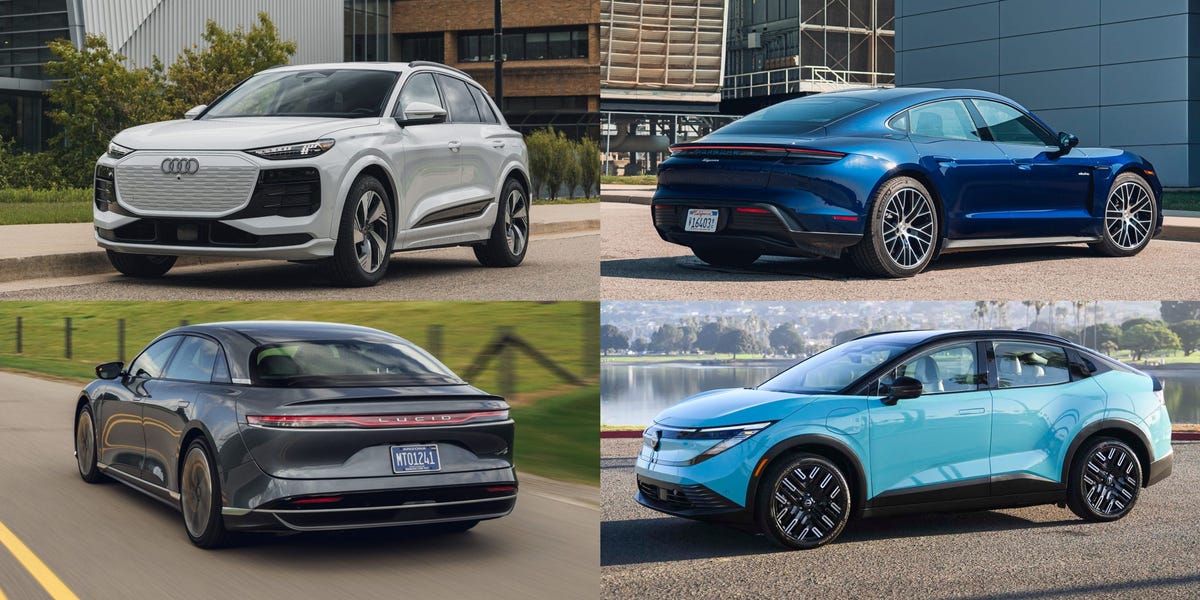
Audi’s approach is the most literal of the group. The A6 e-tron is positioned squarely as the electric answer to the long-running A6 saloon, the car that has carried executives up and down motorways for decades. For drivers who want the same shape of car with a plug instead of a filler cap, that continuity is the point. Those wanting more urgency can look to the S6 e-tron, which produces nearly 500 bhp and turns a sober business saloon into something considerably less sober.
At the other end of the range sits the e-tron GT, which is effectively a Porsche Taycan in Audi clothing. It is quick and genuinely fun, with the low-slung proportions and instant response that come from sharing its bones with one of the sharpest electric cars on sale. It is also neither particularly spacious nor inexpensive, which is worth knowing before you fall for the styling.
The volume end of Audi’s electric family starts with the Q4 e-tron, a compact SUV that shares its components with the Volkswagen ID.4. Buyers can choose the traditional SUV body or the Sportback, which trades a little headroom for a more coupé-like roofline. The Q6 e-tron sits a size up, around 18 cm longer than the Q4, with a performance-focused SQ6 e-tron adding a more potent dual-motor powertrain. Both come in Sportback form as well. That shared hardware with Volkswagen is not a coincidence, and it is a theme running right through the group.
BMW: the saloon, the flagship and the SUV
BMW’s electric line-up hangs on a simple idea: if you like the 5 Series, you will like the i5. The i5 is the electric counterpart to the petrol and plug-in hybrid models, and by most accounts it is arguably the better-driving mid-size BMW saloon of the bunch. The lower centre of gravity does the car no harm at all.
Then there is the i7, the flagship luxury EV. In eDrive50 guise it carries an EPA combined rating of 90 MPGe and up to 321 miles per charge in the US. Those figures come with a caveat: specifying the optional 20- or 21-inch wheels trims both range and efficiency slightly, so the standard wheels are the pragmatic choice for anyone covering big distances. What you get either way is a car that is quick and quiet, with a plush, ultramodern cabin.
The iX3 completes the current picture. It is a compact luxury SUV and, in effect, the electric equivalent of the X3, and it was the first BMW EV to reach the US on the company’s Neue Klasse platform. That architecture matters, because it is the foundation for what comes next.
Cadillac: from compact SUV to bespoke flagship
Cadillac has taken the opposite route to Audi. Rather than electrifying existing nameplates, it has built a new family from the ground up, and the range now stretches from a compact SUV to one of the most expensive electric cars on sale anywhere.
The Optiq is the entry point, a compact electric luxury SUV that uses the same platform and powertrain as the Chevrolet Equinox EV. That is a reminder of how much hardware is shared beneath the skin across General Motors, and Cadillac adds a performance-oriented V-series version for buyers who want more than the standard car offers.
The Lyriq was Cadillac’s first luxury electric SUV, and it shares its battery technology with other high-profile GM EVs including the GMC Hummer EV pickup. Rear-wheel drive delivers the most range, while the all-wheel-drive model adds an electric motor for a combined 500 bhp. The driving demeanour is comfort and cruising rather than corner-carving, backed by a quiet, spacious cabin.
Next in the line-up is the Vistiq, a mid-size three-row electric luxury SUV that slots above the Lyriq and effectively replaces the petrol XT6. Then comes the Escalade IQ, a full-size luxury SUV with an electric powertrain. An IQL variant is 10.7 cm longer, which buys extra third-row legroom and cargo space for buyers who actually use all three rows.
At the very top is the Celestiq. It is over 5.5 m long, packed with technology and rich materials, and every example is special-ordered and entirely bespoke. Prices start around $340,000 in the US, which places it in a different conversation altogether from the rest of this list.
Chevrolet: where the mainstream meets electric
Chevrolet’s role is to make the numbers work. The Bolt returns after a brief hiatus as the brand’s smallest and most affordable EV, starting at $28,995 in the US. That price matters, because it puts electric motoring within reach of buyers who have been waiting for the maths to add up.
The Equinox EV follows, a compact electric SUV starting just under $35,000 in the US, sitting in the heart of the family crossover market. Above it, the mid-size two-row Blazer EV brings a more aggressive look, aimed at buyers who want their electric SUV to make a statement rather than blend in.
Why the breadth of choice is the real story
The interesting thing about these four ranges is not any single car. It is that every familiar body style now has an electric answer. Saloon, compact SUV, three-row family hauler, full-size luxury barge, bespoke flagship: the segments have been filled in, and the badges on the bonnets are the ones buyers already trust.
That matters for the next wave of EV buyers, who are less likely to be early adopters and more likely to be people replacing a petrol car with something that fits the same life. They want to know that the electric version of the car they already like exists, that it goes far enough, and that it charges quickly enough to stop being a consideration. As the next generation of models arrives, the pace of that change is only going to accelerate, as our look at the EVs set to arrive by 2030 sets out.
Electric cars remain a small percentage of the total market. But the line-ups are no longer the reason.