
Car scratch repair is one of those tasks that every car owner eventually faces, and the good news is that many scratches can be fixed at home with the right products and a bit of patience. A scratch that only affects the clear coat often costs less than $50 to repair yourself, according to typical DIY product costs, while deep scratches that reach the metal can require professional attention costing hundreds of dollars. This guide walks you through how to assess scratch severity, choose between DIY and professional car scratch repair, and protect your paint so future damage is less likely.
Quick Answer: Can I fix a car scratch myself?
Yes, in many cases. If your fingernail does not catch on the scratch, it is likely confined to the clear coat and can often be repaired at home with a polishing compound for under $50 in products. If your fingernail catches, the scratch has reached the base coat or deeper, and you will need touch-up paint at minimum. If bare metal or rust is visible, professional repair is the safer choice.
Frequently Asked Questions
How much does car scratch repair cost?
DIY clear coat repair typically costs less than $50 in products. Professional body shop repair ranges from $150 to $300 for a minor scratch, $300 to $600 per panel for repainting, and $500 to $1,500 or more for deep scratches with dent repair.
How can I tell if a scratch is deep?
Run your fingernail gently across the scratch. If it does not catch, it is a clear coat scratch. If it catches slightly and shows color, it has reached the base coat. If it catches clearly and you see gray primer or shiny metal, it is a deep scratch that may require professional attention.
Why Car Scratch Repair Matters More Than You Think
Few things are as irritating as walking out to your car and spotting a fresh scratch. Whether it came from a shopping cart, a narrow parking space, or an overgrown hedge, that mark is more than a cosmetic annoyance. It affects your vehicle’s resale value, and if left untreated, it can lead to rust and more expensive bodywork down the road.
Paint does more than make your car look good. It is the primary barrier protecting the steel body panels from moisture and corrosion. When a scratch cuts through the clear coat and base coat to expose bare metal, you have opened a door for rust. Even a small untreated chip can spread beneath the paint surface, bubbling and flaking over time. Repairing scratches promptly, even minor ones, is one of the simplest ways to protect your investment.
There is also a financial angle. According to industry estimates from sources such as Kelley Blue Book, a single deep scratch or small dent can reduce a used car’s value by several hundred dollars. Buyers notice paint damage immediately, and dealerships use it as a negotiating point. Spending a modest amount on car scratch repair now can preserve thousands in resale value later.
Understanding Scratch Types and Depth
Before you buy a single product, you need to understand what you are dealing with. Modern automotive paint is applied in layers, and knowing which layer is damaged tells you what kind of repair is possible.
The Paint Layers
- Clear coat: A transparent protective layer on top that provides gloss and UV protection.
- Base coat: The colored layer that gives your car its actual paint color.
- Primer: A bonding layer beneath the color that also helps prevent corrosion.
- Bare metal or plastic: The underlying body panel.
Categorizing Scratches
Light scratches affect only the clear coat. You will see them as faint, whitish marks, often called spider webs or swirl marks. Run your fingernail across the scratch. If it does not catch, it is likely a clear coat scratch, and it is the easiest to fix.
Medium scratches penetrate the clear coat and reach the base coat. Your fingernail catches slightly on these. The scratch shows your car’s color or a contrasting shade, and it will not disappear with polishing alone.
Deep scratches go through the base coat into the primer or bare metal. These catch clearly on a fingernail, and you may see gray primer or shiny metal at the bottom. Deep scratches require touch-up paint at minimum and often professional repair, especially if rust has begun.
DIY Car Scratch Repair Techniques
The right approach depends entirely on scratch depth. Using the wrong method on the wrong scratch can make things worse, so match your technique to the damage.
Polishing Compounds for Light Scratches
For clear coat scratches, a polishing compound or a fine abrasive polish is usually enough. These products gently remove a microscopic layer of clear coat around the scratch, leveling the surface so light no longer catches on the edges.
The process is straightforward:
- Wash and dry the area thoroughly.
- Apply a small amount of polish to a microfiber applicator pad.
- Work it into the scratch using circular or back-and-forth motions with moderate pressure.
- Buff off the residue with a clean microfiber towel.
- Repeat if needed, then apply wax or sealant to protect the area.
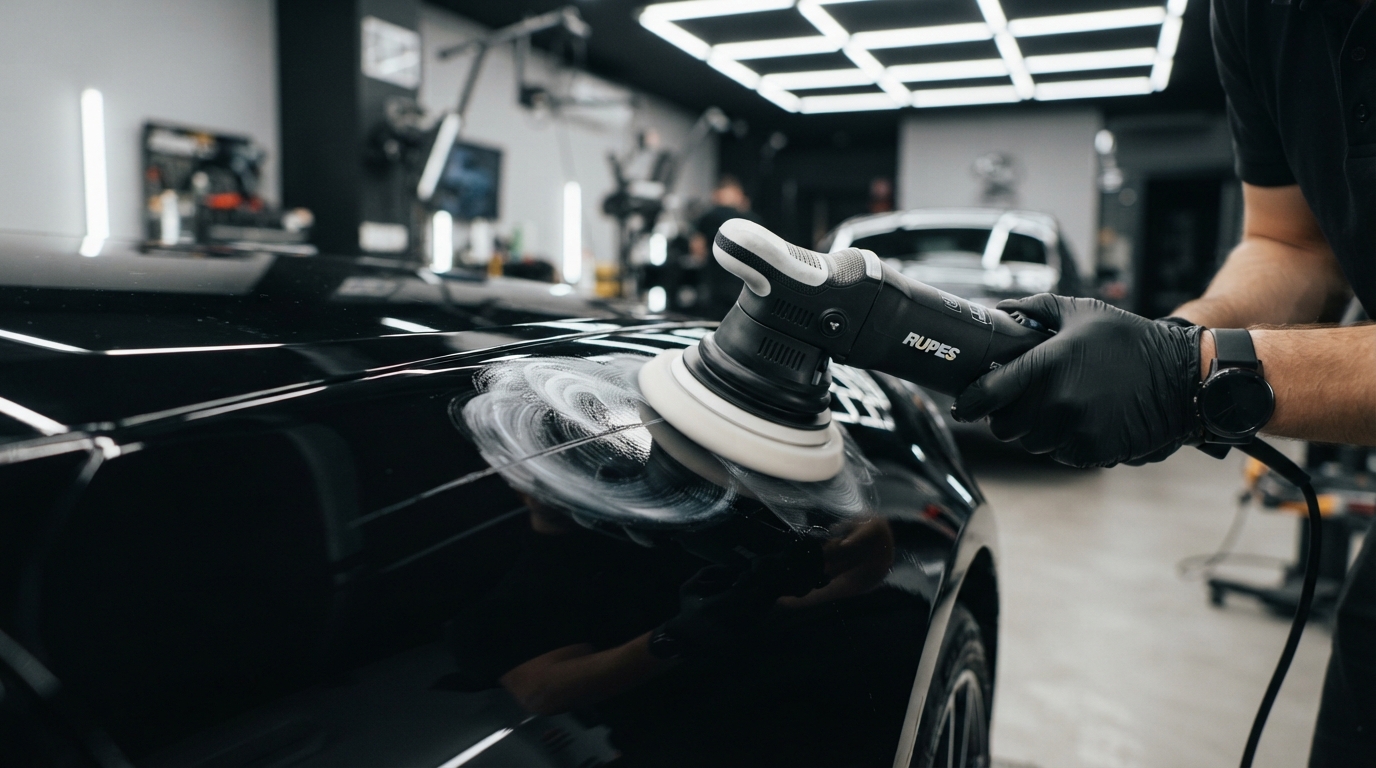
For best results, a dual action (DA) polisher speeds up the work and produces more consistent results than hand polishing, particularly on large panels.
Scratch Repair Kits
Retail scratch repair kits typically include a compound, an applicator, and sometimes a sealant. They work well for light to moderate clear coat damage. Kits vary widely in quality, so look for ones that include a range of abrasives rather than a single polish. Expect to pay between $15 and $40 for a decent kit, based on typical retail prices.
Touch-Up Paint for Medium and Deep Scratches
When a scratch reaches the base coat or primer, polish alone will not restore the color. You need touch-up paint matched to your vehicle’s paint code, which you can find on a sticker in the door jamb, under the hood, or in the trunk.
Application tips:
- Clean the area with isopropyl alcohol to remove wax and oils.
- Shake the touch-up paint thoroughly.
- Apply thin layers using a fine brush or a toothpick for small chips.
- Build up the paint gradually rather than applying one thick coat.
- Allow each layer to dry before adding the next.
- Finish with a clear coat pen or aerosol for protection and gloss.
Touch-up paint will not produce a flawless finish, but it seals the damage and dramatically improves appearance. For a near-invisible repair, wet sanding may be required after the paint cures.
Wet Sanding for Advanced DIYers
Wet sanding uses fine-grit sandpaper, typically 1500 to 3000 grit, lubricated with water and a drop of dish soap. It levels the touch-up paint and surrounding clear coat so the repair blends in.
This technique carries real risk. Sanding too aggressively can burn through the clear coat or damage adjacent panels. If you have never wet sanded before, practice on a junkyard panel first. After sanding, you must polish the area to restore gloss and then seal it with wax or a ceramic coating.
When to Seek Professional Car Scratch Repair
DIY car scratch repair has limits. Certain situations call for a professional body shop, and attempting a home fix can cost you more in the long run.
Seek professional help when:
- The scratch exposes bare metal or has already begun to rust.
- The damage covers multiple panels or is larger than a few inches.
- There are dents, creases, or deformed body lines accompanying the scratch.
- Your car has a specialty finish, such as matte, pearlescent, or a tri-coat color.
- The scratch is on a plastic bumper that has cracked or deformed.
Professional repairs typically involve sanding, filling, priming, painting, and clear coating, often with a bake booth to cure the finish properly. Costs vary by region and severity:
- Minor scratch repair at a body shop: $150 to $300, according to industry averages.
- Panel repainting: $300 to $600 per panel, based on typical body shop pricing.
- Deep scratch with dent repair: $500 to $1,500 or more.
Some shops offer paintless dent repair (PDR) for dents without paint damage, which is faster and cheaper than traditional bodywork. Mobile scratch repair services also exist in many areas and can come to your home or office, often at lower cost than a full body shop.
Preventing Future Scratches
Repairing scratches is satisfying, but preventing them is even better. A few habits and products can dramatically reduce your risk.
Smart Parking
Park away from other cars when possible. Choose end spots or spaces next to curbs. Avoid parking under trees that drop branches or sap, and stay clear of shopping cart corrals.
Car Covers
A quality, breathable car cover protects against minor abrasions, bird droppings, and UV damage. Make sure the cover fits properly and that your car is clean before installing it, since trapped dirt can cause scratches.
Regular Waxing and Sealing
A good coat of wax or a ceramic sealant adds a sacrificial layer over your clear coat. This layer absorbs minor friction and makes the paint slicker, so debris slides off rather than dragging across the surface. Wax every three to four months, or apply a ceramic coating for longer-lasting protection.
Paint Protection Film
PPF is a transparent urethane film applied to high-impact areas like the front bumper, hood, mirrors, and door edges. It absorbs rock chips and light scratches, and many films are self-healing, meaning light scratches disappear with heat. Professional installation costs $1,500 to $6,000 depending on coverage, according to industry estimates, but it is the most effective long-term defense.
Careful Washing
Use the two-bucket method, grit guards, and clean microfiber towels. Avoid automatic brush car washes, which are a leading cause of swirl marks.
Car scratch repair does not have to be intimidating. Start by assessing the depth of the damage. Light clear coat scratches often vanish with a polishing compound and 20 minutes of work. Medium scratches need touch-up paint and patience. Deep scratches that expose metal, or any damage accompanied by dents, are best left to a professional.
Addressing scratches promptly protects your paint, prevents rust, and preserves your car’s resale value. Whether you tackle the job yourself or hand it to a body shop, the key is to act before a minor blemish becomes a major repair. Before you buy touch-up paint, check your vehicle’s paint code so you get an exact color match. For light scratches, pick up a polishing compound and a microfiber applicator pad and start there. With the right products, a little knowledge, and some preventive habits, you can keep your car looking sharp for years to come.
We covered amazon prime day car in more detail elsewhere.
We covered change car ownership complete in more detail elsewhere.
We covered tested floor mats scratch in more detail elsewhere.
We covered car underseal complete protecting in more detail elsewhere.