Parallel versus grey imports
Two terms get used interchangeably, but they describe very different propositions. A parallel import is the same car you could buy in a UK showroom, just bought abroad at a lower list price. A grey import is a vehicle sold in another market that was never officially offered in Britain. It will not meet UK specifications, which makes the process more complex, but it can still be worthwhile if the model is special enough.
Parallel imports were once a substantial corner of the market, but as the gap between EU list prices narrowed the economics stopped making sense and the trade declined. Today, most people importing a car themselves are chasing something Britain never got: a Japanese domestic model, an American truck or a long-desired classic.
Shipping: ro-ro, containers and the cost of getting to port
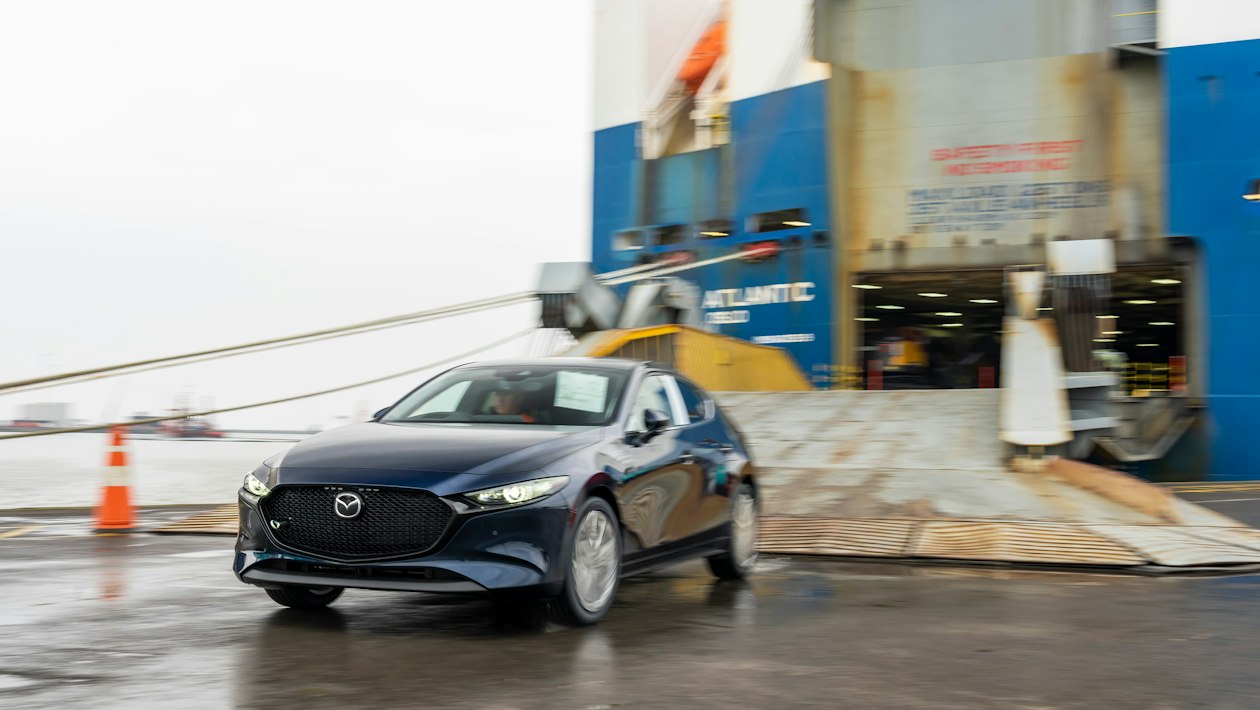
How the car travels depends largely on what it is worth and whether it can move under its own power. The cheapest option is roll-on/roll-off, where the car is driven straight onto the cargo ship. The catch is that it has to be a runner. If it is a project or a non-starter, you are looking at a consolidated container shared with other vehicles, or a sole-use container, which costs considerably more and generally suits collectors shipping high-value cars.
Including loading and unloading fees plus marine insurance, shipping a car from California to the UK typically costs in the region of £2,500, based on quotes from specialist shipping agents. That figure is only the ocean leg. Getting the car from the seller to the US port, and from the UK port to your driveway, adds a few hundred pounds at each end, and more if either journey is long or awkward.
Taxes and duty: the numbers that catch people out
The standard rates are 10% import duty and 20% VAT on the car’s value. On a £20,000 car, that is £2,000 in duty and £4,000 in VAT before you have paid a penny for shipping. VAT is calculated on the value of the car plus shipping and insurance, so the transport cost is not exempt.
There are legitimate reliefs, and they are worth understanding precisely because they are often conflated. A statement of origin, which the UK Government describes as “a commercial document that has enough detail in it to identify the origin of the goods”, can reduce import duty to zero depending on where the car is coming from. Separately, the classic car VAT scheme can cut VAT to 5% on eligible classic vehicles, but it applies to specific categories of vehicle meeting HMRC’s conditions rather than to every car that happens to be 30 years old, so check your car qualifies before budgeting on it. And if you are moving to the UK and shipping your own vehicle over, Transfer of Residence relief removes import duty and VAT entirely, provided you meet the conditions.
Registration and compliance: the £55 fee is the cheap bit
Registering the car with the DVLA costs £55 for first registration, and you must tell the DVLA the car has arrived in the UK within 14 days. Standard car tax then applies as it would to any UK vehicle. These figures are current as published by the DVLA, but fees and deadlines do change, so confirm them on GOV.UK before you rely on them.
The real expense sits in the modifications needed to make a foreign car legal here. Headlamps are the classic example: lights designed for left-hand-drive markets dip the wrong way and will fail an MOT. Tail-lights, number plate surrounds and window tints are also commonly affected. Some of this is straightforward, some requires parts that are not cheap or quick to source, and on a grey import the workshop may be working it out as they go.
Buying sight unseen
If you import yourself rather than using an independent dealer, there is a real chance you will not see the car before it lands. Photos hide a great deal, and a car bought at auction in Japan or the US arrives with whatever faults it left with. Specialist companies exist precisely for this reason: they handle collection at origin, door-to-door delivery, the paperwork and the modifications. Their online quoting systems are genuinely useful, because they let you price the full job before committing rather than discovering the extras afterwards. For a first import, paying someone who has done it fifty times is often cheaper than learning the process yourself.
Insurance and servicing: the long-term bill
Insuring an imported car can often cost more than a similar-spec UK-registered model. Parallel imports close to UK specification tend not to cost much more, if anything, to insure, because insurers recognise them. Grey imports, especially those made outside the EU, may not conform to UK safety standards or emissions regulations, and that uncertainty shows up in the premium. Some mainstream insurers simply will not quote, pushing you towards specialists.
Servicing brings its own considerations. For a used import, or one without warranty cover, find a marque specialist before you buy rather than after. Sourcing parts for a model never officially sold here can be difficult and slow, and a general garage unfamiliar with the car will cost you more in the long run.
What importing really costs
Add it up honestly before you commit. A rough budget for a typical import looks like this:
- Purchase price
- Shipping from the US: around £2,500 plus several hundred pounds at each end
- Import duty: 10% of value (unless a relief applies)
- VAT: 20% on the combined value of car, shipping and insurance
- First registration: £55
- Compliance work: lights and other modifications, variable but rarely trivial
- Insurance: a higher premium, potentially for years
On a grey import, budget for the unexpected, because there usually is some. The cars worth importing are worth importing properly, and the buyers who come out ahead are the ones who priced the whole journey before they bid, not the ones who found out at the port.