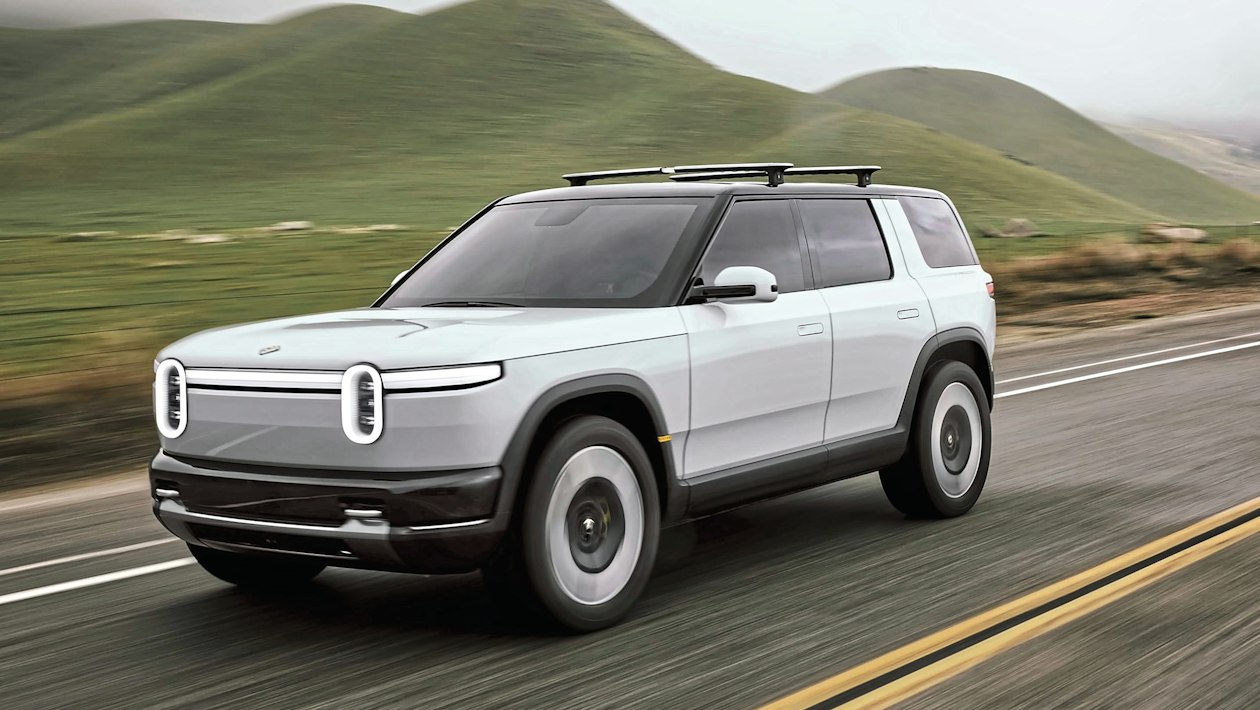
Rivian has spent the past few years building a reputation for electric vehicles engineered for the wild rather than the showroom forecourt. The R1T pick-up and R1S SUV earned plaudits for genuine off-road ability and a design language that stood apart from the aerodynamic jellybeans dominating the market. But they were expensive, low-volume machines. The R2 is the car that has to change that, and it is expected to reach the UK in 2028.
The R2 is a mid-size electric SUV aimed squarely at the Tesla Model Y. It marks a significant shift for the California-based company, moving from the ladder-frame, air-suspended R1 platform to car-like unibody construction and a simpler chassis. The result, according to early reviews, is a vehicle with genuine character that could offer a credible alternative to the Model Y’s dominance.
The R2 story so far
Rivian is often described as America’s second all-electric newcomer, a company that grew up in Tesla’s slipstream and learned from both its successes and its mistakes. Established in California and building its vehicles in Illinois, Rivian has carved out a niche with the R1S and R1T, but the R2 represents its first serious attempt at volume sales.
At 4.72 metres long, the R2 sits in the heart of the mid-size SUV segment. It is smaller than the R1S but still substantial enough to offer family-friendly practicality. The reported plan to bring it to the UK in 2028 signals Rivian’s intent to compete on a global stage, not just in North America.
The company’s approach with the R2 is notably pragmatic. Where the R1 was a statement of intent with its ladder frame and air suspension, the R2 adopts unibody construction and semi-active dampers. This is not a dilution of Rivian’s adventurous spirit so much as a recognition that most buyers want a car that handles well on a B-road and fits in a multi-storey car park. It is a similar lesson being learned across the industry, as evidenced by the Ford Fathom: $28,350 electric pickup confirmed for 2027, which sees Ford pivoting towards affordability after the F-150 Lightning’s cost challenges.
Platform and chassis: a different kind of Rivian
The most significant change under the skin is the move from a ladder frame to unibody construction. This is the same fundamental shift that has defined the crossover boom, trading ultimate off-road articulation for a lower centre of gravity, better on-road refinement and reduced weight.
Rivian has not abandoned its rugged image entirely. The R2 is claimed to offer the greatest ground clearance in its segment, a figure that will appeal to buyers who occasionally venture onto a muddy field or a rutted track. However, the air suspension of the R1 has been replaced by semi-active dampers. According to those who have driven it, these vary noticeably between driving modes and cope admirably with poor road surfaces. On a test route around New York, the R2 handled ankle-deep potholes with far more composure than the city’s yellow cabs.
One casualty of the downsizing is the R1’s clever ‘Gear Tunnel’, a pass-through storage area between the front and rear wheels. It is a loss for the camping crowd, but the R2 compensates with other practical touches.
Powertrains and performance: 647bhp at launch
The R2 launches with a dual-motor, four-wheel-drive Performance variant producing a substantial 647bhp. That is enough to propel the SUV from 0-62mph in well under four seconds and on to a top speed of 130mph. For a family-hauling mid-size SUV, those are genuine performance car figures.
A Premium version will follow later, detuning the dual-motor setup to 444bhp and stretching the 0-62mph sprint to just under five seconds. That is still brisk by any measure, and likely the sweet spot for most buyers who prioritise range and refinement over outright acceleration.
The decision to launch with the more powerful variant first mirrors Tesla’s strategy with the Model Y, where the Long Range and Performance models arrived before the cheaper Standard Range option. It establishes the R2 as a premium product from the outset, with a more affordable entry point to follow.
Pricing: US figures only, for now
In the United States, the R2 Performance is priced at $57,990, with the Premium variant at $53,990. For rough context, those figures convert to approximately £42,000 and £40,000 at current exchange rates, but they apply to the US market only. Rivian has not confirmed UK pricing or specifications.
UK pricing rarely mirrors US pricing directly, and the addition of VAT, import duties and homologation costs would be expected to push any British figure higher. The R2’s positioning will also depend on the broader market landscape in 2028, which will include a wave of new rivals such as the 2027 Kia EV9 and its Hyundai Ioniq 9 sibling.
Interior and practicality: clever camping features
Rivian’s interiors have always leaned into the outdoorsy lifestyle, and the R2 continues that tradition with several genuinely innovative features. The fully retractable rear window allows long items such as surfboards or skis to be carried poking out of the back, a simple solution that negates the need for a roof rack in many cases. A slide-out load floor doubles as a camping table, a neat touch that speaks to Rivian’s brand identity.
There is a 147-litre front storage area, or frunk, which is generous enough for charging cables and a weekend bag. The dashboard features a genuine wood finish, lending a premium feel that some rivals lack. A large central touchscreen is complemented by a smaller screen ahead of the steering wheel, and two MagSafe charging pads sit between the front seats.
The R2’s approach to controls is a mixed bag. Mirror and steering wheel adjustment are entirely digital, accessed through the touchscreen, which may frustrate buyers who prefer physical knobs. However, Rivian has retained chunky scroll wheels on the steering wheel spokes and physical switches on the seats. Twin gloveboxes, a large centre console bin and a front drawer are all opened manually, a sensible decision that acknowledges the limitations of touchscreen interfaces for everyday tasks.
Practicality is strong, with a 2.94-metre wheelbase and a completely flat floor liberating generous rear passenger space. There is no third-row option, which positions the R2 firmly as a five-seater. Buyers needing seven seats will have to look elsewhere, perhaps towards the Kia EV9.
What the first reviews say
Auto Express awarded the R2 a score of 4.0 out of 5, praising it as characterful, well-driving and spacious with a strong interior. The ride quality impressed testers, with the semi-active dampers proving adept at smoothing out rough surfaces. The interior drew particular commendation for its blend of digital technology and physical controls.
The main criticisms centred on the digital mirror and steering wheel adjustments, which some found less intuitive than traditional controls. This is a common complaint across the industry as manufacturers increasingly migrate functions to touchscreens, and Rivian’s decision to retain physical switches for the seats suggests the company is listening.
Rivian R3: the smaller follow-up
Rivian is already working on an even smaller model, the R3. Expected to be priced around $35,000 in the US (approximately £26,000 at current exchange rates), the R3 is described as more European-focused, with styling that blends Mk1 Volkswagen Golf cues with SUV proportions. It targets the affordable entry-level EV segment that Tesla has not filled, a gap that is becoming increasingly crowded as brands rush to launch cheaper electric models.
The R3 may ultimately prove more significant than the R2. Its smaller footprint and lower price point align more closely with European tastes and budgets. But the R2 arrives first, and it will establish Rivian’s reputation in this market before the R3 lands.
Verdict: a genuine Model Y alternative, with caveats
The Rivian R2 matters because it represents a credible, characterful alternative to the Tesla Model Y. It offers more power, a more distinctive design and genuinely clever practical features that appeal to the outdoor lifestyle many SUV buyers aspire to. The 4.0 out of 5 rating from Auto Express suggests Rivian has nailed the fundamentals of ride, handling and interior quality.
The key questions are price and timing. A 2028 launch is still several years away, and much can change in the electric vehicle market by then. Rivian’s ability to establish a dealer network, service infrastructure and charging partnerships outside North America will be crucial to its success. The company’s US-centric approach to date means buyers will be watching closely for signs of a genuine commitment to Europe.
The R2’s pricing will also need to remain competitive as the market evolves. If it lands near the US figure once local costs are applied, it would undercut most premium electric SUVs while offering more power and character than the Model Y. But if exchange rates shift or import costs prove higher than expected, that advantage could erode.
What is clear is that Rivian is serious about challenging Tesla on a global scale. The R2 is the vehicle that must deliver on that ambition, and on early evidence, it has the substance to back up the style. Buyers searching for a family electric SUV with a sense of adventure should keep a close eye on this one.