
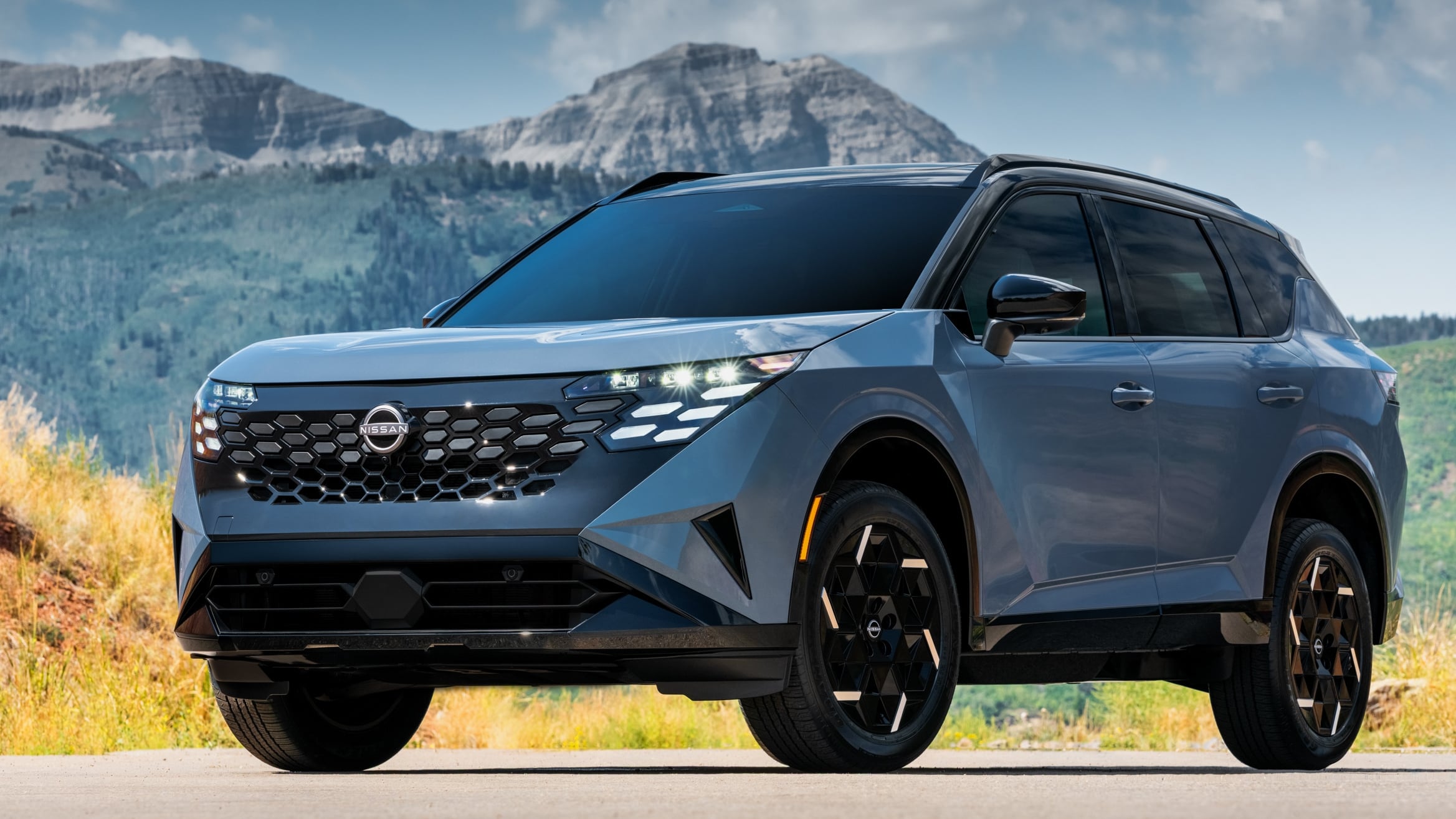
Nissan has spent years watching Toyota and Honda clean up in the North American hybrid market, and now it wants a slice of that action. Meanwhile, Tesla is quietly collecting European approvals for its supervised Full Self-Driving software, country by country, while Volvo has decided that the safest move in a cooling market is to stop hiring.
Nissan Makes Hybrids Its North American Centrepiece
Nissan Americas chairman Christian Meunier used a briefing at the company’s global headquarters on 28 September to set out a clear shift in priorities: hybrids will become the brand’s primary powertrain in North America by 2030.
The plan is specific. Nissan will localise production of the Rogue e-Power hybrid in 2028, bring an e-Power version of the Kicks compact crossover to the US around the same time, and add V6 hybrid options across its upcoming body-on-frame truck line, which launches with the XTerra SUV. Meunier wants hybrids to account for 30 to 40 per cent of Rogue-segment sales “very quickly.”
That is a notable admission from a company that once bet heavily on pure electric vehicles. Toyota and Honda have spent years building hybrid loyalty in the US, and Nissan is now playing catch-up rather than trying to leapfrog them.
The strategy has been under discussion for a while. Meunier has been candid about the wider competitive picture too. As we reported when he warned that Nissan Warns Chinese Car Brands Will Build in Mexico Within Three Years, the chairman has not been shy about naming the threats facing established manufacturers in the Americas. Hybrids are, in effect, Nissan’s attempt to hold ground before those new entrants arrive in force.
There is a regulatory backdrop worth noting as well. Washington has moved to loosen fuel economy requirements, with the US Slashes Fuel Economy Rules: 34.9 mpg by 2031 as CAFE Credit Trading Axed, replacing the Biden-era push toward a fleet average of 50 mpg. Those figures are US standards, measured in US gallons, not UK mpg. Looser targets arguably reduce the pressure to go fully electric, which makes a hybrid-heavy line-up a more comfortable bet for the next several years.
Tesla Adds Croatia to Its European FSD Map
Tesla says its supervised Full Self-Driving system has been approved in Croatia, with a nationwide rollout expected to begin shortly. It is the latest in a growing list of countries where the software has cleared regulatory hurdles.
The Dutch regulator RDW approved the system in April, followed by Belgium and a handful of other countries. Slovenia, Croatia’s neighbour, gave the green light earlier in September. Each approval is national, which means Tesla is effectively assembling a patchwork of permissions rather than securing one bloc-wide decision. FSD remains unapproved in the UK.
That is where the RDW comes in. The Dutch authority is proposing approval of the software across the entire EU, which would transform Tesla’s European rollout from a country-by-country slog into a single market launch. For a company under pressure from Chinese EV makers, that matters commercially. Tesla has said a European FSD rollout is crucial to boosting sales and regaining market share.
But the path to bloc-wide approval is not straightforward. A safety group and several EU member states have raised concerns about the system’s ability to exceed speed limits, which has become one of the most contentious aspects of the entire European push. Should an assisted driving system be permitted to break the law that applies to every other driver on the road?
Until that is resolved, expect Tesla to keep banking individual national approvals and rolling out FSD market by market. The strategy is slower than a single EU-wide green light, but it keeps momentum going and gives regulators in hesitant member states a working precedent to look at.
Volvo Freezes White-Collar Hiring Worldwide
Volvo Cars has imposed a global hiring freeze on white-collar roles and adopted a more restrictive approach to outside spending, according to an internal memo. Internal recruitment has also been paused temporarily while the company reviews talent development, career opportunities and job rotation.
The freeze covers roughly 20,000 white-collar employees globally, including nearly 1,000 in the US and Canada. The memo said the measures are intended to “reduce complexity, create stronger regional synergies and ensure resources are focused on the areas that have the greatest impact on our performance and transformation.”
Volvo is tightening its belt because demand is softening in key markets, including China and the US. A hiring freeze is one of the least dramatic cost-cutting tools available to a carmaker. It avoids headline-grabbing redundancies while still putting a brake on headcount growth, and it buys management time to work out where the business actually needs people.
For a brand that has positioned itself as one of the more committed electrification pioneers, the move is a reminder that even the most confident strategies need to survive contact with the sales charts. Volvo has not abandoned its electric plans, but it is clearly no longer hiring as though the transition will be smooth and immediate.
Three Carmakers, One Pressure Point
What connects these three stories is not a shared strategy but a shared problem. Demand is uneven, regulation is fragmented, and the cost of getting the next five years wrong is enormous.
Nissan is betting on a proven technology to hold its ground in its most profitable region. Tesla is betting that regulators will eventually say yes to FSD across Europe. Volvo is betting that restraint now will leave it stronger later. The next two to three years will show which of them read the market best.
We covered verstappen wins chaotic bahrain in more detail elsewhere.






2 Comments