The crossover blueprint
Before the Qashqai, the family car market was neatly split. You bought a hatchback like the Ford Focus if you wanted sensible running costs, or an SUV if you wanted the raised driving position and the chunky looks, and you paid for the privilege at the pumps.
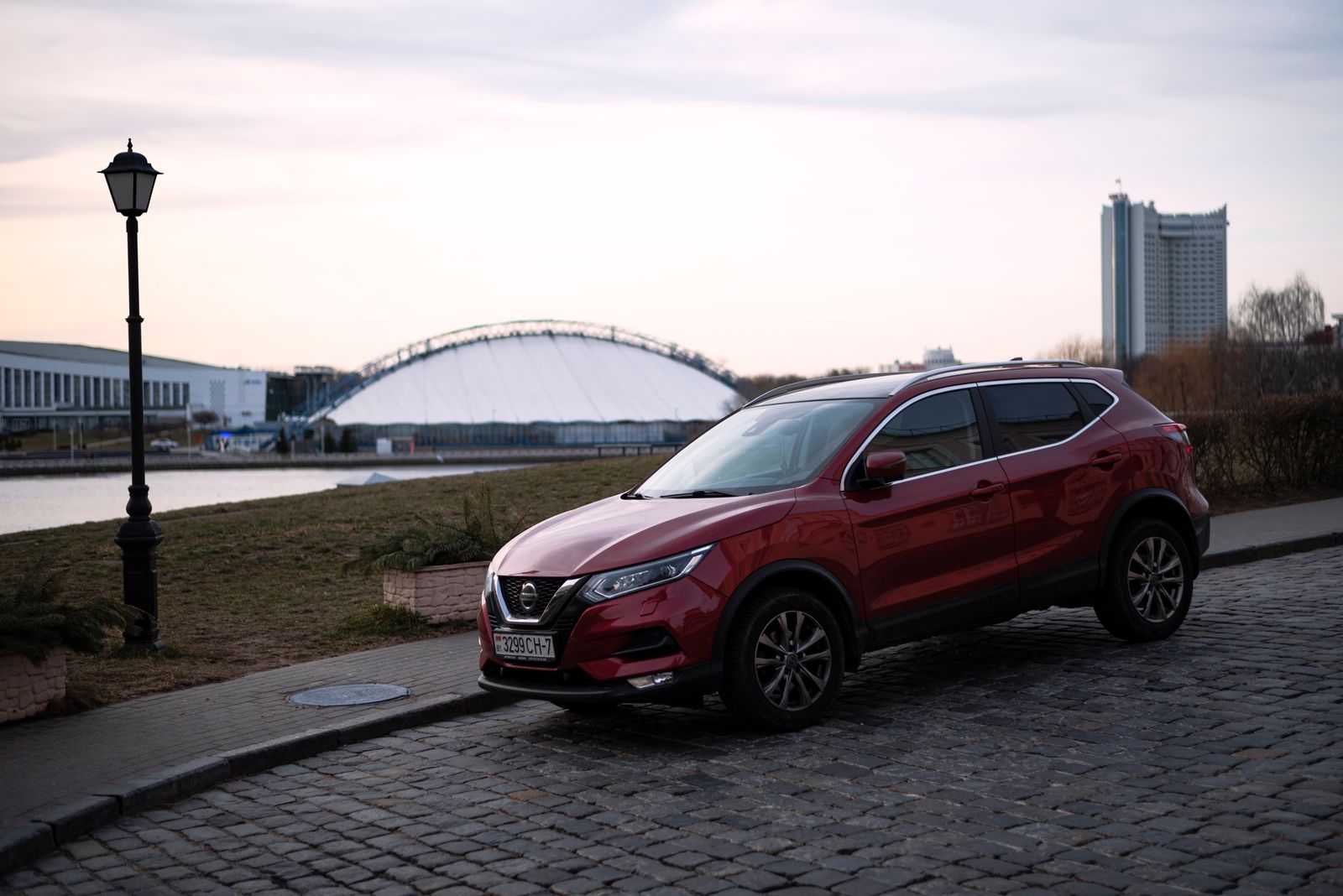
The Qashqai’s insight was that most buyers wanted the second without the penalty of the first. It offered raised ride height and SUV styling without SUV running costs, while packaging that kept it genuinely practical for a family. That combination sounds obvious now. In 2006 it was a gap in the market nobody had properly filled, and the segment it created has since been copied by virtually every mainstream manufacturer on sale.
Look at what sits around it in the sales charts today and you can see the template everywhere: the Ford Puma, the Kia Sportage, the Jaecoo 7. All of them are playing a game the Qashqai wrote the rules for.
Made in Britain
The Qashqai’s British credentials are not a marketing footnote. It was styled at Nissan’s London design hub, engineered at its Bedfordshire technical centre and assembled at Sunderland, and that combination makes a strong case for it as the most significant British-built model of the past two decades. Auto Express has argued exactly that, saying the Qashqai has done more for British automotive manufacturing than any other model launched in the past 20 years. It is a big claim, but it holds up: Sunderland has been one of the most productive car plants in Europe for years, and the Qashqai has been its backbone through good times and bad.
The sales story
The numbers tell their own story. In its first full year on sale, Nissan shifted almost 20,000 Qashqais in the UK. That was a strong start for an unknown badge in an unfamiliar segment.
Then it snowballed. UK sales peaked in 2017 at 64,294 units, a figure that would be a career year for most models. It has not scaled those heights since, but it has stayed remarkably durable, and so far this year it sits fourth in the UK charts with the Ford Puma leading the way. That is a notable position. It means a car launched in 2006, now in its third generation, is still outselling almost everything else on the market. Plenty of models have come and gone in that time.
From Qashqai+2 to the third generation
The Qashqai’s evolution has not always been linear. For a period Nissan offered a seven-seat Qashqai+2, a stretched version for buyers who needed extra seats but did not want to move up to a larger SUV. It was a brief experiment, and in 2013 it was replaced by the Nissan X-Trail, which took on the seven-seat role while the Qashqai stayed focused on five.
The third-generation car arrived in Europe in 2021. That is a long lifecycle by modern standards, and it explains why the current car is facing such a different competitive landscape from the one its predecessor knew.
Why e-Power instead of a plug
Nissan’s powertrain strategy for the Qashqai has been one of the more interesting calls in the segment. Rather than chase a plug-in hybrid or a pure-electric version, the current car uses the company’s e-Power hybrid system.
Auto Express has described e-Power as offering most of the EV experience without the need to plug in. The wheels are driven by an electric motor, with a petrol engine on board generating electricity. You get the smooth, immediate delivery of an EV and none of the charging anxiety, which for a lot of buyers is exactly the right trade-off.
It also says something about buyer habits. The Qashqai’s audience is families doing school runs, motorway trips and the weekly shop, often without a driveway to charge on. A hybrid that gives them electric drive without demanding any change in routine fits that life far better than a plug-in that needs planning around.
Recognition and mounting pressure
The Qashqai’s standing was underlined recently when it picked up a commendation in Auto Express’s 2026 New Car Awards. Twenty years in, it is still being noticed by the people who drive everything.
The pressure, though, is real. Auto Express flags competition from Chinese brands including Jaecoo, BYD and MG as a direct threat to the Qashqai’s popularity, and the sales charts back that up. The Jaecoo 7 is already sitting second in the UK this year, ahead of the Nissan. Chinese manufacturers have moved from curiosity to genuine market force in a remarkably short time, and the Qashqai is one of the models in their sights.
That shift is visible across the industry. At the Paris Motor Show 2026: Chinese Brands Flood the Show as BMW Stays Away, the absence of some legacy marques tells its own story about where the momentum now sits. It is a long way from the show where the Qashqai first appeared, when European brands set the agenda and everyone else followed.
The road ahead
The most pressing question for the Qashqai is what comes next. Reports have suggested the current car’s electric successor could be shelved, which is a concern given how quickly EV uptake is gathering pace. The model that built its reputation on anticipating what buyers wanted now faces the risk of being left behind by the shift it helped normalise.
Nissan is not standing still as a brand, but heritage alone will not defend a family crossover in the most competitive segment in Britain.
Twenty years is a long time at the top of British shopping lists. The Qashqai earned its place by understanding something simple: most families want the feel of an SUV without the cost of running one. The question now is whether Nissan can repeat that trick for the electric age, or whether the next twenty years belong to the challengers already climbing the charts.