
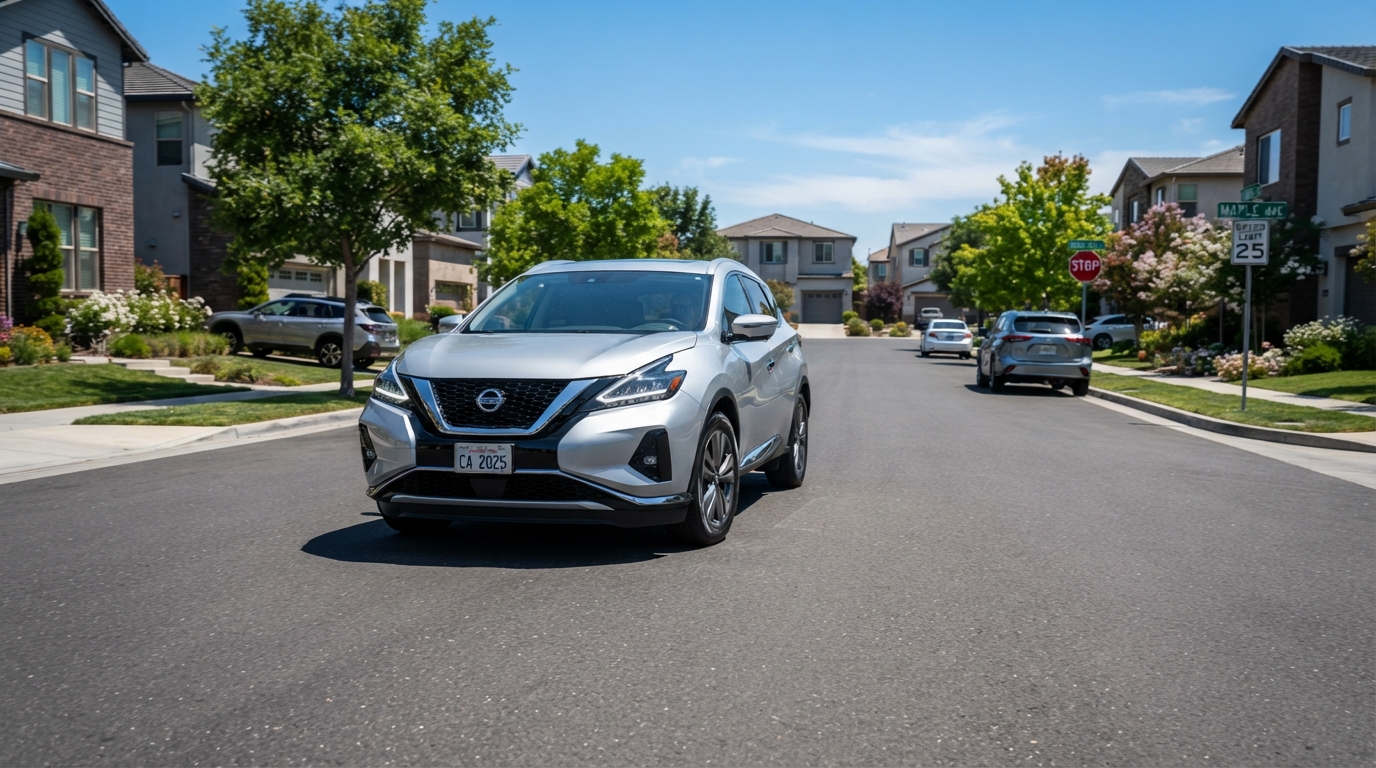
Nissan’s hybrid plans and the way people actually buy cars were both under the spotlight on the airwaves this month. Two episodes of the ANC Podcast, on 18 and 25 September, tackled the latest vehicle buyer study and Nissan’s hybrid strategy for the Rogue. If that nameplate means nothing to you, here is the short version: the Rogue is a North American model, and its pricing, trims and launch dates do not translate to Britain. What does translate is the strategy behind it, and the buyer behaviour data that applies to showrooms on both sides of the Atlantic. For UK drivers, the question worth asking is a simple one. Will Nissan’s US hybrid push reach the X-Trail?
Nissan’s Hybrid Push: What Steve Rhind Said About the Rogue
The 25 September episode of the ANC Podcast featured Steve Rhind of Nissan discussing the Rogue and the company’s hybrid ambitions. The segment formed part of the programme’s weekly round-up of top stories before turning to Nissan’s electrification direction.
The headline takeaway is that Nissan is leaning harder into hybrid powertrains, using the Rogue as the vehicle to demonstrate that commitment in the US market. Hybrids occupy a useful middle ground for manufacturers. They cut fuel consumption and emissions without asking buyers to commit to a full battery electric vehicle, and they slot into existing production lines and dealer networks with far less disruption than a wholesale switch to EVs.
For Nissan, the calculus is straightforward. The company has invested heavily in electrification, but the pace of EV adoption has varied wildly between markets. In the United States, hybrids have enjoyed a genuine boom as buyers hedge their bets. Nissan’s decision to push hybrid technology in its best-selling crossover reflects that reality. It also signals that the brand sees hybrids not as a stopgap but as a core part of its line-up for years to come.
Specific technical details, pricing and launch timing for the Rogue hybrid were not confirmed in the material available, and readers should treat any US-market figures circulating online with caution. What matters for UK observers is the strategic direction, not the dollar signs.
Rogue vs X-Trail: The UK Picture
The Rogue is the North American name for the model that British buyers know as the Nissan X-Trail (Nissan sells the two as closely related but separately specified vehicles). Specifications, trim structures, engine choices and pricing are set separately for each market, and a US launch date tells you nothing about when, or whether, a particular powertrain will reach UK showrooms.
Nissan’s global hybrid push is a strong hint that the X-Trail will continue to feature electrified powertrains prominently. The current X-Trail already offers Nissan’s e-Power system in the UK, which uses a petrol engine as a generator for an electric motor rather than driving the wheels directly (Nissan GB). That technology sits at the heart of Nissan’s UK electrification story.
However, no UK-specific announcement about a new X-Trail hybrid variant has been confirmed in the material reviewed, and no UK pricing or specification has been announced. UK buyers should check with Nissan GB before assuming what will reach showrooms. The sensible reading is that Nissan’s commitment to hybrids in its global crossover line-up is good news for the future of the X-Trail, but official confirmation is what counts.
The Latest Vehicle Buyer Study: PCP, Research and the Real Buying Journey
The 18 September episode of the ANC Podcast featured Darren Slind of Clarify, discussing the company’s latest vehicle buyer study. The research digs into how consumers actually shop for cars, and the findings challenge some long-held assumptions about the buying journey.
Several themes stand out. First, buyers are doing more research than ever before they set foot in a dealership, but they are doing it in fragments rather than in one long sitting. They dip in and out across weeks, using multiple devices and sources. Second, finance has become the default rather than the exception. The study reinforces what most dealers already know: monthly payment is often the deciding factor, not the sticker price. Third, trust in traditional advertising is low, while peer reviews, owner forums and independent video content carry significant weight.
Slind’s insights also point to a growing split in buyer behaviour. Some consumers arrive at the dealership almost fully decided, having configured their car online and checked stock availability. Others remain genuinely undecided and rely heavily on the salesperson to narrow the field. Dealerships that can serve both types well are the ones converting enquiries into sales.
The study appears to be US-focused, so the specific percentages and finance products referenced may not map neatly onto the UK. The behavioural patterns, though, are strikingly familiar.
What Buyer Trends Mean for the UK Market
Translate those findings into a British context and the picture is recognisable. UK buyers are overwhelmingly financing their cars, with PCP remaining the most popular route for new vehicles and HP still common for used purchases (Finance & Leasing Association data). The monthly payment mentality is deeply entrenched, and manufacturers’ deposit contributions and low-rate finance offers dominate showroom conversations. Typical new car PCP rates have sat in the region of 4% to 8% APR depending on brand, model and deposit, and salary sacrifice schemes have become a mainstream route into electrified company cars.
Online research is now the default first step. Most UK buyers start with manufacturer configurators, then check independent reviews, then look at stock through dealer websites or aggregators. The shift towards researching on a phone during a commute or a lunch break mirrors the fragmented behaviour Clarify identified.
On the powertrain question, UK buyers are weighing up petrol, hybrid and electric options with more care than at any point in the past decade. Range anxiety, charging infrastructure and running costs all feature heavily in the decision. For anyone weighing up a used electric car against a nearly new petrol model, our Used Car Buying Guide: How to Score a Deal on an EV or a Future Classic walks through where the value currently sits.
Dealerships are responding by investing in online reservation tools, video walkarounds and remote handover. The days of a single showroom visit deciding a sale are long gone.
Hybrids in the UK: Where the Market Stands
The US hybrid boom has been dramatic, but the UK story is different. British hybrid uptake has grown steadily rather than spectacularly. Self-charging hybrids and plug-in hybrids were, for several years, exempt from the strictest emissions penalties and remain attractive to company car drivers, though that treatment has tightened repeatedly since the 2010s.
VED changes have shifted the maths in recent years. Since April 2025, most hybrid owners pay road tax on the same basis as petrol and diesel drivers, removing one of the traditional financial perks. Company car tax, by contrast, still favours low-emission hybrids and electric vehicles, keeping them firmly on the radar for fleet buyers and salary sacrifice schemes (HMRC benefit-in-kind rates).
Charging infrastructure remains a mixed picture. Motorway services have improved considerably, but rural coverage and on-street charging for drivers without off-street parking are still pain points. That uneven experience is one reason hybrids continue to appeal to UK buyers who want lower running costs without committing fully to electric.
Nissan’s e-Power approach is well suited to this environment. It offers the smoothness and immediacy of electric drive without the need to plug in, which suits drivers who cannot charge at home. If Nissan extends that philosophy across more of its range, UK buyers stand to benefit.
Conclusion: What to Watch Next
Nissan’s hybrid strategy, as outlined by Steve Rhind on the ANC Podcast, tells us where the company is placing its bets. The Rogue is the vehicle carrying that message in North America, but the underlying technology and intent are global. UK buyers should watch for how those priorities filter through to the X-Trail and the rest of Nissan’s British line-up.
The buyer study discussed by Darren Slind of Clarify offers a useful reminder that how people shop matters as much as what they shop for. Fragmented research, finance-first thinking and a healthy scepticism of advertising are now the norm, and UK dealers are adapting accordingly.
The next buyer study will likely show further movement towards electrified powertrains and even more digital-first purchasing. For UK drivers, the practical advice remains unchanged: wait for official UK pricing and specification before committing, and treat any foreign-market announcement as context rather than confirmation.





5 Comments