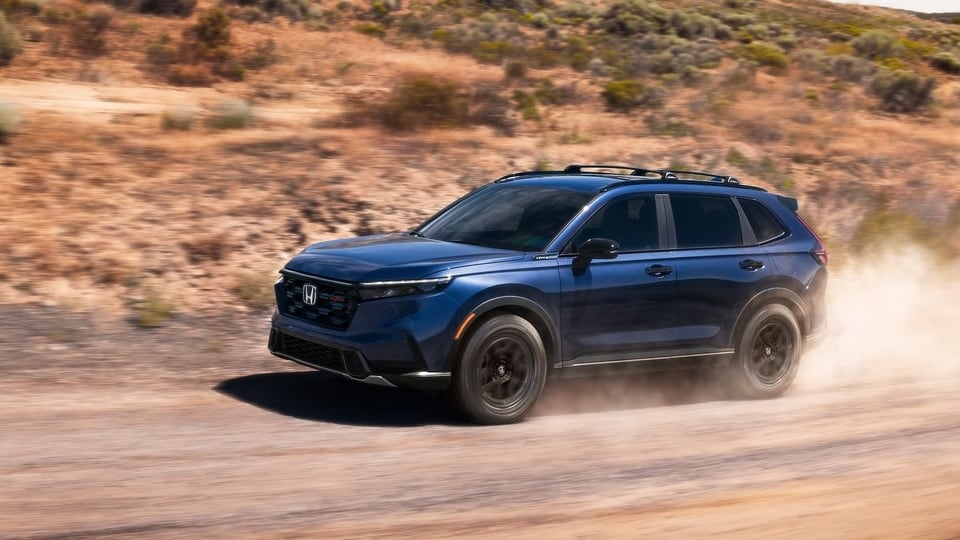
Why the next CR-V is being held back
The current-generation CR-V has become the centrepiece of Honda’s US line-up. Through September this year, it accounted for 9.5 percent of the brand’s total US sales, making it Honda’s most popular nameplate, with the Civic in second place. That kind of volume is difficult to walk away from, and Honda has decided not to.
The revised timeline gives the existing 2027 CR-V more time in showrooms before the redesigned model takes over. It also means the new car will launch later in the model-year cycle than originally planned, arriving for 2028 rather than earlier.
The powertrain decision is arguably the bigger story. The next CR-V will be sold exclusively with a hybrid powertrain, a significant shift for a nameplate that has long been offered with conventional petrol engines alongside its electrified variants. For Honda’s best-selling US model, going hybrid-only is a statement about where the company believes the market is heading.
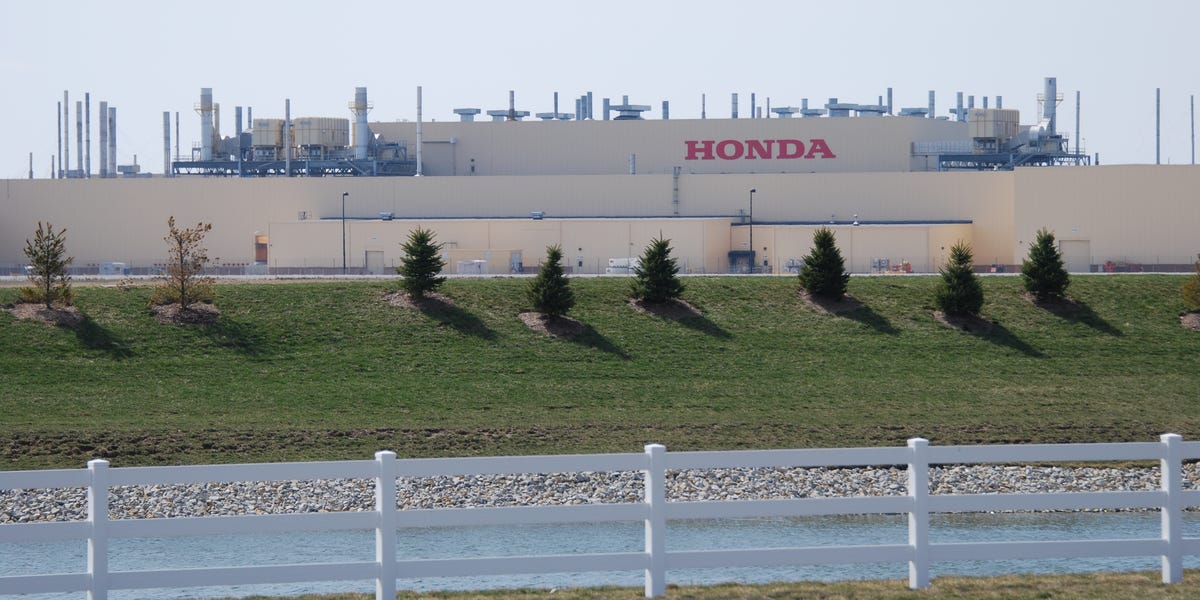
Production dips before it climbs
A later start also reshapes the numbers. Honda expects a 6.7 percent decrease in monthly output of the redesigned model during its first year of production, a reduction that reflects the shorter runway before the switchover. That dip should be followed by a substantial production ramp-up as the new CR-V settles into its stride.
Reading between the lines, Honda is trading a slower launch for a smoother handover. Rather than rush the new model to market while the old one is still clearing showrooms, the company appears to be timing the transition so that supply and demand stay roughly in step.
Indiana capacity and the Civic’s retreat
The knock-on effect lands on the Civic. Honda is scrapping original plans to build the next-generation Civic at its Indiana plant from May 2028, freeing up capacity for the CR-V instead. The same facility is projected to build around 70,000 Civics this year, so the change represents a meaningful reallocation of resources.
That decision does not sit in isolation. Civic hatchbacks sold in North America are currently built exclusively in Indiana, but once next-generation production takes over, Honda will begin importing hatchbacks from its plant in Japan. The next-generation Civic sedan will still be built in Canada.
For a model with the Civic’s history and following, moving hatchback production offshore is a notable step, even as the performance side of the range carries on largely unchanged, as we noted when the 2027 Honda Civic Type R arrived with sharper dampers, heated seats and a bigger grille but still 315bhp. The regular Civic’s production shuffle is a different matter entirely, driven by factory capacity rather than product planning.
Tariffs are quietly redrawing the map
The CR-V’s manufacturing footprint has already shifted once in recent years. Last year Honda moved much of its CR-V production from Canada to the United States to reduce the impact of import tariffs, and US-market CR-Vs are now primarily built at East Liberty in Ohio and Greensburg in Indiana.
That context matters when reading the latest decision. Keeping the current CR-V in production for longer is easier when the plant network is already configured around it. Shifting Civic work out of Indiana and importing hatchbacks from Japan gives Honda room to build more of the vehicle that is actually flying off forecourts.
It is a pattern playing out across the industry, as manufacturers rework sourcing and assembly to blunt the cost of tariffs. Rivals are wrestling with the same arithmetic, and the debate over how quickly buyers will embrace hybrids over pure electric models continues to shape product plans, with Nissan’s hybrid strategy for the Rogue a live topic in recent industry discussion. Honda’s CR-V call sits squarely in that conversation.
Fifteen new models and a hybrid-first roadmap
The restructuring is not a one-off. It forms part of Honda’s plan to release 15 new or heavily refreshed models globally by 2030, with an emphasis on next-generation hybrid powertrains. The CR-V is effectively the flagship for that push in the US, which explains why the company is prepared to be patient with it.
Honda is also planning another hybrid-focused assembly plant in the United States. That additional capacity, however, is likely to be claimed by its upcoming large hybrid SUV line-up rather than by the CR-V, suggesting the company is thinking about hybrid manufacturing at a portfolio level rather than model by model.
Taken together, the picture is of a carmaker reorganising its North American operations around hybrids, with the CR-V at the centre and the Civic adjusted to fit around it.
What the delay tells us about the CR-V’s future
Honda’s decision to push the next-generation CR-V Hybrid to April 2027 is, at heart, a vote of confidence in the car it already sells. When a model is commanding 9.5 percent of your US sales, there is little incentive to hurry it off stage, and every reason to keep the line running while the successor is prepared properly.
The move also shows how carefully Honda is balancing capacity during the transition. Freeing Indiana from next-gen Civic duties, importing hatchbacks from Japan and keeping sedan production in Canada are all pieces of the same puzzle: making room for the vehicle that matters most.
For buyers, the practical upshot is a longer run for the current CR-V and a hybrid-only future for its replacement. For the industry, it is another example of tariffs and demand, rather than product cycles alone, deciding where cars get built. What is clear is that the next CR-V will be a hybrid, it will arrive later than expected, and Honda is prepared to reshape its factories to make sure it lands well.
Related: honda enter ladder frame.