
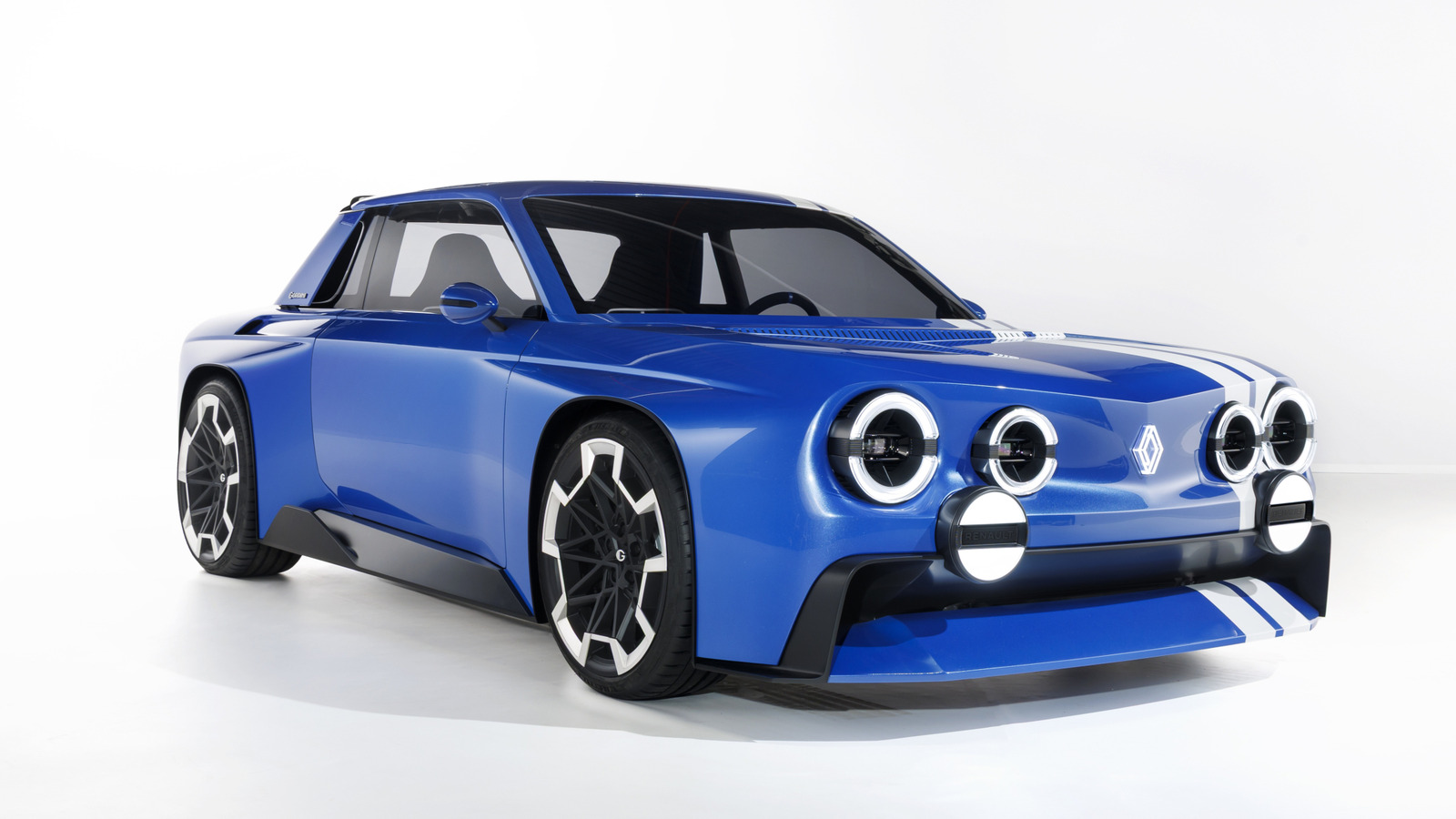
Renault 8 Gordini electric concept: UK price, specs and availability
Strip away the nostalgia and the hardware is refreshingly simple to describe. The concept uses a 270 bhp electric motor driving the rear wheels, a layout that deliberately echoes the original’s rear-engine, rear-drive configuration. Renault has not announced performance figures, battery capacity or range, so any acceleration or mileage claims you see elsewhere are guesswork.
The bodywork is carbon fibre, and the proportions are pure hot rod. The car measures roughly 4.1 m long, and the US outlet Jalopnik reports it sits about 150 mm longer, 300 mm wider and 100 mm lower than the original Gordini. It rides on 19-inch front wheels and 20-inch rears, a staggered setup that hints at serious rear traction.
One persistent rumour worth flagging: the US outlet has suggested the concept could use the new Alpine A110 platform. That is the writer’s speculation, not a Renault statement. Treat it accordingly.
Design nods to the original 8 Gordini
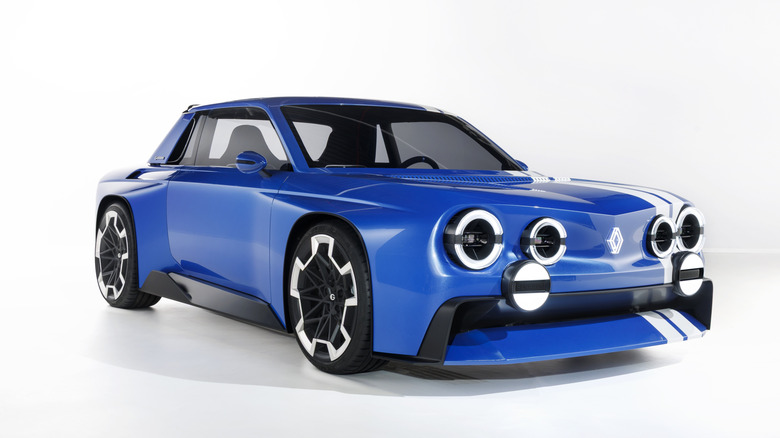
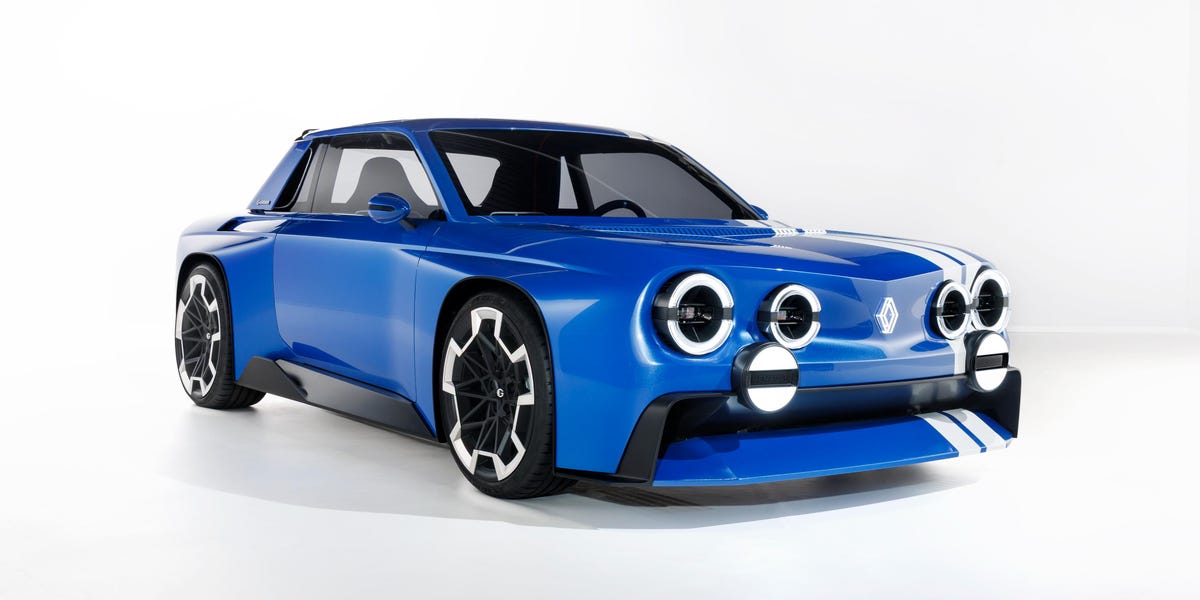
The most striking element is the face. Six round headlights define the front end, with four large units set into a sculpted panel and two more housed in the bumper. It is a clear nod to the auxiliary rally lamps fitted to competition Renault 8 Gordinis, and it gives the car a wonderfully aggressive squint.
Elsewhere, the references come thick and fast:
- Squared-off wheel arches with dramatically flared fenders, the rear more pronounced than the front
- A full-width cowl vent and intake, plus shell-style mirrors
- Twin white racing stripes over Gordini blue paint, recreating the original “Bleu de France”
- An entire nose that unbolts as a single removable panel
- A chrome side moulding from the original, reinterpreted as a sharp character line
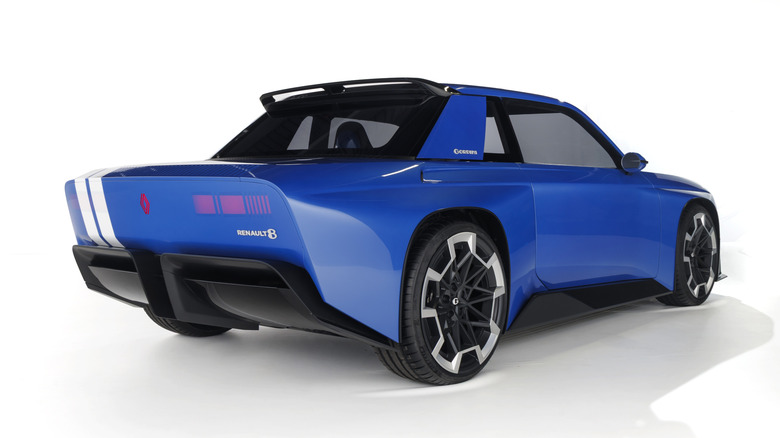
At the rear, there is a dramatic diffuser, graphic taillights that disappear when switched off, and air vents along the boot edge. A rear window spoiler and side quarter windows that curve inward to form a C-pillar air intake complete the package. It is retro without being pastiche, which is a difficult trick to pull off.
Inside the cabin
Renault describes the interior theme as “café racer”, and the materials list reads like a love letter to the 1960s. There is brushed aluminium, Alcantara and blue corduroy, the latter referencing the original’s plain bucket seats. The seats themselves use blue corduroy centres with black upper sections, which Renault says creates the illusion of old seats without headrests.
The dashboard is a recessed brushed aluminium panel housing two trios of round digital displays with thick metal bezels, styled to mimic classic analogue gauges. A row of toggle switches sits in the centre, while an aluminium centre console carries climate-control knobs, shifter buttons and window switches. Door panel top stitching is styled to resemble racetrack kerbs, and two blue Alcantara stripes on the dash echo the exterior livery.
It is a two-seater only, though the US outlet has suggested a production version could add a small rear seat. That is speculation, not a Renault plan.
How the concept came together
This was not a top-down management brief. The project began as an internal competition within the Renault Design studio, drawing more than 300 sketches. Entries ranged from classic retro to futuristic styling, including concepts fusing heritage with a modern edge and GT-inspired looks.
Two proposals were selected and built as 2:5 scale models. Those two designs were then merged into the single car you see here, which explains why it feels both nostalgic and forward-looking at once.
A brief history of the original Renault 8 Gordini
To understand why Renault keeps returning to this badge, you need the backstory. The Renault 8 saloon arrived in 1962 with a small inline-four mounted in the rear, driving the rear wheels. The Gordini version followed in 1964, and its upgrades doubled output to 95 bhp, paired with improved suspension and a four-speed manual gearbox. Later models gained more power and a five-speed box.
All of them came in bright blue with off-centre white stripes, and larger headlights gave Gordinis a more distinctive face than standard Renault 8s. That 95 bhp saloon became a training ground for generations of French racing drivers, including rally icon Jean Ragnotti. It also introduced the twin white racing stripes that became synonymous with Renault performance, a motif still doing heavy lifting today.
Where it sits in Renault’s retro EV strategy
The 8 Gordini concept is not an isolated flight of fancy. It follows a run of heritage-inspired projects including the Renault 5 Diamant art car, the R17 electric restomod created with designer Ora Ïto, and the upcoming Renault 5 Turbo 3E.
The US outlet makes a sharp observation here: Renault’s recent retro EVs, namely the new 5, 4, Twingo and R5 Turbo 3E, all started life as concepts, and the production models stayed remarkably close to the show cars. That precedent is precisely why this concept has generated so much chatter. It is also worth noting that most Renault EVs are front-wheel drive, with the Turbo 3E the notable exception, so a rear-drive Gordini would be a genuine departure.
The car will eventually go on permanent display at Renault’s still-under-construction Renault Collections museum in Flins, France. Sources differ slightly on timing, with Car and Driver reporting completion in a little over a year and the US outlet citing 15 months.
UK availability: nothing confirmed
Here is the part that matters for British buyers. No UK pricing, production date or availability has been announced, and the concept is not confirmed for production in any market. Renault has been explicit that this is a show car only, so treat it as a design statement rather than a preview of your next PCP deal. If you want the full picture of how the concept was received at its debut, our earlier coverage of the Renault 8 Gordini concept is worth a read.
FAQ: Renault 8 Gordini electric concept
Will the Renault 8 Gordini concept go into production?
Not according to Renault. The company has confirmed no production plans for the concept in any market. It exists as a design study only.
Is the electric Renault 8 Gordini coming to the UK?
There is no UK launch plan, no UK price and no confirmed build date. Any suggestion of a British arrival is speculation at this stage.
What powers the Renault 8 Gordini concept?
A 270 bhp electric motor driving the rear wheels, paired with carbon fibre bodywork. Renault has not published battery capacity, range or performance figures.
How much would a production version cost?
Renault has not indicated any pricing, in the UK or elsewhere, so any figure you see quoted is guesswork.
The honest verdict is that the 8 Gordini concept does exactly what a concept car should. It reminds us why the Gordini name still carries weight, shows Renault’s designers can work a heritage brief without resorting to lazy pastiche, and dangles a rear-drive electric hot hatch in front of enthusiasts who would love to buy one. Whether Renault ever builds it is another question entirely, and for now, the answer is no.
We covered nissan kaze concept tops in more detail elsewhere.






2 Comments