The shop that builds film cars for a living
Vehicle Effects is not a novelty outfit. Under McCarthy, the company has spent years producing hero cars and stunt machines for Hollywood, including the Fast & Furious franchise. That pedigree matters here, because turning a sprite into something that can be driven requires the same skills: fabrication, bodywork, trim and a willingness to solve problems nobody has solved before.
The choice of canvas is deliberate. The car in the game was never officially licensed as a Lexus, but it is unmistakably an LS400, and that recognition is the whole point. For a generation of players, the blocky saloon behind the fence is as memorable as any fighter on the roster.
Turning a sprite into sheet metal
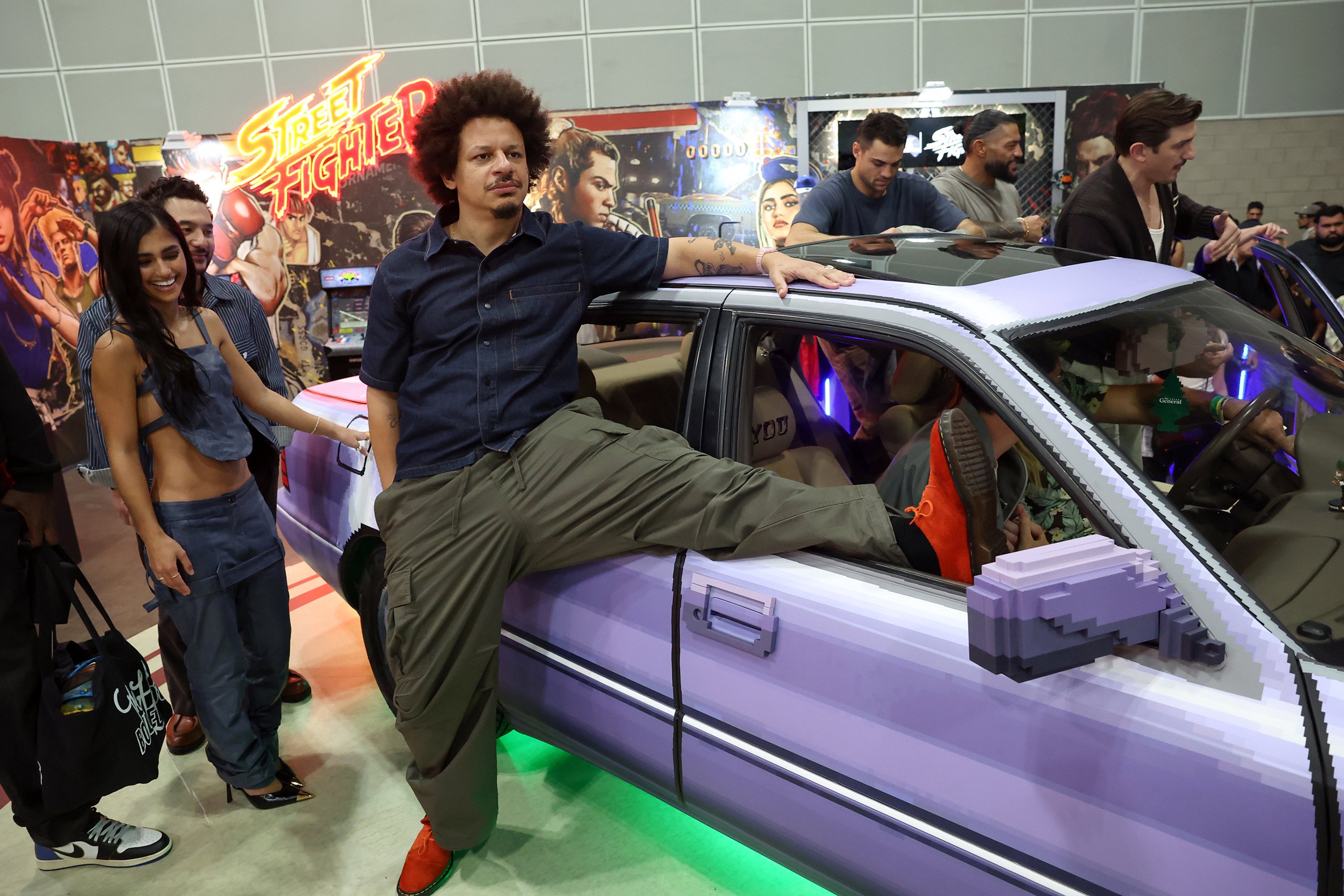
The obvious approach would have been to wrap a standard LS400 in a pixel-print vinyl and call it a day. Vehicle Effects went considerably further. The car wears a pixelated wrap, but it also carries genuine fabricated details that mimic the low-resolution graphics of the original.
That includes a protruding, blocky grille surround, plus side mirrors and door handles built to the same chunky, angular brief. Look closely at the front end and there are what appear to be functional headlights and turn signals, hidden beneath removable pixelated covers. The car can therefore be presented as a rolling screenshot at a show, then stripped back and driven on the road. It is a neat piece of engineering: the joke survives the journey, and so does the car.
A coin slot where the seat warmer used to be
The interior is where the build stops being a tribute and becomes a punchline. The seats have been retrimmed with embroidered headrests reading “YOU” and “WIN”, a nod to the on-screen text that appears when you finally reduce the LS400 to a smoking shell.
Then there is the centre console. The heated-seat controls have been replaced with an arcade-style coin holder, described by the team as “a coin-slot change holder that works as a seat warmer”. In other words, the switchgear that once warmed your backside has been repurposed into a piece of cabinet hardware that performs the same function. It is the kind of detail that only lands if you have stood in front of an arcade machine with a pocket full of 10p coins, and it is the single best illustration of how seriously this build takes its silliness.
Why Capcom put a Lexus in the bonus stage
The car was not chosen at random. According to official Street Fighter lore, the car-smashing scene represented a used-car dealer disposing of unsold inventory, which explains the fence, the lot and the general air of a backstreet forecourt. The stage may also have drawn on 1980s protests in which American autoworkers smashed Japanese imports, a period of genuine tension in the US car market.
The idea was not even new for Capcom. Final Fight, released roughly 18 months earlier, had already featured a similar bonus stage built around a Toyota Crown. The LS400 version simply arrived with better graphics, a bigger car and a more satisfying crunch. It also arrived at a moment when the LS400 was establishing Lexus as a serious alternative to the established European saloons. Wrecking one for points was, in its own small way, a comment on the market.
The sweepstakes
The replica is being given away in a sweepstakes run with The General, the US auto insurance company, and the contest is limited to US residents. The prize includes a cash award of $25,400.69, a figure that reads like an arcade high score and is presumably not a coincidence.
The car has also been put to work. A live-action Street Fighter film is due to open on 16 October, with trailers showing cars being smashed, and the film’s cast was filmed striking the replica. That gives the build a second life beyond the convention floor: it is a promotional prop, a sweepstakes prize and a functioning vehicle all at once.
The broader car world is having a similar moment of playfulness. The 2026 Ford Mustang RTR Review: The 315bhp EcoBoost Built to Go Sideways covers a car from a company founded by drifter Vaughn Gittin Jr, where the whole point is accessible, tyre-shredding fun rather than outright lap times. Cars built around a joke or a feeling, rather than a spec sheet, are having a good run.
What a throwaway bonus stage says about cars escaping the screen
The LS400 bonus stage was never meant to be important. It was filler between fights, a chance to rack up points and hear a satisfying crunch of glass. Yet it has outlasted most of the games that copied it, and it now exists in physical form, built by a shop whose day job is making cars for Hollywood.
That is the interesting part. Virtual cars usually stay virtual. When they do cross over, it tends to be as a paint scheme or a special edition with a badge and a plaque. This is different: a car that only ever existed as pixels has been fabricated, retrimmed and made road-worthy, with a coin slot where the seat warmer used to be. It is a tribute, a marketing exercise and a genuine piece of engineering, and it is hard to think of a better monument to 40 seconds of mindless destruction.
There is also a quieter point buried in the build. The car in the game was never officially a Lexus, only recognisable as one. The real car is unmistakably a Lexus, dressed up as something that never was. Somewhere in that loop is a neat summary of how car culture works now: the screen feeds the workshop, the workshop feeds the show, and the show feeds the next screen. For anyone who spent their youth hammering a joystick and watching a saloon collapse into pixels, the fact that you can now sit in it, on embroidered “YOU” and “WIN” headrests, is a strange and rather wonderful full circle.