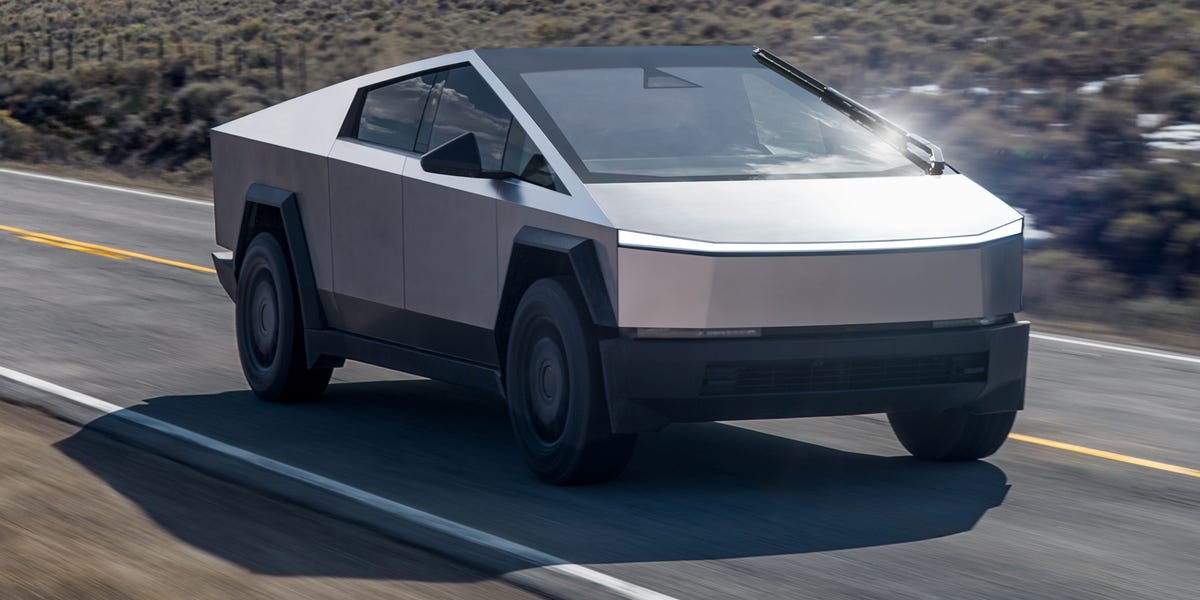
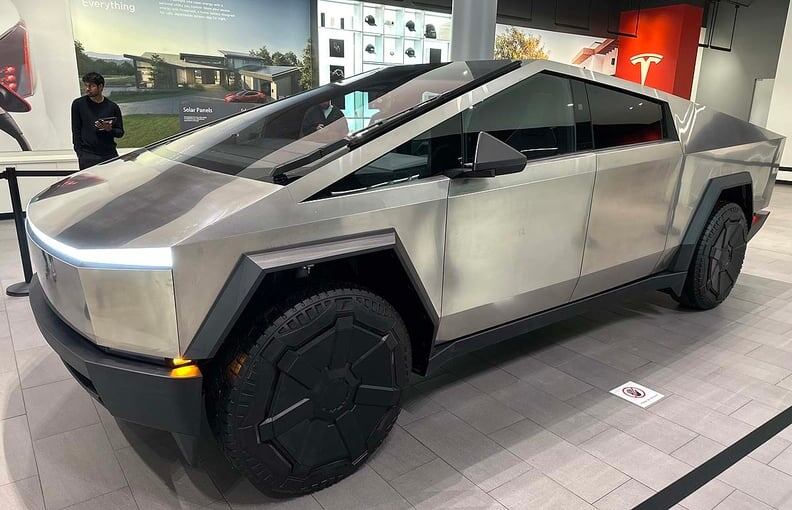
Elon Musk has confirmed that Tesla will stop building the Cybertruck, ending one of the most talked-about vehicles of the decade well short of the sales success it was meant to deliver. The announcement, made in a post on X overnight, puts the wind-down of production at Gigafactory Texas around the middle of 2027, with the freed-up capacity redirected to the Cybercab.
For a truck that arrived with genuine ambition to challenge America’s best-selling pickups, the retreat is a striking admission. It also leaves Tesla’s showroom thinner than at any point in the past decade. This is a US-market decision: the Cybertruck was never sold in the UK, so there is no British owner base affected by the shutdown.
Musk confirms the wind-down in Texas
The news came not through an earnings call or a press release but through Musk’s own account on X, the platform he owns. Production of the Cybertruck will cease at the Texas plant around the middle of 2027, with the line capacity repurposed for additional Cybercab output.
The signals around the announcement were telling. The Cybertruck’s lead engineer posted on X referring to the vehicle in the past tense, a strong hint that the pickup is being discontinued outright rather than having its production moved elsewhere. If you want the full detail of the shutdown and the reaction to it, our report on Tesla Cybertruck Production to End in 2027: What Went Wrong for the Polarising Pickup covers the confirmation and its immediate fallout.
A high-volume ambition that never materialised
The Cybertruck was never conceived as a niche halo model. Tesla pitched it squarely against the Ford F-150 and the Chevrolet Silverado, the two giants of the American pickup market, in the same way the Model 3 and Model Y take on combustion saloons and crossovers. The logic was straightforward: crack the pickup segment and Tesla would unlock the largest and most profitable slice of the US market.
That never happened. Even after Tesla added a cheaper, more basic variant last year in an effort to broaden the truck’s appeal, volumes stayed far below the benchmarks set by the F-150 and Silverado. The gap between ambition and reality is the defining feature of the Cybertruck’s commercial life.
A timeline that flatters nobody
The numbers on the calendar make uncomfortable reading. The Cybertruck was revealed in November 2019, with first customer deliveries finally arriving in November 2023, a four-year wait that included repeated delays. With production ending around mid-2027, the gap between the original reveal and the end of the line runs to roughly seven and a half years, against about three and a half years of actual sales.
Put another way, the Cybertruck spent more than twice as long being promised as it spent being built. Few vehicles in modern memory have had such a long, hyped gestation followed by such a short commercial run.
Missed benchmarks, then a string of safety campaigns
When the truck finally reached customers, it fell short of the range and price figures Tesla had announced at the 2019 reveal. Those targets had been central to the pitch, and their failure to materialise dented the value proposition from the outset.
Quality and safety issues compounded the problem. The Cybertruck was the subject of seven separate recall campaigns in 2024, all filed with the US National Highway Traffic Safety Administration (NHTSA), the regulator that oversees such actions in the American market. Among the most serious defects were a risk of unintended acceleration and exterior metal body panels detaching at speed. In 2025, an owner shared video with Road & Track of a bodywork panel flying off his truck, an image that does little for a vehicle whose stainless steel exoskeleton was marketed as a toughness selling point.
Recalls are not unique to Tesla, and the company has handled them through the usual regulatory channels. But the frequency and the nature of these faults, particularly panels coming loose at speed, cut against the Cybertruck’s core marketing claims in a way that rivals’ recalls rarely do.
What is left in Tesla’s showroom
The bigger story is what the Cybertruck’s departure does to Tesla’s range. With the pickup gone, the Model S and Model X cancelled, and the Roadster not expected until 2028, Tesla’s only current products will soon be the Model 3 and Model Y.
Both remain strong sellers and have received recent facelifts, so this is not a crisis of demand for the two cars themselves. But it is an extraordinarily narrow lineup for a company that once promised to expand across almost every segment. The Model 3 and Model Y will have to carry Tesla’s showrooms alone until the promised Cybercab is actually delivered, and that vehicle is aimed at a robotaxi future rather than the retail buyers who have sustained the brand.
There is no shortage of ideas in the pipeline. Tesla has been granted a patent for a concept it calls an electric fan car, with four ducted fans that could suck its next Roadster onto the tarmac, the kind of audacious engineering that built the company’s reputation. But patents and promises do not fill showrooms, and the Roadster’s long-delayed arrival leaves a conspicuous hole at the top of the range.
The verdict
The Cybertruck is a case study in the risks of betting on a radical design over proven volume segments. Tesla chose a stainless steel wedge with sharp angles and a market position unlike anything else on the road, and it asked pickup buyers to abandon their loyalty to the F-150 and Silverado on the strength of that design alone. The buyers did not follow in sufficient numbers.
The contrast with the Model 3 and Model Y is instructive. Those cars succeeded because they competed directly with established combustion models on price, range and practicality, not because they looked like nothing else. The Cybertruck inverted that formula, leading with provocation and hoping the fundamentals would catch up. They never did. Radical thinking is not inherently wrong, but the concepts that work are designed to flex around proven customer needs, whereas the Cybertruck asked customers to flex around the design.
For Tesla, the lesson is costly. A vehicle revealed in 2019, delivered in 2023 and gone by 2027 has consumed enormous engineering and manufacturing resources for a fraction of the return the company projected. The capacity at Texas will now go to the Cybercab, a vehicle that bets even more heavily on a future that has not yet arrived.
The Cybertruck will be remembered as a genuine cultural phenomenon, endlessly memed, instantly recognisable and impossible to ignore. What it will not be remembered as is the truck that took the fight to America’s best-selling pickups. That gap between fame and sales is the real verdict on Tesla’s most divisive product, and it leaves the company leaning on two cars to hold the fort until the next big idea is ready.
For more on this, see tesla cybertruck production end.
For more on this, see badge engineering gone wrong.
For more on this, see rimac nevera production end.