The Weekend Effect
Weekend car traffic in Britain is now firmly above the pre-pandemic baseline, up almost 2 per cent year-to-date in 2026, according to Department for Transport traffic estimates. Weekday car traffic, by contrast, remains a couple of percentage points below 2019 levels.
That gap is small in percentage terms but significant in what it represents. For decades, weekday peaks were the defining rhythm of the road network: the school run, the office commute, the Friday getaway. Now the busiest days are increasingly the ones we choose rather than the ones we are obliged to observe. Leisure trips, family visits, days out and weekend shopping are filling the roads at times when they were once comparatively quiet.
For anyone who has noticed that Saturday traffic on the A-roads feels heavier than it used to, the data confirms it. The weekend is no longer the calm interval between commutes. In many places, it is the new peak.
The Lockdown Cliff and the Slow Climb Back
The scale of the disruption makes the recovery all the more striking. At the height of the Covid-19 lockdowns, car usage dropped by more than a quarter as offices, schools and shops closed and millions of people stayed at home.
Total road usage has since recovered comprehensively. In 2025, all vehicles covered 342.6 billion miles on Britain’s roads, surpassing the 338.6 billion recorded in 2019. On the headline measure, the pandemic is behind us.
But the aggregate figure hides the split. Total motor vehicle usage has risen 3.2 per cent versus pre-pandemic levels since 2024, and that rise has been driven mainly by commercial vehicles. Cars, the dominant mode by volume, are still slightly below where they were. The recovery is real, but it is not evenly distributed across the week or across vehicle types.
The Van Boom
The clearest signal of how our driving habits have changed is the light commercial vehicle. LCV usage is up 24.3 per cent compared with 2019 so far in 2026, while car usage is down 2.2 per cent over the same comparison.
That is not a blip. It is the physical manifestation of the delivery economy. In September 2026, 28 per cent of UK retail expenditure was online, up from 18 per cent in the same period in 2018. Every one of those purchases has to move through a supply chain, and the last mile of that chain is increasingly a diesel van pulling up outside a front door.
The result is a road network carrying more commercial traffic than ever, often at times and in places that were not designed for it. Residential streets built for one delivery a day now see a steady stream of vans, and the weekday traffic that has disappeared from the commute has partly been replaced by vehicles working the delivery shift.
Why We’re Driving Less on Weekdays
Two forces explain most of the weekday shortfall. The first is hybrid working. The pandemic normalised home working, and a large share of the workforce now commutes less often than they did before 2019. For many households, the office is a two or three day a week destination rather than a daily one, and the car stays on the drive accordingly.
The second is cost. According to insurer Tempcover, 44 per cent of drivers say high petrol and diesel prices have forced them to drive less, with most cutting non-essential journeys. That is a familiar pattern. When fuel gets expensive, drivers do not usually give up the school run or the trip to work. They trim the marginal miles instead, and the effect tends to bite hardest on weekday journeys that are easy to postpone or combine.
The curious side effect is that high fuel prices have not pushed British drivers towards electric cars in the way some expected. The logic seems straightforward enough: when filling up costs a fortune, drivers start doing sums on an electric car. Polling in the US, as reported elsewhere, suggests high petrol prices have made some American drivers more interested in going electric, yet even there the enthusiasm has not translated into a surge of sales. The gap between what drivers say and what they buy is a theme worth understanding, and it helps explain why the UK’s car parc, the stock of vehicles on the road, is changing more slowly than fuel prices alone might suggest.
More Cars, Fewer Car Miles
Here is the statistic that best captures the shift. There are now more than 1.5 million extra cars on UK roads compared with the 35 million registered in 2019, yet overall car mileage is lower.
More cars, fewer miles. That combination only makes sense if each car is being used differently. Households that once ran one car doing a daily commute may now run two, each doing fewer but more specific journeys. The second car is not a commuter tool; it is a local runabout, a weekend vehicle, a backup for a household where working patterns no longer align.
For buyers, this matters. It suggests the case for a car is increasingly about flexibility and occasional use rather than daily mileage, which changes the arithmetic on running costs, finance deals and even powertrain choice. A car doing 6,000 miles a year on short weekend trips has different needs from one eating motorway miles five days a week.
What About the Bus?
Bus use remains well below pre-pandemic levels, down 16 per cent. That is a notable lag, and it raises an awkward question: where did the former bus commuters go?
The answer is probably a mixture. Some now work from home. Some switched to the car for journeys they once made by bus, particularly where services have been cut or fares have risen. Some moved their commuting to the train. Whatever the precise mix, the bus has not shared in the recovery enjoyed by the weekend car, and that has consequences for the viability of routes that depend on a steady flow of weekday passengers.
What This Means for Drivers
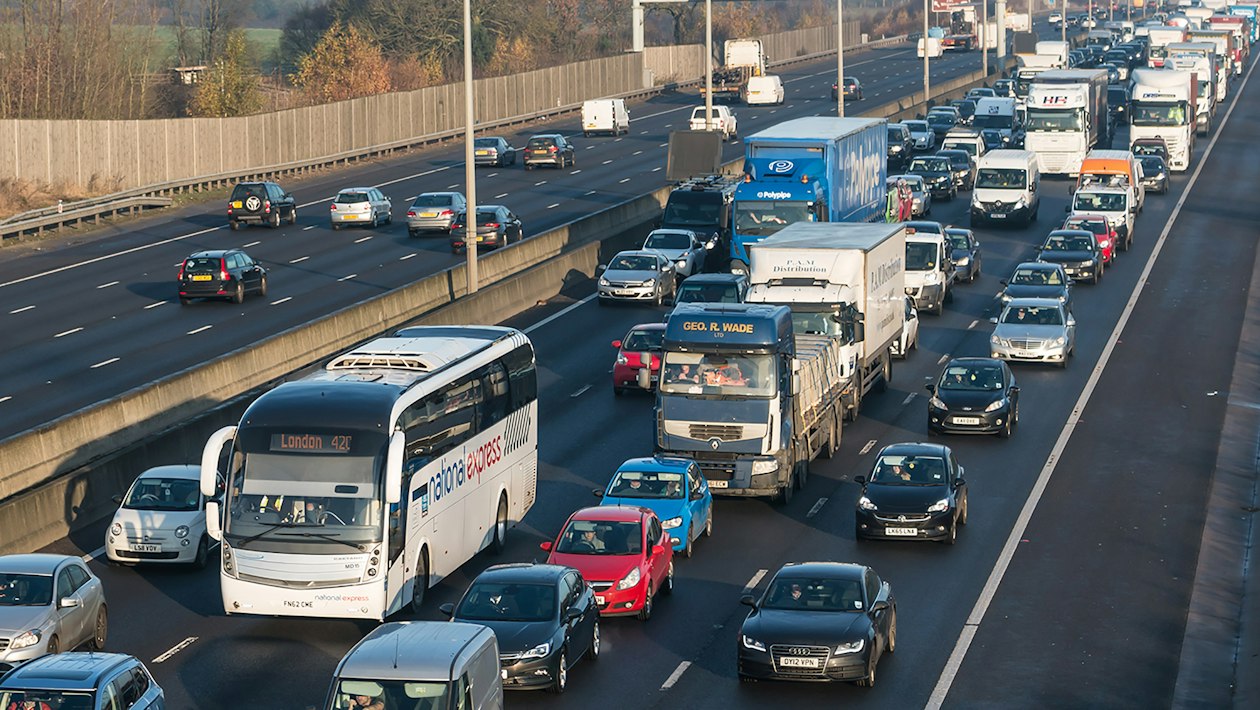
The practical implications are already visible. Congestion is shifting to weekends, which means the Saturday trip to the coast or the retail park is now more likely to involve queueing than it was a decade ago. Anyone planning a long weekend drive should assume busier roads than the old pattern would suggest.
Van traffic is reshaping the roads too. Expect more commercial vehicles on residential streets, more pressure on loading bays and more competition for kerb space. For drivers, that means more careful observation in built-up areas and a greater chance of meeting a delivery van reversing out of a side road.
The weekday commute, meanwhile, may never fully return. Hybrid working looks settled rather than temporary, and the cost of fuel continues to shape discretionary journeys. The roads of 2026 are not simply busier or quieter than 2019; they are used differently, with the weekend carrying the weight that the working week once did.
For anyone buying or running a car, the takeaway is to think about the driving you actually do rather than the driving you used to do. If your mileage is now concentrated into weekends and occasional longer trips, that is the pattern to budget for, insure for and choose a car around.
We covered hands free driving test in more detail elsewhere.