Why a 1994 Cherokee Is Hard to Diagnose
Modern cars are designed to tell you what is wrong with them. Since OBD-II became the standard diagnostic interface in the United States for the 1996 model year, any garage with a generic scan tool can plug into the port under the dashboard and pull trouble codes. The 1994 Cherokee predates all of that. There is no standardised diagnostic port, so a generic scanner simply cannot talk to the car.
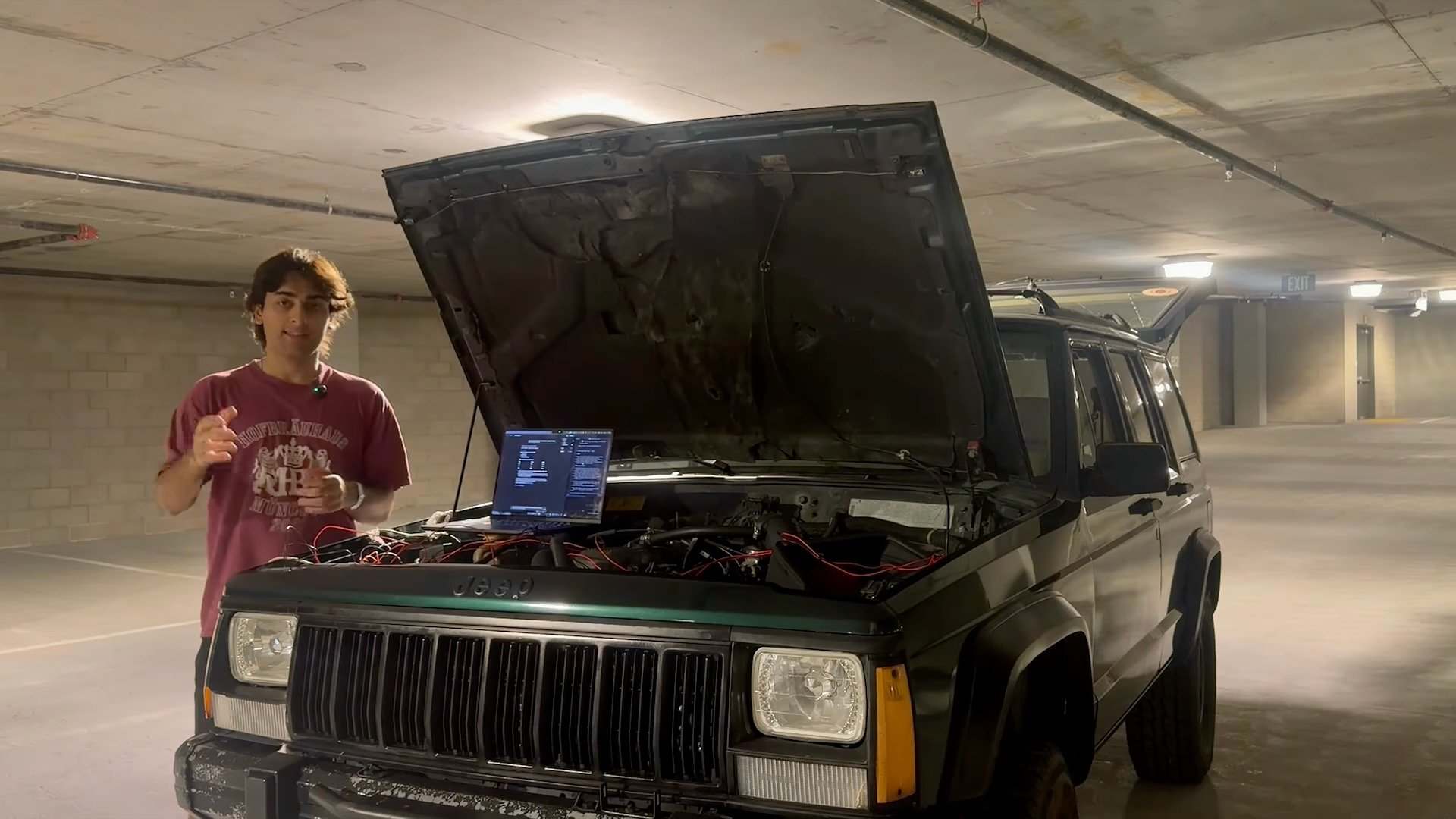
A Chrysler-specific tool built for that model year does exist, but Zulali found it hard to track down and limited in what it could tell him. For an owner trying to solve an emissions failure at home, that leaves two options: guess and replace parts until the problem goes away, or find a way to interrogate the engine computer directly. The second option is normally the preserve of people with specialist knowledge and specialist equipment. Zulali had neither, but he did have access to Claude.
Claude Identifies the Protocol and Suggests a $3 Fix
The first task was simply getting the car’s computer to talk. Claude worked out the communication protocol the onboard computer uses and suggested an Arduino Nano as a translator between the car and a laptop. The board cost three dollars. That is the sort of suggestion that sounds almost too simple, but it is exactly the kind of narrow technical problem where a large language model can be genuinely useful: identify the protocol, find a cheap off-the-shelf board that speaks it, and write the code to bridge the two.
With the laptop plugged in while driving, Zulali used Claude to take readings from the Cherokee’s computer. This is where the story becomes a cautionary tale as much as a success. Claude reviewed the data and concluded the car had a fuelling problem. Through the Arduino and laptop setup, it then commanded the fuel pump and raised fuel pressure. The pressure went up. The emissions failure did not go away. The diagnosis had been built on a faulty dataset, and the AI had acted on it confidently.
That episode is worth pausing on. An AI model does not know when the numbers it is reading are wrong. It reasoned from the data it was given, made a plausible suggestion and executed it. A human mechanic with a fuel pressure gauge and years of experience might have spotted the same dead end, but would probably have questioned the readings first.
Copying the Code and Finding the Real Fault
Having failed to fix the problem through live diagnosis, Zulali took a different approach. He had Claude copy the entire code from the engine computer so it could be examined outside the car. With the full program in front of it, the AI determined that the XJ was failing emissions because of a fuel-mapping issue. The problem was not a worn component or a failing sensor but the calibration itself: the instructions the computer uses to decide how much fuel to deliver.
The obvious next step would be to reflash the computer with corrected code. The obstacle was hardware. The 1994 computer lacks the capability to be conventionally reprogrammed, so the usual route was closed. This is where a second AI tool came in. Claude reflashed the computer with help from Codex, OpenAI’s coding agent, which was needed to work around the missing hardware. With the new code in place, Zulali reports that the Cherokee passed its emissions test.
The whole job was done without the car going to a shop. For anyone who has watched a project stall because a diagnostic tool costs more than the car is worth, that is an appealing result. The same spirit of reviving unlikely machinery drives some of the more ambitious projects we have covered, such as the 102.4-Litre Mirrlees Blackstone JS8: YouTuber Brings a 1953 RAF Diesel Back to Life.
The Catch: This Is Not a Weekend Job
Zulali is upfront about the caveat. The fix required substantial programming knowledge. Reading raw engine computer code, understanding a fuel map, modifying it and writing it back to hardware that was never designed to accept a reflash is not a task that begins with a prompt and ends with a pass certificate. The AI was a capable assistant, but the person directing it had to understand what was being asked and verify what came back.
For most owners, a good mechanic remains the easier and cheaper route, particularly when you factor in the risk of bricking an engine computer or causing damage through a bad calibration. Emissions testing in the UK has its own pressures, and an MOT failure is not something to experiment on with improvised code.
What the Cherokee Repair Really Shows
The Zulali Cherokee is a useful test case because it sits at the edge of what AI can currently do for DIY car repair. It shows that a model can identify an obscure communication protocol, suggest cheap hardware to interface with it, read live data, copy an entire engine program and help rewrite it. It also shows the failure mode: Claude confidently pursued a fuelling diagnosis from bad data and changed the fuel pressure without solving anything. The eventual fix came from a more fundamental approach, examining the code itself, and from a second tool brought in to overcome a hardware limitation. The AI did not diagnose the car in a single flash of insight. It was directed, corrected and supplemented by a human who knew when to change tack.
For owners of pre-OBD-II cars, the practical lesson is narrower than the headlines suggest. If you have programming skills and a stubborn attachment to an old Cherokee, the tools now exist to do what Zulali did. If you do not, the three-dollar Arduino is not the expensive part of the project. The knowledge is. AI can compress the learning curve and handle the tedious parts, but it cannot yet tell you when its own data is wrong. Until it can, the mechanic down the road remains the sensible first call.