
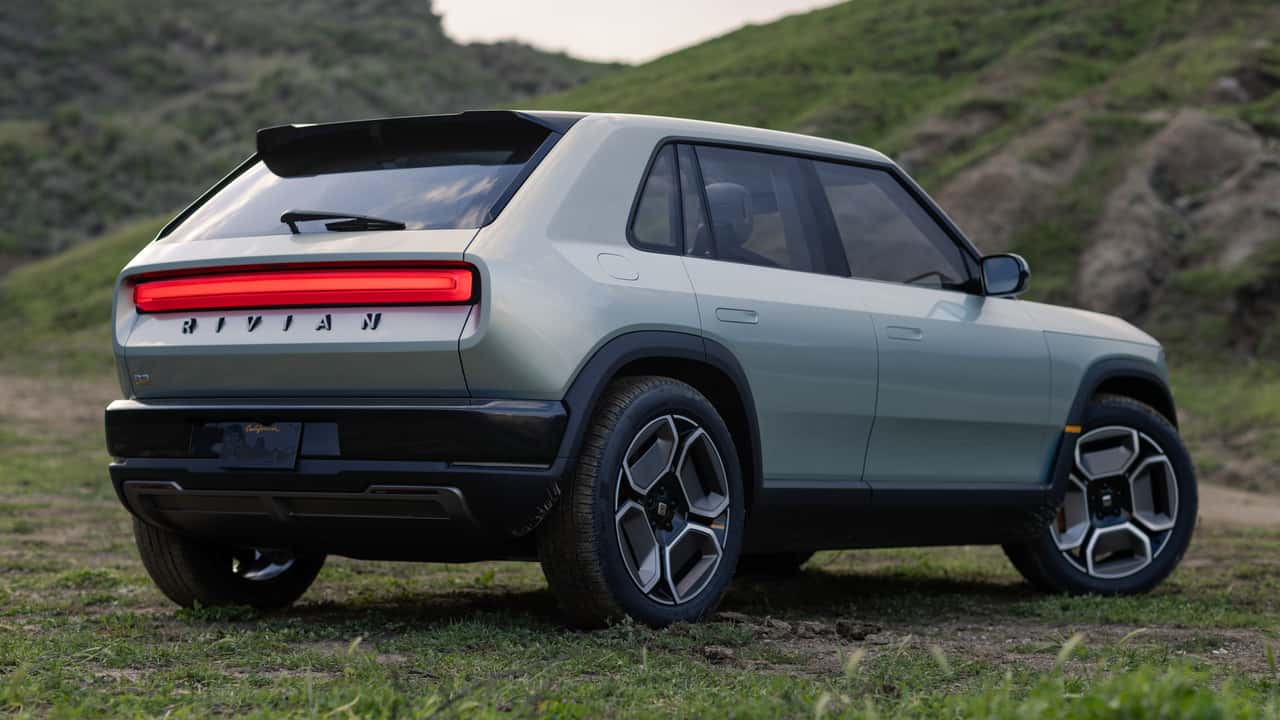
Rivian made its name with the R1T pickup and R1S SUV, two premium electric vehicles that sit in luxury price territory. Now the California-based automaker is working on its next act, and the plot twist is affordability. The R2 is coming in 2026 as Rivian’s first mass-market play. But even as the R2 prepares for launch, CEO RJ Scaringe is already talking about two more models that will slot beneath it: the R3 and R4.
The short version: the Rivian R3 and R4 are the company’s planned follow-ups to the R2, each targeting a lower price point as Rivian pushes from niche premium brand toward the mainstream.
The pitch is simple. The R2 is the affordable Rivian. The R3 will be more affordable than that. And the R4? Even cheaper still. If that sounds like a company racing toward the bottom of the price ladder, that is exactly the point. Rivian wants to move from niche premium brand to mainstream EV player, and the R3 and R4 are the vehicles that get it there.
Rivian’s Pricing Ladder: From R1 to R4
To understand where the R3 and R4 are headed, you have to start at the top of the ladder.
The R1 lineup currently sits in premium territory, with the R1T and R1S commanding prices that put them in competition with luxury SUVs and trucks. That was always the plan. Rivian needed to establish itself as a credible brand before it could credibly sell something cheaper.
The R2 is the first step down. Rivian has been marketing it as a “$45,000 SUV,” but the reality is more nuanced. The launch lineup rolls out in stages:
| Model | Starting Price | Timing |
|---|---|---|
| R1T / R1S | Premium luxury territory | On sale now |
| R2 Performance launch edition | $57,990 | 2026 |
| R2 Premium | $53,990 | Late 2026 |
| R2 Standard Long Range | $48,490 | Early 2027 |
| R2 Standard RWD (275+ miles) | $45,000 | Late 2027 |
| R3 | “Mid to high 30s” (unconfirmed) | 2028 |
| R4 | Lower than R3 (unconfirmed) | TBD |
So the headline $45,000 figure is real, but it is also the last version to arrive. R2 deliveries are expected to begin in 2026, and the cheaper trims will follow over roughly eighteen months.
Below that sits the R3. And below the R3, eventually, sits the R4.
Rivian R3 Price and Release Date: “Materially Lower” Than R2
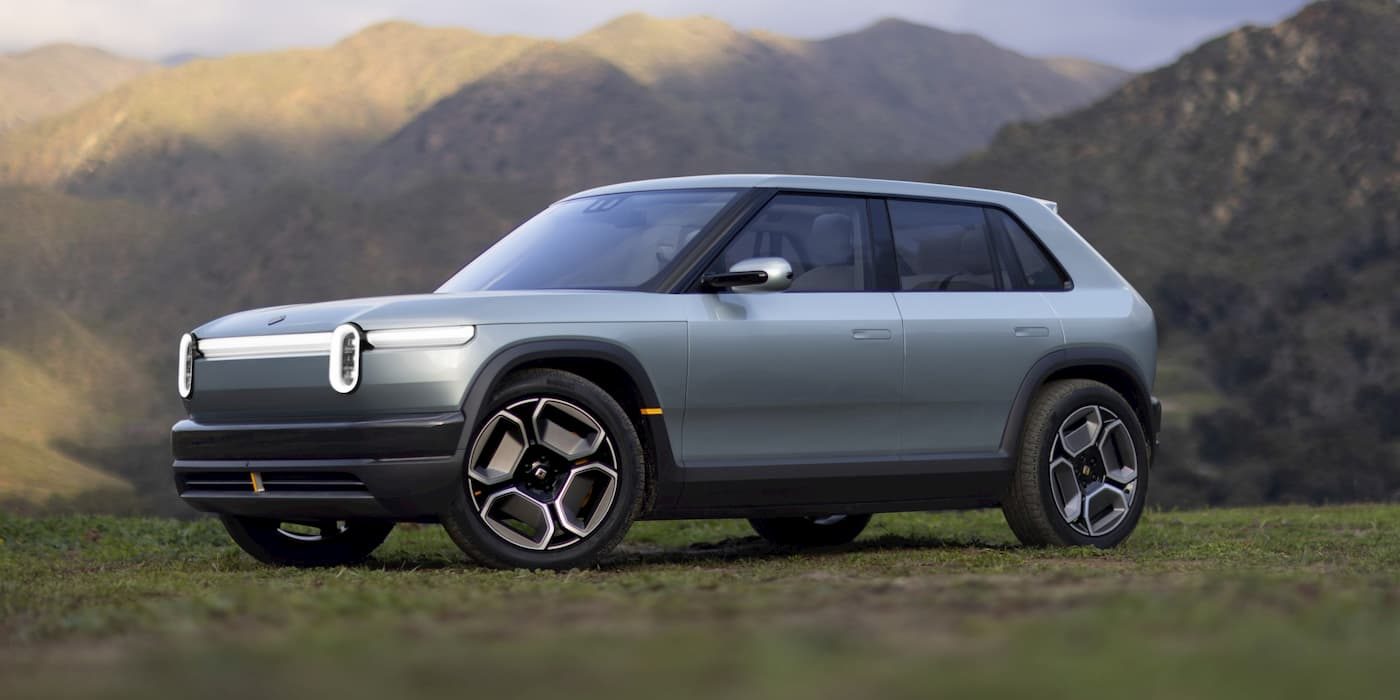
Scaringe has been direct about where the R3 lands. He has said the R3 will be priced “materially lower” than the R2, and he previously indicated it would land in the “mid to high 30s.” No official pricing has been announced, but that range is the clearest signal yet.
For context, the mid to high 30s puts the R3 in territory that very few EVs currently occupy. Most electric vehicles on sale today remain more expensive than the segment the R3 targets. A compact electric crossover starting around $36,000 to $39,000 would undercut the average transaction price of a new EV by a wide margin.
The R3 will also launch with a twist. Sales will begin with the R3X, a high-performance, off-road-oriented variant. That mirrors Rivian’s broader strategy of leading with the most capable and most expensive version first, then working down. It also means the cheapest R3 trims are likely a year or more behind the R3X.
Rivian R4: What We Know So Far
The R4 is where things get fuzzy. Rivian has confirmed it as a future model, and Scaringe has said it will push prices down “further still” compared to the R3. But that is a price direction, not a product plan. There is no date attached, no confirmed body style, and no pricing target.
What we do know is that the R4 and R5 are described as “a sibling set” sharing an entirely new platform. As of earlier statements, no engineering teams had been assigned to those vehicles. That places the R4 in the second half of the decade at the earliest, based on what Rivian has said so far.
The strategic logic is still worth noting. If the R3 targets the mid to high 30s, the R4 would presumably aim for the low 30s or even below, though Rivian has not confirmed any pricing target. That is the price point where EVs stop competing with each other and start competing with mainstream gas-powered compact SUVs. It is also the price point where the economics get very hard.
Production Timeline and Platform
The R3 will be built at Rivian’s Georgia factory, with production scheduled to start in 2028. That plant is designed for 400,000 units of annual capacity across two phases, which gives Rivian room to scale well beyond its current output.
The timeline matters. R2 deliveries are expected to start in 2026. R3 production begins in 2028. That is roughly a two-year gap between the two launches, which gives Rivian time to work the bugs out of the R2 platform and its Georgia manufacturing before adding a second, cheaper model.
The R4 and R5 will ride on an entirely new platform, separate from the R2 and R3. That suggests Rivian is not simply shrinking the same architecture but designing something new for the smallest and cheapest end of its lineup. It is a bigger bet, and a more expensive one, which explains why the company has not committed to a timeline.
The R2 Effect: Why R2 Success Is Critical
Here is the part of the story that matters most. None of the R3 or R4 plans work if the R2 fails.
Rivian raised its 2026 delivery guidance to 65,000 to 70,000 vehicles, up from roughly 42,000 in 2025. That is meaningful growth. But the company is still losing money, with adjusted EBITDA losses guided at $1.8 billion to $2 billion for the year. Rivian needs volume, and the R2 is the vehicle that delivers it.
Scaringe has been blunt about the stakes. He has said the R2 “must go well” for the rest of the roadmap to materialize. That is not marketing language. It is a statement of financial reality. The R3 and R4 exist on paper because the R2 is expected to generate the cash and credibility to fund them.
There is also a revealing detail about how Rivian’s supplier dynamics have changed. Scaringe explained that Rivian could not lead with a cheap car because, as an unproven startup, it budgeted a “40 percent or 50 percent premium” on supplier pricing for the R1. Suppliers were not sure Rivian would survive, so they priced in the risk. That dynamic has since flipped. Supplier CEOs now pitch Rivian directly. That shift is what makes a mid-$30,000 Rivian plausible in a way it simply was not five years ago.
Competitive Landscape: Who Will the R3 Fight?
The R3 will not arrive into a vacuum. By 2028, the affordable EV segment will be crowded.
Potential competitors cited for the R3 include the Hyundai Ioniq 5, the Subaru Uncharted, and the Toyota bZ. Each of those vehicles brings something different. The Ioniq 5 has established itself as one of the best all-around EVs on the market, with fast charging and a spacious interior. The Uncharted gives Subaru a rugged, outdoor-focused entry. The Toyota bZ carries the weight of the world’s largest automaker behind it.
Rivian’s advantage is brand identity. The R3X, in particular, will lean into the off-road capability and design language that made the R1 famous. If Rivian can deliver that character at a mid-$30,000 price, it will have something none of those competitors can match directly.
The risk is execution. Cheaper vehicles mean thinner margins, and Rivian has not yet built a high-volume, low-cost product. The R2 is the proving ground. The R3 is the payoff.
Rivian’s Road to Mass Adoption
Rivian is following a playbook that Tesla wrote first: start with expensive, desirable flagships, build the brand, then work down to volume models. The R1 was the Model S moment. The R2 is the Model 3 moment. The R3 and R4 are what comes after.
The difference is timing and pressure. Tesla had years of clear runway. Rivian is attempting the same transition while burning billions and facing a competitive field that is far more crowded than it was in 2017.
What we know for certain is this: the R2 arrives first, with trims rolling out through 2027. The R3 follows in 2028 from Georgia, starting with the R3X and eventually reaching the mid to high 30s. The R4 is confirmed in direction only, with a new platform and a promise of lower prices still.
If the R2 goes well, Rivian becomes a mainstream automaker. If it does not, the R3 and R4 stay on the whiteboard. That is the whole story in one sentence. The affordable Rivian era begins with the R2, and everything else depends on it.
Related: rivian recalls almost 000.




One Comment