
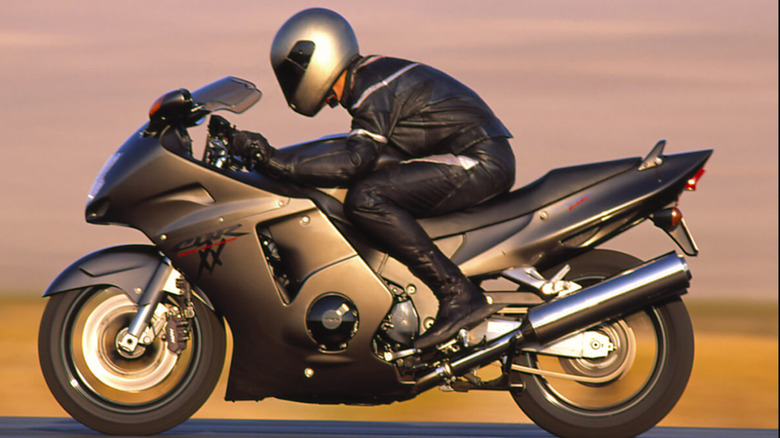
The Honda CBR1100XX Super Blackbird: the bike that started it
Honda fired the opening shot in 1996 with the CBR1100XX, a 1,137 cc four-cylinder machine producing 149 bhp and carrying a claimed top speed of 178 mph. It earned the nickname Super Blackbird after the Lockheed SR-71, the reconnaissance aircraft that spent its career outrunning everything sent to intercept it, and the comparison was not entirely marketing fluff.
The numbers behind the nickname were genuinely remarkable. The CBR1100XX was the fastest motorcycle of its time and the fastest vehicle Honda had ever sold to the public, beating the contemporary NSX supercar by a full 10 mph. It sold more than 17,000 units, and the quality that drove those sales was not outright pace so much as high-speed stability. The Blackbird was a bike you could sit on at three-figure speeds for hours without feeling like you were wrestling it, which is exactly what long-distance riders wanted from a hypersport machine.
Its arrival changed the game. Rival manufacturers, particularly in Japan, stopped treating top speed as one attribute among many and started treating it as the headline metric.
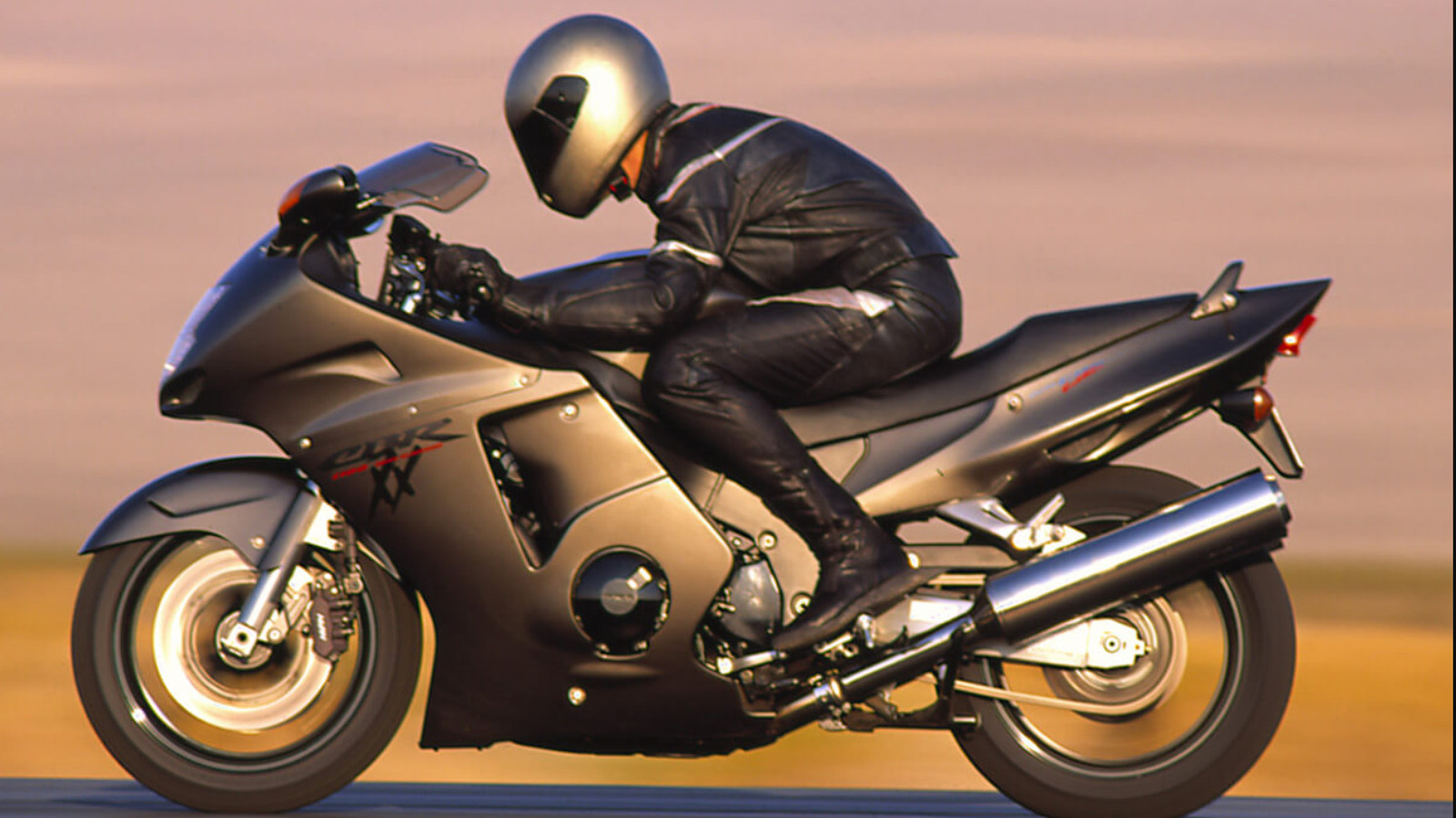
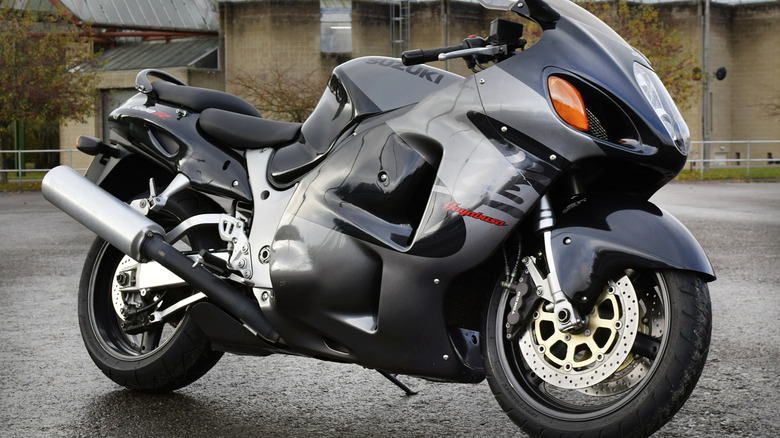
The Suzuki GSX-1300R Hayabusa: the predator arrives
Suzuki answered three years later with a name that was effectively a threat. Hayabusa is Japanese for falcon, and the falcon’s preferred prey is the blackbird. There was no subtlety in the message.
The GSX-1300R backed it up. A 1.3-litre engine, 175 bhp, and a claimed 194 mph top speed made it the fastest production motorcycle in the world on arrival. It was also, by common consent, a machine that transcended its own spec sheet. Cycle World’s Mark Hoyer put it better than anyone: “As much as Suzuki’s soul gets its divine light from the GSX-R, the Hayabusa is where engineering put supernatural powers, with lights and a license plate, in our hands.”
That line captures why the Hayabusa became a legend rather than just a fast bike. It was absurd, over-engineered and completely road legal, and it remains one of the most modified and drag-raced platforms in motorcycling.
The 300 kph gentleman’s agreement
Then, quietly, the arms race stopped. Japan’s big four manufacturers, Honda, Yamaha, Suzuki and Kawasaki, voluntarily agreed to cap top speeds at 300 kph, roughly 186 mph. The motivation was political as much as philosophical: European lawmakers were growing increasingly vocal about a top-speed arms race on public roads, and the industry judged that a self-imposed ceiling was preferable to one written into law.
The agreement was unwritten and unenforceable, which is precisely what makes it interesting. Suzuki did not detune the Hayabusa or shrink its engine to comply. It kept the power and the displacement and simply limited the top end electronically. The fastest street-legal bikes from Japan remain artificially restricted below 300 kph to this day, which means the Hayabusa you can buy now is mechanically capable of more than it will ever deliver.
That is a strange thing to know as a buyer. The spec sheet tells you what a manufacturer agreed to sell, not what its engineers built.
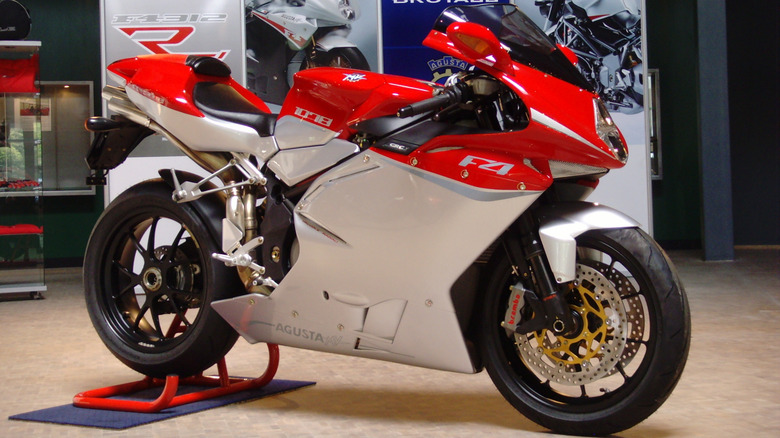
MV Agusta F4 R 312: the first to break ranks
Seven years after the agreement, MV Agusta broke it. The 2007 F4 R 312 took its name directly from its claimed top speed in kilometres per hour, 312 kph (194 mph), which matched the Hayabusa’s original claim exactly. The message was pointed.
The Italian machine had the hardware to justify it: a claimed 183 bhp and a dry weight of 423 lb (192 kg), making it both more powerful and significantly lighter than the Hayabusa. It was developed from the F4 1000 R, gaining a nine-horsepower increase through titanium valves, larger throttle bodies and shorter intake trumpets, while retaining the chassis, forks, brakes and the celebrated Massimo Tamburini design that had made the F4 one of the most beautiful motorcycles of its generation.
It was priced at $24,995 when new in the US, and few were sold. That was the point as much as the problem. MV Agusta was a boutique operation, and the F4 R 312 was never intended to compete with Suzuki on volume. What it demonstrated was that the 300 kph ceiling was a commercial and political decision rather than a technical barrier, and that a small Italian factory with the right engineers could step over it whenever it chose.
For a sense of how performance stories from other eras and other industries have shaped what enthusiasts value, it is worth looking at From 1903 Camelbacks to Viper-Powered Trucks: The Rare Machines That Defined American Performance, which traces a similar tension between engineering ambition and commercial reality.
BMW M 1000 RR and the modern era
By the time BMW launched the M 1000 RR in 2020, the terms of the argument had changed completely, [citation needed]. It was the first collaboration between BMW Motorrad and M Performance, an extension of the S 1000 RR, and its significance lay less in any single speed figure than in what it signalled about how performance is now sold.
Outright top speed gradually stopped being the headline number over the 2000s. Modern superbikes are marketed on lap times, electronics packages, aerodynamic downforce, weight and track-focused chassis hardware. The M 1000 RR arrived into that world, a flagship defined by its engineering relationship to BMW’s car division rather than by a claim about how fast it could go in a straight line.
What the agreement left behind
The legacy is a two-tier market that buyers rarely think about. The fastest street-legal Japanese machines remain limited to under 300 kph, and that limit has nothing to do with what their engines can produce. Comparing spec sheets between a Japanese hypersport and a European exotic is therefore an exercise in comparing two different sets of intentions rather than two different levels of capability.
The Blackbird and the Hayabusa still define the class, not because nothing has surpassed them but because they were built at the last moment when top speed was the only number that mattered. The 186 mph handshake that followed was an act of collective restraint by four companies that could each have kept going. It has held for decades, broken only by a small Italian firm with a point to prove and a price tag to match. If you want to understand why the fastest bikes you can buy are not the fastest bikes that could be built, that unwritten agreement is the whole answer.




One Comment