
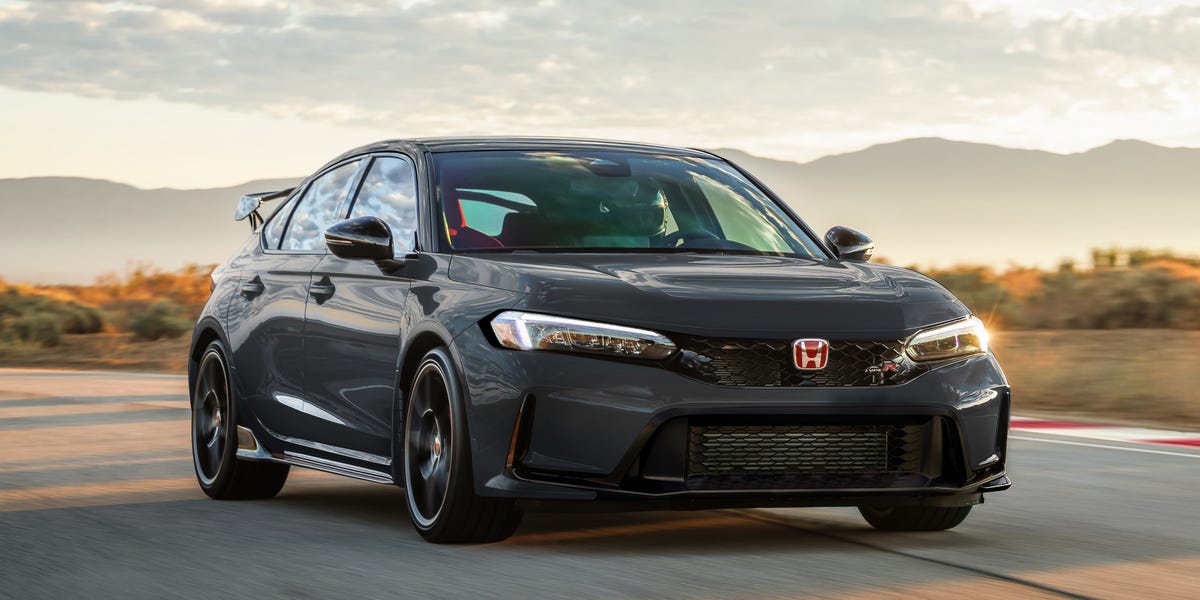
The powertrain stays exactly as it was
There is no power increase, no all-wheel drive and no hybrid assistance. The turbocharged 2.0-litre four continues to produce 315hp, sent exclusively through the front wheels via a six-speed manual and a limited-slip differential. That’s the same recipe the current-generation car has used since launch, and Honda has shown no appetite to change it.
The front-drive manual hot hatch is a format under pressure from both ends: electric performance cars deliver instant torque with none of the traction compromises, while all-wheel-drive rivals offer more usable pace in poor conditions. Honda’s answer is to keep the formula and improve how it feels.
Chassis tweaks aimed at real roads
The most substantive mechanical changes sit in the damping and pedal feel. Honda has retuned the adaptive dampers in +R mode to improve road-following performance while reducing bouncing and impact harshness. In plain terms, that should mean a car that stays composed over broken tarmac without rattling your fillings loose on the way to work.
The automatic rev-matching system has also been revised for quicker engine response on downshifts, which matters more than it sounds in a manual performance car where heel-and-toe is optional. Honda has added a yoke spring to the brake pedal linkage as well, reducing play for a more direct pedal. It is a small, inexpensive change that drivers will notice every single time they brake.
A bigger grille and more downforce
The front end has been redesigned with a larger grille opening. Honda claims the reduced turbulence increases airflow velocity, improving engine cooling particularly during sustained track driving. A deeper front splitter is said to produce additional downforce, though Honda hasn’t quoted a figure. The engine cover has also been restyled after earlier Japanese-market Type Rs, a nod to the badge’s heritage.
None of this is dramatic. But cooling has been a genuine consideration for track-day drivers of turbocharged front-drive cars, and a larger grille opening is a functional fix rather than a styling exercise.
Heated seats arrive at last
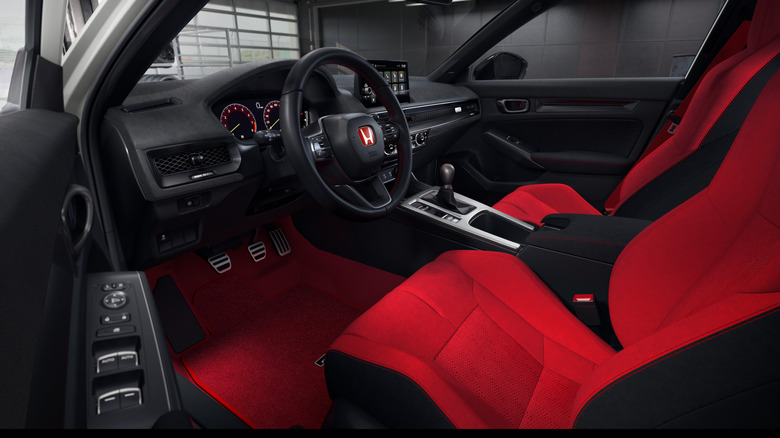
The interior changes are where the 2027 car makes its strongest case to daily drivers. Heated front bucket seats with three temperature settings appear on a Civic Type R for the first time, joined by an auto-dimming rearview mirror as standard. On a cold morning, that is a meaningful addition.
Elsewhere there are darker finishes for the aluminium shift knob, console trim and door handles, a new diamond-pattern dash insert, black climate-control knobs, silver door trim, and Ultrasuede on the instrument panel and upper front door panels. There’s even a new dual-tone horn. It is a cabin that has been quietly upgraded rather than overhauled, which suits a car whose interior was already one of the more sensible in its class.
Technology and safety upgrades
Honda has added Google built-in, bringing Maps, Play and Gemini to the infotainment system alongside Alexa. Two extra USB-C ports now sit above the existing wireless charger, addressing one of the more common complaints about modern car interiors.
The advanced driver assistance suite has been improved too. It now includes motorcycle and bicycle detection, revised acceleration and braking behaviour for adaptive cruise control, and post-collision braking. The last of those applies the brakes automatically after an initial impact to reduce the chance of a secondary collision, a feature that has become more common across the industry and is welcome here.
Colours, pricing and availability
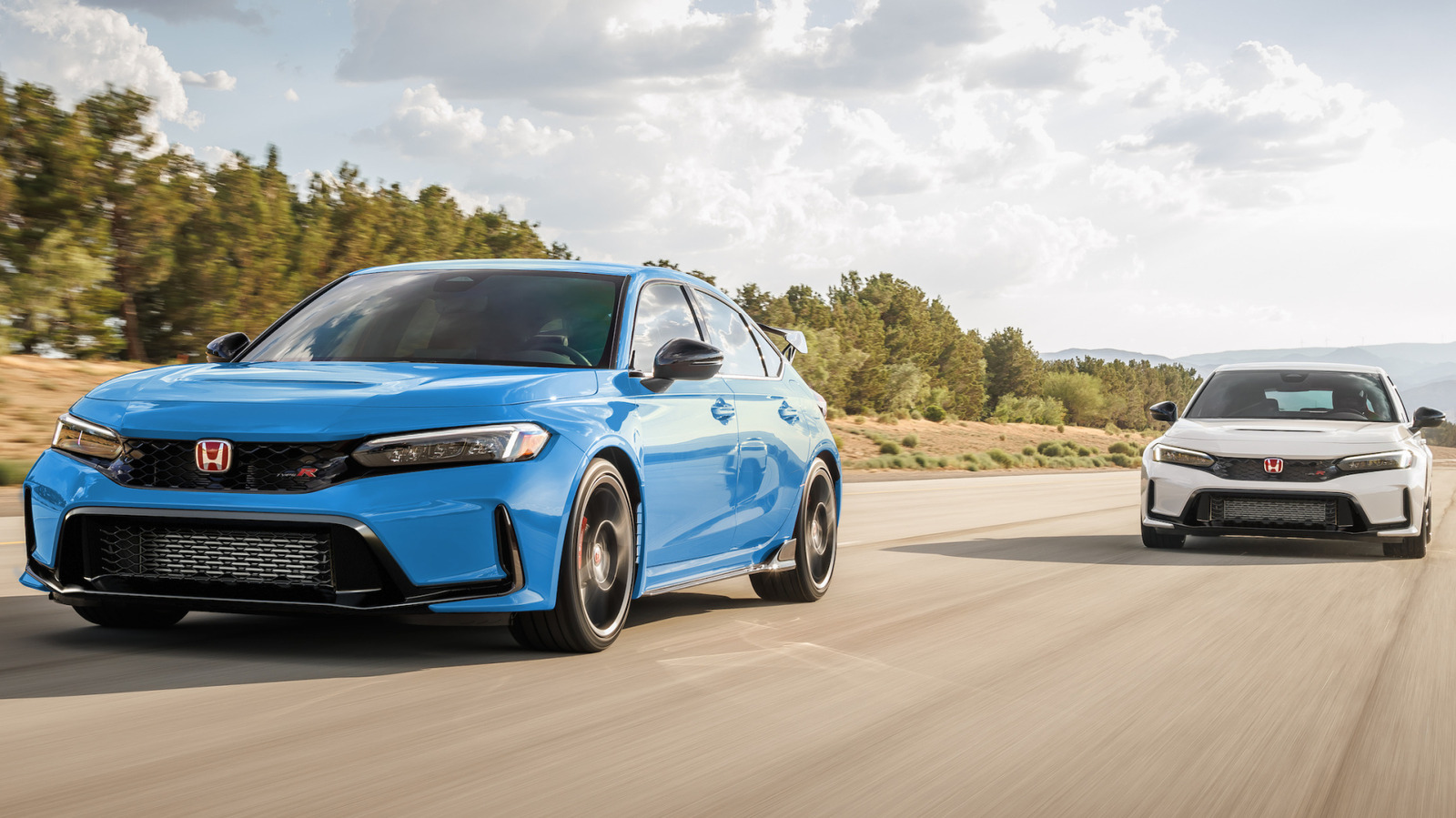
A new Meteorite Gray Metallic joins Boost Blue Pearl, Sonic Gray Pearl and Championship White. In the United States, pricing starts at around $49,990 including destination, and US deliveries begin this month. UK pricing and timing have not yet been confirmed.
A careful update in a market that rewards restraint
The 2027 Civic Type R is not trying to be something it isn’t. It remains a front-drive, manual, 315hp hot hatch at a time when that combination is increasingly rare, and Honda has chosen to refine rather than reinvent. The approach echoes Toyota’s ongoing development of the GR Corolla, which has been characterised as a similar philosophy of incremental improvements rather than wholesale change.
There is a counter-argument worth acknowledging. Buyers cross-shopping the Type R against more powerful all-wheel-drive rivals may find the lack of a headline gain underwhelming, and the US increase buys equipment rather than performance. For those who measure a car by its output figure, this refresh will look like a holding pattern.
But the Type R has never really been about the number. It has been about the way a well-sorted front-drive chassis rewards commitment, and about a manual gearbox that makes even a mundane commute feel like an event. Heated seats, a bigger grille and retuned dampers won’t win a drag race, but they make the car easier to live with every day. As the badge turns 30, that feels like the right kind of present.
For a sense of how differently the same power figure can be deployed, our 2026 Ford Mustang RTR review shows what 315hp looks like when the brief is entirely sideways. Honda has picked its side, and it’s the one that keeps the manual alive.




One Comment