What the Sanrivatti One Actually Is
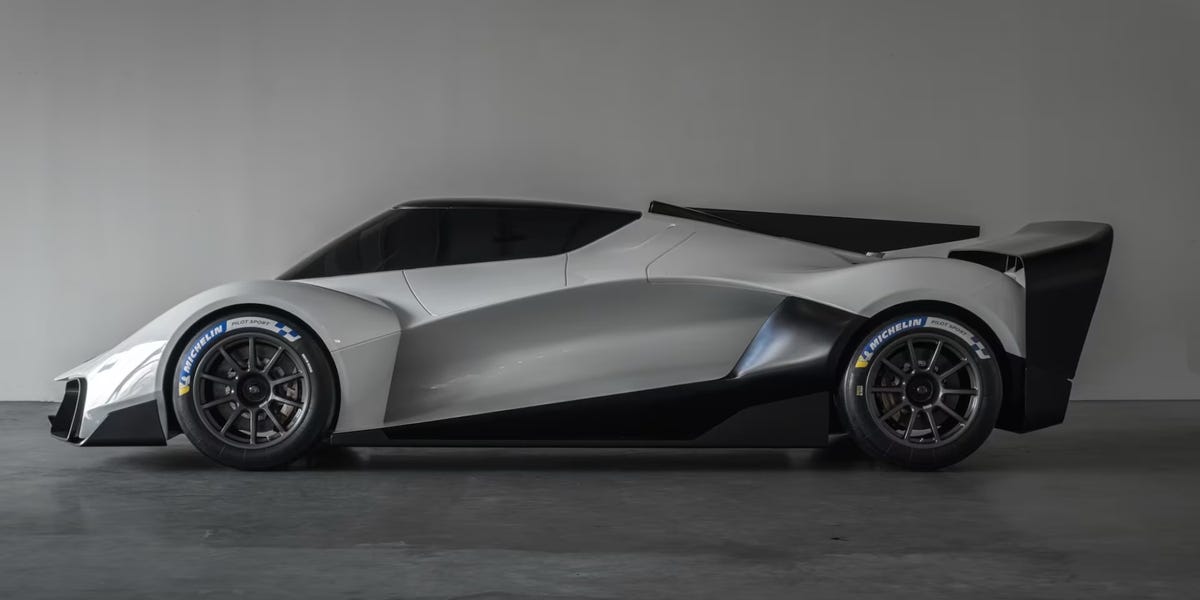
The One is a single-seat, track-only hypercar prototype from Sanrivatti, a Dutch manufacturer that first showed the car as a concept with only the barest of details attached. Now the wraps have come off a running prototype with a full specification sheet, and the headline act is not the power figure. It is the way the driver sits.
This is a machine designed from a blank sheet of paper around a completely different idea of what driving a fast car should feel like. It is not a road car with the roof chopped off, nor a track special with a tweaked seating position. The entire car has been packaged around its driver, and the result is unlike anything else on a circuit.
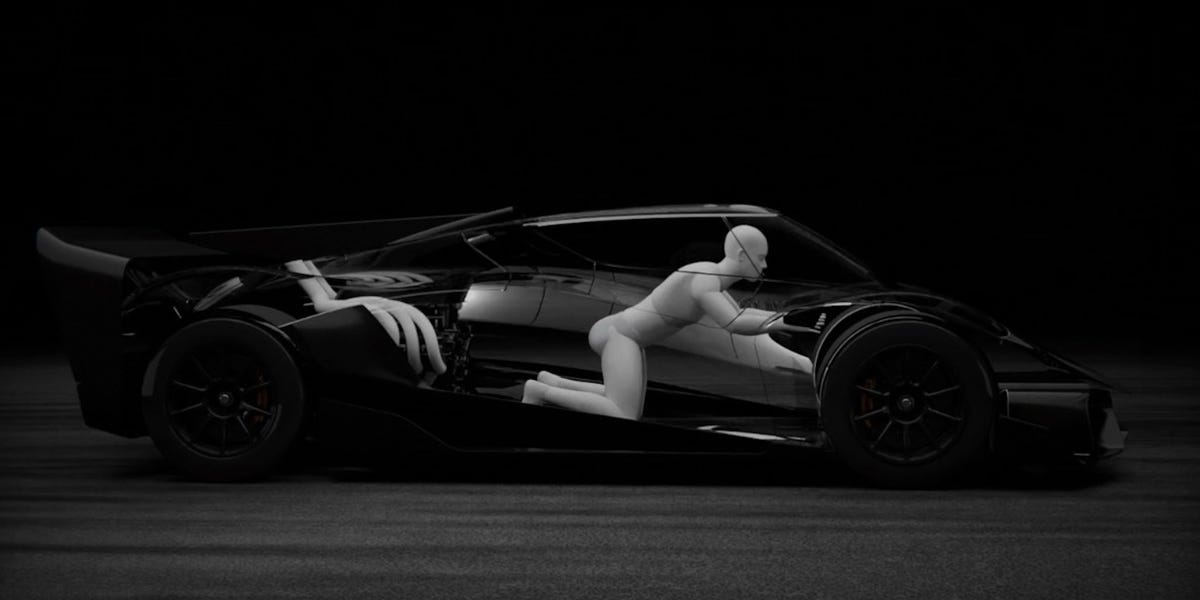
The Apex Position: Kneeling, Leaning and Still Holding a Wheel
Sanrivatti calls its layout the Apex Position. The driver lies head-forward and kneels, supported by proprietary body-support and control technologies that the company is still developing. Rather than sitting upright and resisting cornering forces with harnesses and bolsters, the driver moves with the car, leaning into bends the way a motorcyclist hangs off a bike.
Here is the crucial detail that separates it from a motorcycle: you still steer with a wheel, and you still use foot pedals for throttle and brake. This is not a handlebar machine or a set of grips. It is a car with conventional control architecture, just arranged around a body that is lying down rather than sitting up.
The claimed benefit is visibility. Sanrivatti says the Apex Position offers around 3.2 times better visibility than rival supercars and track cars, though the company has not published how that figure is measured or precisely which rivals it is benchmarked against. Treat it as a manufacturer claim for now. In a low, wide track car, forward vision is often compromised by the wheel arches and a shallow windscreen, and lying head-forward beneath a single-piece canopy should in principle change that equation. Whether it delivers the stated advantage is something only track testing will settle.
A Judd V10 With No Electrification in Sight
Underneath the dramatic bodywork sits a mid-mounted 5.5-litre naturally aspirated V10 built by Judd, the UK-based racing engine specialist with form in Formula 1 and IndyCar, and a long history of supplying engines at Le Mans. It produces 800bhp and 700Nm (516 lb ft) of torque, with peak power arriving at 9,000rpm.
There is no hybrid assistance, no electric motor filling in torque gaps, no battery pack adding weight. Power goes to the rear wheels through a Hewland six-speed sequential racing gearbox. Sanrivatti quotes a top speed of 205mph, and it has not released any acceleration figures at all. That silence is telling. When a manufacturer leads with top speed and stays quiet on straight-line acceleration, it usually means the launch is traction-limited, and a rear-drive car with this much power and this little weight will demand respect.
The choice of a Judd V10 is a statement in itself. In an era when the most exotic machines are turning to electrification, Sanrivatti has gone the other way. For context on how quickly the landscape is shifting, the Jaguar Type 01: Everything We Know About the 1,015bhp Electric Sedan Leading Jaguar’s Reinvention shows where the mainstream is heading. The Sanrivatti One is deliberately, loudly, wonderfully not that.
Chassis, Weight and Running Gear
The One is built around a carbon-fibre monocoque, with double-wishbone pushrod suspension at each corner. Sanrivatti quotes a dry weight of 1,100kg (2,425lb). Once fluids, coolant and fuel are aboard, the kerb weight will be higher. Even so, that is remarkably light for a car with this much power, and it explains why no acceleration numbers have been published: the power-to-weight ratio alone tells the story.
Braking comes from AP Racing carbon discs with six-piston calipers at both the front and the rear, which is serious hardware for a track car. It rolls on 18-inch forged magnesium wheels from Braid, fitted as standard with Michelin slick tyres. Magnesium wheels are a costly choice, but they save unsprung mass where it matters most, and the factory-fit slicks confirm this car is intended for circuit use only.
Design Borrowed From a Peregrine Falcon and a Fighter Jet
The carbon-fibre bodywork features large air channels around the waist, similar in concept to the Ford GT, and a single-piece canopy with nose-mounted intakes. Sanrivatti says the styling draws on the peregrine falcon and fighter jets, and the result is a shape that looks fast even standing still.
Aerodynamic management is central to the design. A large wing rises from the diffuser, and much of the rear is left open to dissipate the considerable heat generated by the V10. Cooling a naturally aspirated engine of this size, mounted amidships and wrapped in tight bodywork, is a genuine engineering challenge, and the open rear is a pragmatic solution as much as a stylistic one.
This is a different breed of track car to the road-legal machines now reaching buyers, such as the KTM X-Bow GT-XA, which is built to be driven to the circuit and back. The Sanrivatti One makes no such concession. It exists for the track and nothing else.
The Man Rethinking the Whole Package
Paul Arkesden, executive director of technology partnerships at Sanrivatti, is clear that the driving position is not a gimmick bolted onto a conventional car. It is the starting point for everything else.
“Creating an exceptional hypercar is difficult enough,” he said. “Creating one around an entirely different driving position means rethinking the relationship between packaging, structure, aerodynamics, ergonomics and controls from the outset. That is what makes the One so interesting.”
That quote gets to the heart of the project. Move the driver from sitting to lying and kneeling, and the entire architecture of the car changes. The monocoque must be shaped around a horizontal body. The suspension pick-up points move. The aerodynamics must account for a lower, longer cockpit. The controls must fall naturally to hand and foot in a position the driver has never experienced before. Sanrivatti says it is developing proprietary body-support and control technologies specifically to keep the driver supported and secured while moving with the car, which is the crux of whether the Apex Position works in practice.
Where the One Goes From Here
The Sanrivatti One has now had its full public debut, but it remains deep in testing, with track running and further prototype builds still to come and no target delivery date announced. That places it firmly in the development phase rather than the showroom.
Sanrivatti is also not the only small manufacturer discovering that ambition and volume do not always align. The Rimac Nevera production to end in 2026 with just 71 cars built – and Mate Rimac isn’t calling it a failure is a reminder that even the most celebrated hypercars are built in tiny numbers. For a startup like Sanrivatti, the priority is proving the concept on track before any talk of customer cars.
A Genuine Rethink of the Track Car
The Sanrivatti One matters because it asks a question almost nobody else is asking: what if the way we sit in fast cars is simply a convention rather than a necessity? Kneeling, head-forward, leaning into corners like a motorcyclist, yet still holding a wheel and working pedals, is a genuinely different proposition. Add a naturally aspirated Judd V10, a carbon monocoque and magnesium wheels, and you have one of the most intriguing track cars in development anywhere.
Whether the Apex Position proves comfortable, confidence-inspiring and fast over a full stint remains to be seen, and the visibility claim needs independent verification before anyone treats it as fact. But the thinking behind it is exactly the kind of fresh engineering that the hypercar world needs. On paper, at least, the Sanrivatti One is the most interesting thing to come out of the low-volume track car scene in years.