
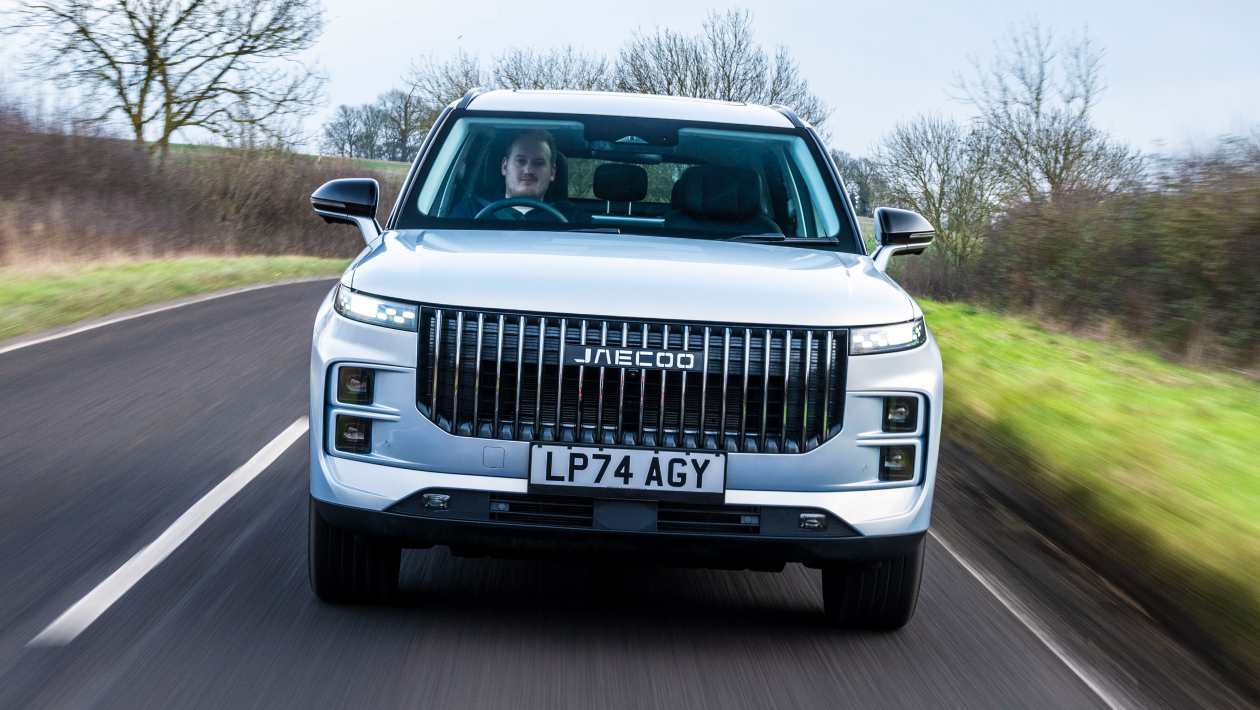
The UK is reportedly preparing to impose tariffs on Chinese car imports, but the motivation may have less to do with protecting domestic production than with buying a seat at Europe’s top table. According to The Times, Business Secretary Jonathan Reynolds is drawing up plans for levies on Chinese vehicles, with the aim of unlocking access to the EU’s ‘Made in Europe’ scheme. It is a move that pits Britain’s free-trade instincts against the hard reality that UK-built cars are currently locked out of European consumer incentives.
Tariffs on the Table, But No Decision Yet
Reports suggest Reynolds is devising the tariffs specifically to secure a deal with Brussels, rather than as a purely defensive measure against a flood of cheap imports. The dual aim is to shield the UK car industry while gaining entry to a scheme that has become increasingly central to how European buyers choose their next vehicle.
A Government spokesperson was careful to pour cold water on the speculation, saying: “We have not put tariffs on Chinese EVs. We continue to engage closely with industry so that our approach reflects the sector’s and the UK’s national interests.” That wording leaves plenty of room for manoeuvre. No policy has been announced, no consultation launched and no timeline set, but the fact that the plans are being reported at all tells you the conversation is live inside Whitehall.
Why the EU’s ‘Made in Europe’ Scheme Matters
The ‘Made in Europe’ scheme is not a slogan. As reported, it involves state-backed grants and tax breaks offered to consumers who buy locally built cars, sweetened with CO2 credits for manufacturers selling small EVs. For any brand building cars on the wrong side of the Channel, that is a significant commercial disadvantage.
UK-built vehicles do not currently qualify for ‘Made in Europe’ status, which makes them effectively uncompetitive under the scheme. A buyer in France or Germany weighing up two similarly priced models will often find the European-built one comes with substantial support that the British-built alternative cannot match. Consumer incentives across the EU remain fragmented by member state rather than delivered through a single bloc-wide grants programme, so the level of support varies from one market to the next.
According to reports, EU leaders have made clear that tariffs on Chinese vehicles are a condition for Britain’s inclusion. In other words, the price of admission is a trade policy the UK has so far resisted.
Reynolds’ Shifting Stance
The timing is notable. Just a few weeks before the reports emerged, Reynolds told Auto Express: “If you put trade protections up, they’ll probably be reciprocated and you’ll lose things.” That is a textbook free-trade argument, and it sits awkwardly alongside the suggestion that he is now drawing up precisely those protections.
The most plausible answer is that the calculation shifted from principle to leverage. Tariffs on Chinese cars would not merely shield UK factories from low-cost imports. They would function as a bargaining chip, a concession offered to Brussels in exchange for access to a scheme that could be worth far more to UK manufacturers than the cost of a trade spat with Beijing.
It is a familiar pattern in post-Brexit trade policy: the UK talks up its independence while quietly aligning with EU rules where the commercial stakes are high enough.
The Brussels Playbook
The EU has already begun placing tariffs on Chinese imports, with higher levies applied to manufacturers deemed to have received more substantial state funding. The underlying concern is that Chinese state subsidies have contributed to what critics describe as “rock-bottom pricing strategies,” allowing brands to undercut European rivals on price while absorbing margins that would sink a conventional carmaker.
That tiered approach matters. Rather than a single blanket rate, the EU has calibrated its tariffs to the perceived level of state support behind each manufacturer, a structure that invites negotiation, exemption and, inevitably, lobbying. It also sets a precedent the UK may feel obliged to mirror if it wants its own regime to be treated as compatible.
Industry Warns of a Bigger Risk
The Society of Motor Manufacturers and Traders (SMMT) suggested last month that exclusion from ‘Made in Europe’ could threaten the UK-EU trade relationship, worth around £68bn (€80bn), along with thousands of jobs on both sides of the Channel. That is the number that should concentrate minds in Westminster.
The argument is straightforward. If UK-built cars cannot access the same consumer incentives as European-built ones, sales suffer, production volumes fall and the case for investing in British plants weakens. The damage would not stop at the showroom either. Supply chains straddle the Channel, with components crossing borders multiple times before a car is finished. A trade relationship of that scale does not unravel quietly.
Chinese Brands Are Already Winning Here
There is a certain irony in the UK contemplating tariffs on Chinese cars at the very moment they are becoming genuinely popular with British buyers. The Jaecoo 7 was the best-selling car in September 2025, a bumper month for new registrations, and it is now the second best-selling car of the year overall. That September performance helped deliver UK New Car Sales Hit Near-Decade High as Jaecoo 7 Tops the 76 Plate, with more than 350,000 cars registered, a jump of over 12 per cent year on year and the strongest September since 2017, according to SMMT figures.
MG and BYD also feature in the top-selling model and electric car lists respectively. Analysis by Auto Express earlier this year found that China is now the UK’s second-most popular country for automotive brands, ahead of Japan and Korea and behind only Germany. Chinese marques have moved from curiosity to mainstream in barely a handful of years, and buyers have responded to competitive pricing, generous equipment levels and rapid model cycles.
Philip Nothard, insight director at Cox Automotive, offered a measured take on the shift. “The increasing influence of Chinese manufacturers is impossible to ignore,” he said. “Their growing presence is stimulating competition and a greater range of consumer choice. Still, it is also intensifying pressure on established brands, especially as the industry continues to work towards increasingly demanding EV targets.”
That tension runs through the whole debate. Chinese competition is good for buyers and uncomfortable for incumbents, and the pressure is sharpest in electric vehicles, where manufacturers must hit mandated sales targets or face penalties. Tariffs would raise prices for consumers at the exact moment affordability is the biggest barrier to EV adoption.
The wider supply chain is already under strain. Component makers are reassessing their bets on electrification, as reported in Nidec’s reported exit from EV motors, a reminder that the transition is proving harder to forecast than many suppliers assumed.
What Happens Next
The UK finds itself caught between two uncomfortable positions. Protect the domestic industry with tariffs and risk retaliation, higher prices and a reputation for abandoning free trade. Decline to act and UK-built cars remain shut out of the incentives that increasingly shape European buying decisions.
The coming months should reveal whether the reported plans turn into policy. If they do, expect a consultation, a lobbying battle and a great deal of noise from both sides. If they do not, the question of how UK manufacturers compete inside Europe’s incentive-driven market will not go away.
For buyers, the near-term picture is unlikely to change much. Chinese brands are here, they are selling well and they are expanding their ranges. Whether that continues on the same trajectory may depend less on consumer demand than on a negotiation taking place in Brussels and Whitehall. The automotive industry has plenty of practice at waiting for the next model year. It is rather less accustomed to waiting on a trade deal.
We covered paris motor show chinese in more detail elsewhere.