
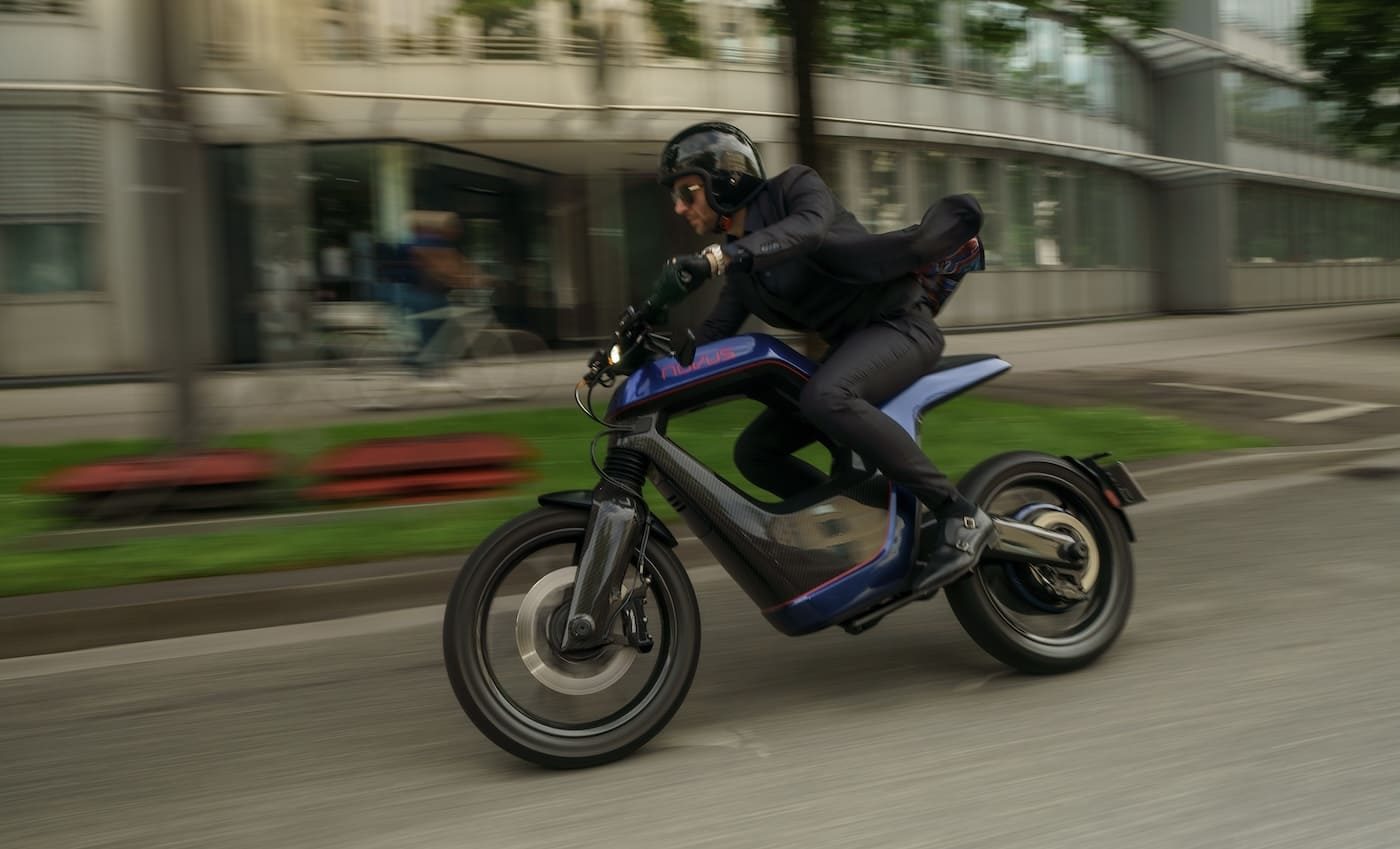
NOVUS One secures major funding for US push
NOVUS, the German electric motorcycle startup behind the One, has closed a funding round worth a figure in the double-digit millions of dollars. The money is earmarked for two things: a US market entry in 2027 and further growth across Europe, where the One is already in series production and customer deliveries began earlier this year.
That is a notable pace for a young company. Plenty of electric two-wheeler startups have shown handsome concepts and then struggled to build them at volume. NOVUS has gone the other way round, getting a finished product into customers’ hands before going after serious capital.
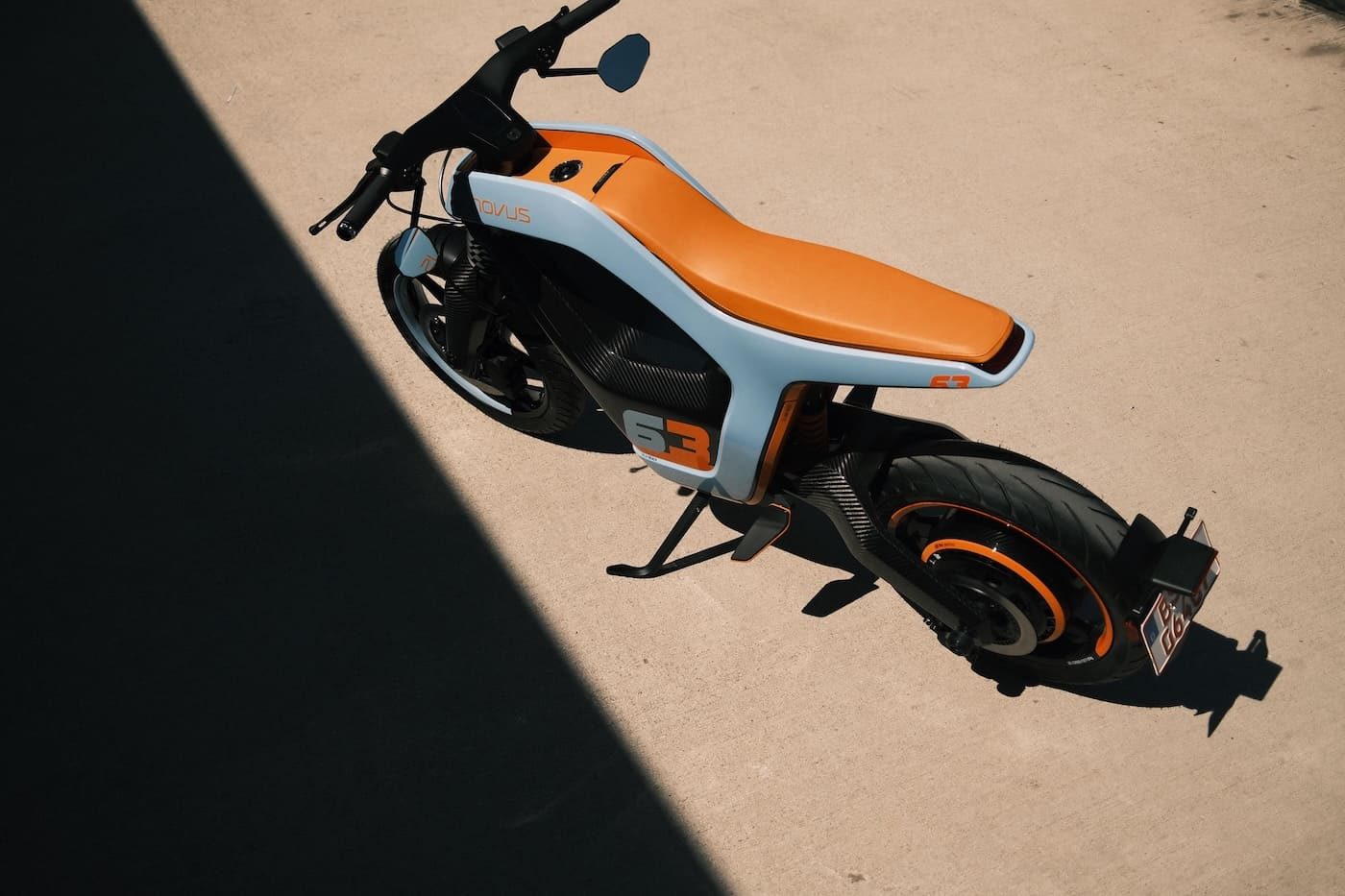
A carbon-fibre Lightbike from a former Volkswagen designer
The One is the work of founder René Renger, who spent time as a lead designer at Volkswagen, with the Golf and the ID. Buzz among the projects on his CV. His brief with NOVUS was to rethink the small urban motorcycle from the structure up.
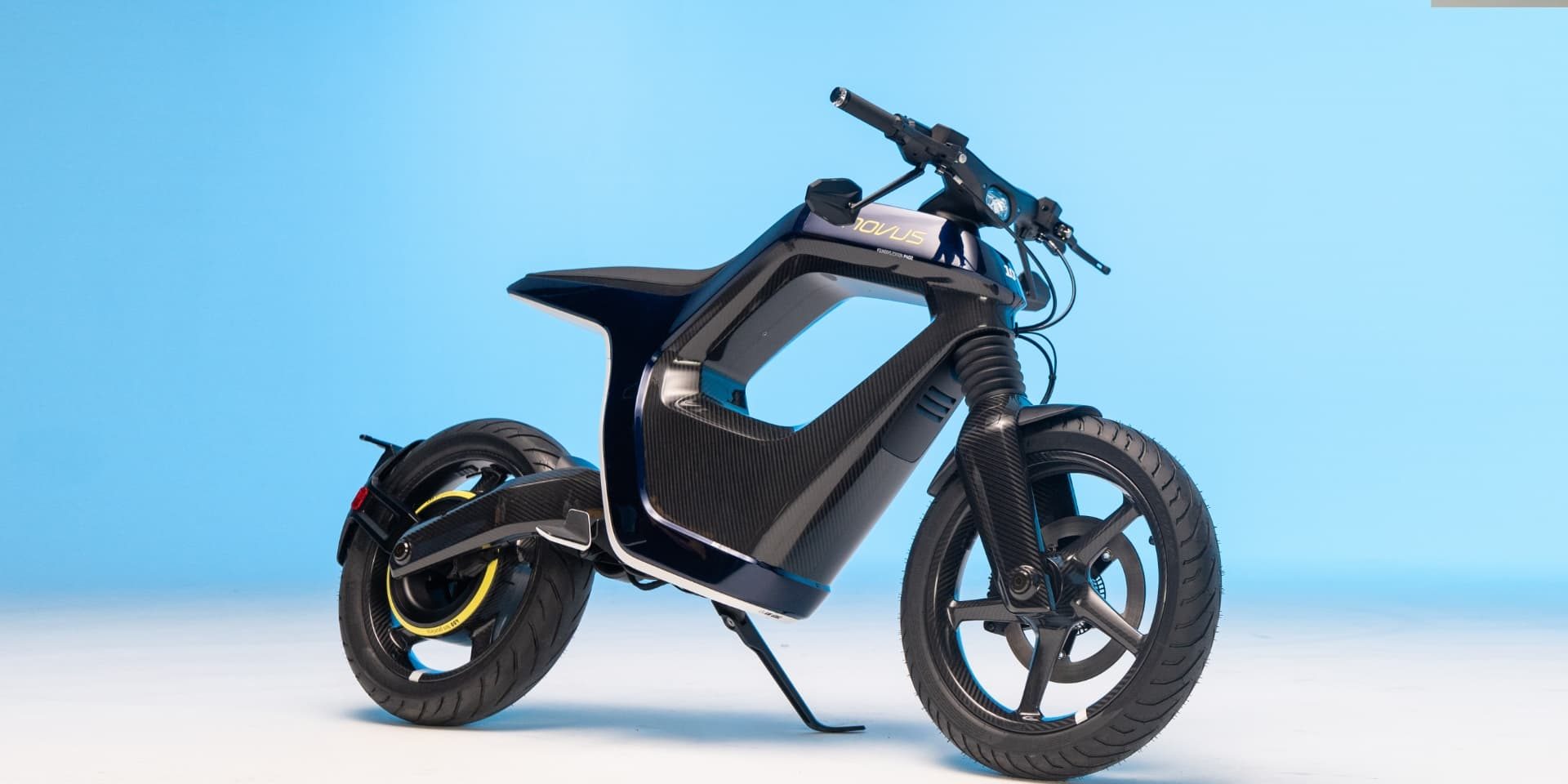
The result is what the company calls a “Lightbike,” a machine positioned deliberately between a scooter and a full motorcycle. Its defining feature is a large carbon-fibre monocoque that acts as a self-supporting structure, wrapping around a cavernous opening where conventional bodywork would normally sit. Design, engineering and final assembly all happen in Germany, with most components sourced from elsewhere in Europe.
Performance and specifications
The numbers are punchy for something weighing just 121 kg. A hub-mounted drivetrain produces up to 25 kW (33 hp) of peak power and a claimed 430 Nm of torque in its most aggressive mode. NOVUS quotes 0 to 30 mph in under two seconds and a top speed of 81 mph (130 km/h).
Energy comes from a 6.2 kWh battery, rated for up to 93 miles (150 km) of range at lower city speeds. Charging from 0 to 80% takes a claimed 90 minutes. Riders get three riding modes, keyless operation, smartphone integration and over-the-air updates.
Software-defined flexibility
The cleverest part of the One is arguably its configurability. The same hardware can be set up through software as either a full-power L3e machine capable of 81 mph or an L1e version limited to 28 mph (45 km/h). Licensing requirements for those classes vary from market to market, but the point is that NOVUS can build one bike and sell it into very different regulatory environments, or to riders at different stages of their riding career, without changing the hardware.
That approach is increasingly common in the car world, where manufacturers use software to unlock or restrict performance. Seeing it applied to a lightweight urban motorcycle makes a lot of sense, particularly for a company planning to sell across Europe and North America.
Pricing and the NOVUS Two
The NOVUS One Founders Edition starts at €21,300 before tax for the European market, which puts it firmly in premium territory. NOVUS is well aware that this limits volume, and a second, higher-volume model called the NOVUS Two is already in development. Production is planned for late 2027, with a “significantly lower” entry price promised.
That timeline lines up neatly with the US expansion, suggesting NOVUS intends to arrive in America with a broader, more accessible range rather than a single halo product.
Zero Motorcycles sets a Guinness World Record
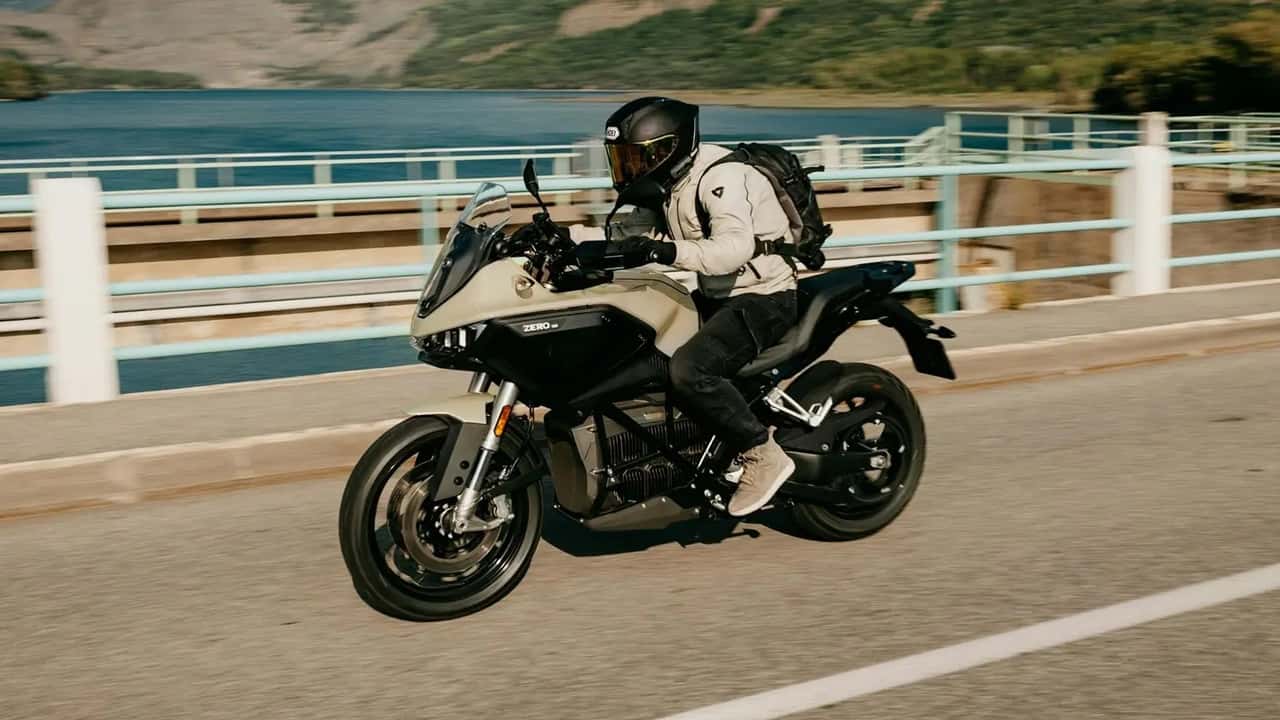
On the other side of the Atlantic, Zero Motorcycles has been busy proving a point about range. The Californian firm, founded two decades ago, has set a Guinness World Record for the longest journey by an electric motorbike on a single charge.
A Zero DS travelled 271.2 miles (436.5 km) on a full charge, running from the French Alps down to the Mediterranean. That comfortably beat the previous record, set in March 2025 when a Verge TS Pro covered 193 miles (310.6 km). Belgian rider Jelle Verstaen was the man in the saddle for the record-setting run, which took place last month.
For anyone who still treats electric motorcycle range as a dealbreaker, it is a useful corrective. Our look at the electric motorcycles with the longest range in 2026 shows how varied the official figures can be, and how much depends on how you ride.
How the record was achieved
The DS was fitted with Zero’s optional Power Tank, an official dealer-installable accessory that lifts battery capacity from 15.6 kWh to 19.2 kWh. Beyond that, the run was as much about discipline as hardware.
The route avoided major highways and faster two-lane roads, favouring quieter roads where a consistent, economical pace could be held. The convoy set off in the evening and rode through the night until the following morning, when a major storm rolled in. Zero did not disclose the exact route or average speed, but said riders aimed for around 32 mph (52 km/h) wherever road conditions and speed limits allowed.
Verification was taken seriously. The charging port was sealed before departure, the rider carried two GPS trackers, and a Guinness World Records representative checked the trackers and confirmed the result.
Convoy support and context
The record-setting DS did not ride alone. An SR/S in the convoy finished after 217 miles (350 km) and a DSR/X after 238 miles (384 km). Both would have beaten the Verge TS Pro’s previous record in their own right, which says something about the depth of Zero’s range capability rather than a single lucky run.
The DS itself uses a single rear motor with 45 kW (60 hp) of peak power and 11 kW (15 hp) continuous output. One quirk worth noting: Zero does not list the DS in its US line-up, so this particular record was set on a model aimed at other markets.
The contrast between the two stories is instructive. NOVUS is betting that urban riders want something lighter, cleverer and more configurable than either a scooter or a conventional motorcycle, and that software can do much of the heavy lifting. Zero is betting that range anxiety is beatable with existing technology, a bit of patience and a steady right wrist.
Both are pushing the same market forward from different directions. The funding round gives NOVUS the means to test its Lightbike concept beyond Europe, while Zero’s verified 271 miles sets a benchmark that rivals will now have to answer. For riders watching the segment mature, the interesting question is which approach translates into bikes people actually buy. Electric motorcycling remains a long way from mass-market volume, but a funded German startup with a genuinely novel design and a Californian firm with a record in the books make for a healthier picture than either story would on its own. And with the NOVUS Two due in late 2027 and Zero’s dealer-installable Power Tank already available, the next chapter is not far off.
For more on this, see honda passport trailsport one.
For more on this, see says electric trucks have.
For more on this, see electric 125cc motorcycle world.

One Comment