Honda confirms hybrid-only future for the CR-V
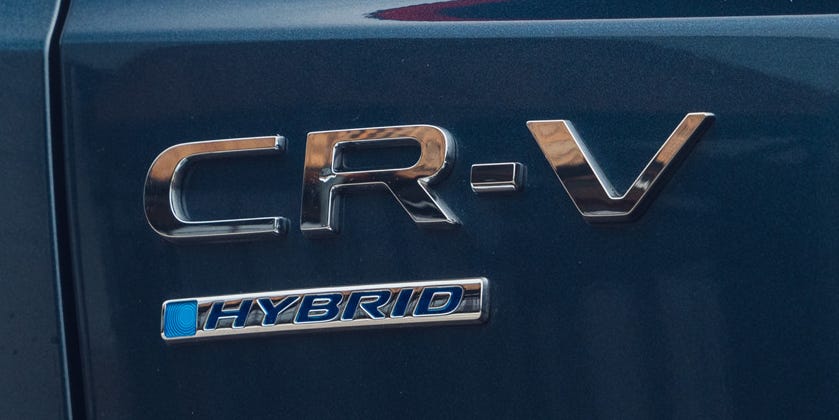
Honda has confirmed that the next-generation CR-V will be hybrid-only, ending petrol power for the family SUV. The seventh-generation model is due to be revealed in 2026 before going on sale in the United States, where the CR-V is one of Honda’s highest-volume models.
The decision makes Honda the latest major manufacturer to bet the future of a mainstream family SUV on electrified power alone, following Toyota’s move to sell the current Camry and the new RAV4 exclusively as hybrids. For a model that only gained a hybrid option in the 2020 model year, it is a remarkable shift in strategy.
The sales case: from niche option to the only option
The numbers explain the logic. When the CR-V hybrid arrived in the US with the facelifted fifth-generation car in the 2020 model year, it was one choice among several. Annual hybrid sales have since grown almost tenfold and now account for more than 50% of total CR-V sales.
That milestone matters because it turns the hybrid from a niche trim into the default choice. Honda has also confirmed that 2026 will be the third consecutive year it has sold more than 400,000 CR-Vs in the US, so the model is carrying serious volume while the hybrid share climbs.
Underpinning the decision is pricing. The gap between hybrid and non-hybrid CR-V models is relatively small, which makes the petrol-only versions harder to justify with each passing year. When the electrified version costs only a little more and returns better fuel economy, the business case for keeping a conventional engine in the range weakens quickly. Honda has evidently concluded that the remaining petrol buyers are not numerous enough to sustain a separate powertrain line.
Fifth-generation hybrid system targets 10% efficiency gain
The new CR-V will use the fifth generation of Honda’s two-motor hybrid system, paired with an Atkinson-cycle four-cylinder petrol engine. Honda claims the set-up “will greatly increase the standard power and efficiency”. The company is targeting an efficiency improvement of more than 10% over the outgoing system.
Output figures have not been released. For reference, the current CR-V hybrid produces 205 hp and is rated at up to 38 mpg combined on the US EPA test cycle, a different gallon from the UK mpg figure. Honda has also promised an improved electric all-wheel-drive system, which should appeal to buyers in colder climates who want all-weather traction without the fuel penalty of a traditional mechanical set-up.
The Atkinson-cycle engine is a familiar building block in Honda’s hybrid architecture, prioritising thermal efficiency over outright power, with the electric motors providing the low-speed response. A 10% gain would be a meaningful step for a vehicle of this size. The real-world figure will depend heavily on how the new platform manages weight.
A new modular platform with more parts sharing
The seventh-generation CR-V moves to a new modular platform that Honda says will be stiffer and lighter, with greater parts sharing and lower production costs. That combination is the quiet enabler behind the hybrid-only strategy. A lighter body offsets some of the mass of the battery and motors, while shared components spread development and manufacturing costs across more models.
Greater rigidity typically pays off in ride quality and refinement, both areas where family SUV buyers are quick to notice shortcomings. The platform is expected to be shared across a range of Honda models, which helps explain how the company can commit to 15 new hybrids by 2030 without starting from scratch each time.
Following Toyota’s lead
Honda is not first to this party. Toyota gave rivals a template by removing petrol engines from the Camry and the RAV4, and Honda is now applying the same logic to its own volume seller.
The CR-V will be the first of several hybrid models Honda plans to launch by 2030, with most of them oriented towards the American market. The strategy reflects where demand actually sits: hybrid take-up has been strong in the US, and Honda is moving to meet it rather than trying to convert buyers back to petrol.
The company’s wider range shows the hybrid push is not universal. The 2027 Honda Civic Type R keeps its turbocharged 2.0-litre engine and 315bhp (as reported in our separate article), with no hybrid assistance in sight, while the 2027 Honda Passport TrailSport focuses on suspension and ground clearance rather than electrification (as reported in our separate article). The CR-V, as the volume model, is where the hybrid bet carries the most weight.
Design: vertical taillights expected to go
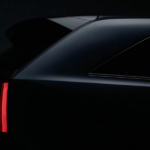
Prototypes of the new CR-V have already been spied testing under light camouflage, and they point to a significant styling change. The current car’s signature vertical taillights are expected to be dropped, bringing the SUV into line with Honda’s newer design language.
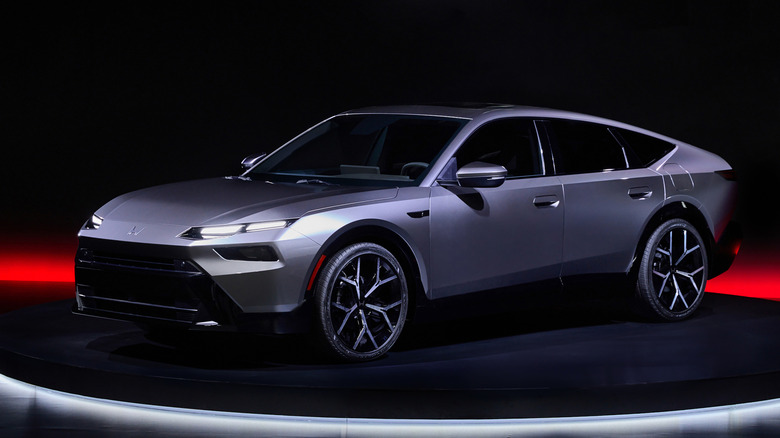
Honda has also shown a “Hybrid Sedan Prototype” fastback wearing that new design direction, widely read as a preview of the next-generation Accord. The CR-V is expected to adopt similar cues, with a cleaner rear end and a more horizontal light signature.
As for the debut, a motor show appearance is expected. A Detroit show debut in January is considered a safe bet, with Chicago in February or New York in March as alternatives. Timing has been fluid before: Honda has already pushed the next CR-V hybrid back once (as reported in our separate article), so the 2026 reveal and subsequent US on-sale date are worth treating as a plan rather than a guarantee.
Manufacturing: Ohio and Indiana, with a new $3bn plant
Most US-spec CR-Vs are built in Ohio, with the remainder assembled in Indiana. Honda has announced a new $3 billion plant in Ohio, a US investment figure, focused on hybrids, though petrol and fully electric cars will also be built there. Production is not expected to start until 2029, with an envisioned capacity of 240,000 units a year.
That timing sits slightly behind the CR-V’s planned launch, which suggests the first hybrid-only CR-Vs will rely on existing capacity before the new facility comes online. The investment is a clear signal of intent: Honda is committing billions to hybrid manufacturing in the US at a point when some rivals are scaling back electrification plans.
What buyers still need to know
Power and efficiency figures for the fifth-generation hybrid system have not been released, so it is too early to say how the new car will compare with the outgoing 205 hp model in real-world driving. The 10% efficiency target is a claim, not a tested result.
Pricing is also unknown, though Honda’s stated logic is that the hybrid premium is already small enough to make petrol-only versions redundant. Whether that remains true for a hybrid-only range, with no cheaper entry model to advertise, is the commercial question the company will have to answer. UK availability is unconfirmed.
The petrol-only family SUV’s days are numbered, and the CR-V is the clearest sign yet that the hybrid has become the default rather than the exception.
We covered honda avancier hybrid suv in more detail elsewhere.
We covered subaru forester wilderness hybrid in more detail elsewhere.